The most important historical events in Egypt span five thousand years — more usable history than any country on earth. This is the traveler’s timeline: the twelve moments that made Egypt, each pinned to a place where you can stand inside its consequences.
Quick Answer: Egypt’s pivotal events run from Narmer’s unification (~3100 BC) through the pyramid age, the imperial New Kingdom (Hatshepsut, Ramses II, Tutankhamun), Alexander’s conquest and Cleopatra’s fall, the Christian and Islamic transformations, all the way to the Suez Canal, the 1952 revolution and the High Dam that ended the Nile’s ancient flood.
The Timeline That Explains Everything You’ll See
| Event | When | Stand inside it at |
|---|---|---|
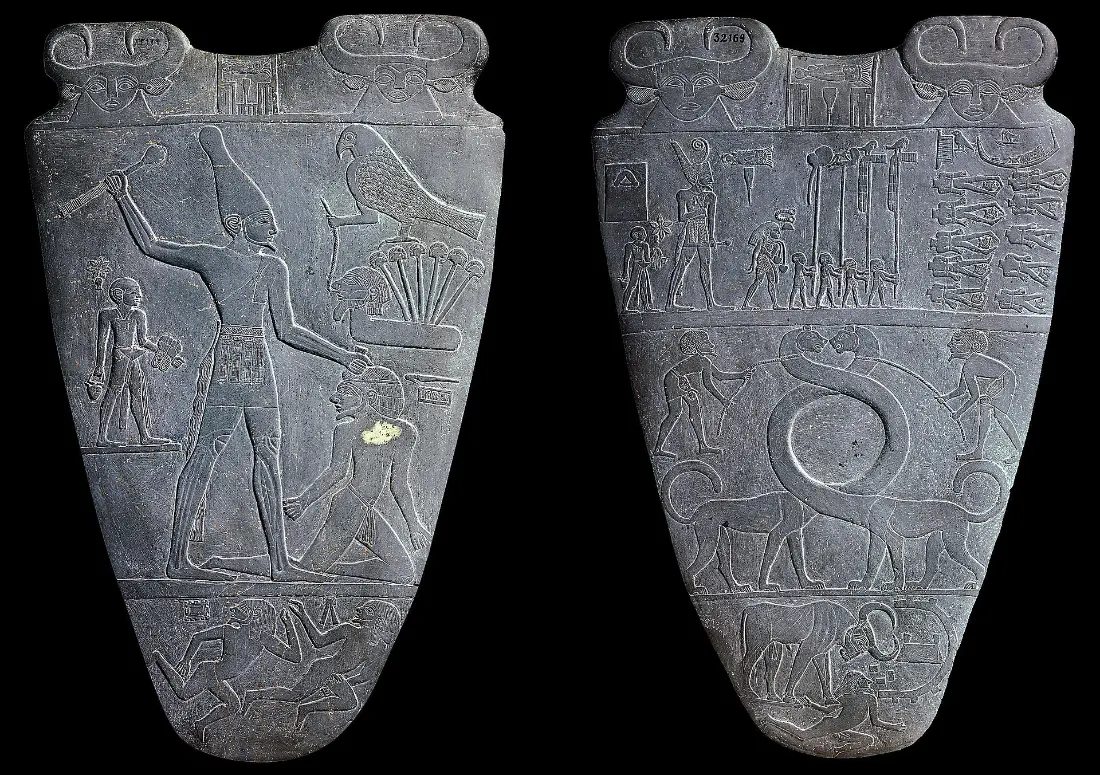
| Narmer unites the Two Lands | ~3100 BC | His palette, Cairo’s museums |
| The Pyramid Age peaks | ~2560 BC | Giza — the plateau |
| Thebes rises; empire begins | ~1550 BC | Karnak’s growing forest |
| Hatshepsut takes the throne | ~1479 BC | Her terraces, Luxor |
| Akhenaten’s one-god revolution | ~1350 BC | His erasures everywhere; Luxor Museum’s talatat wall |
| Tutankhamun restores the gods | ~1330 BC | KV62 itself |
| Kadesh & the first peace treaty | 1274 BC | Ramses II’s walls, Abu Simbel & the Ramesseum |
| Alexander & the Ptolemies | 332 BC | Edfu, Philae — Greek kings in pharaoh’s dress |
| Cleopatra falls; Rome annexes | 30 BC | Roman layers at Alexandria |
| Christianity then Islam transform Egypt | 1st–7th c. AD | Coptic Cairo; the minarets of Islamic Cairo |
| Suez Canal opens | 1869 | Modern Egypt’s geopolitical birth |
| Revolution & the High Dam | 1952–1970 | The dam — the flood’s end |
Three Turning Points Worth Slowing Down For
Hatshepsut: the woman who ruled as king
Twenty years of peace and trade under a female pharaoh — then her images chiseled away by successors. Her terraces at Deir el-Bahari are the comeback: erased, excavated, unforgettable.
Kadesh: history’s first documented peace
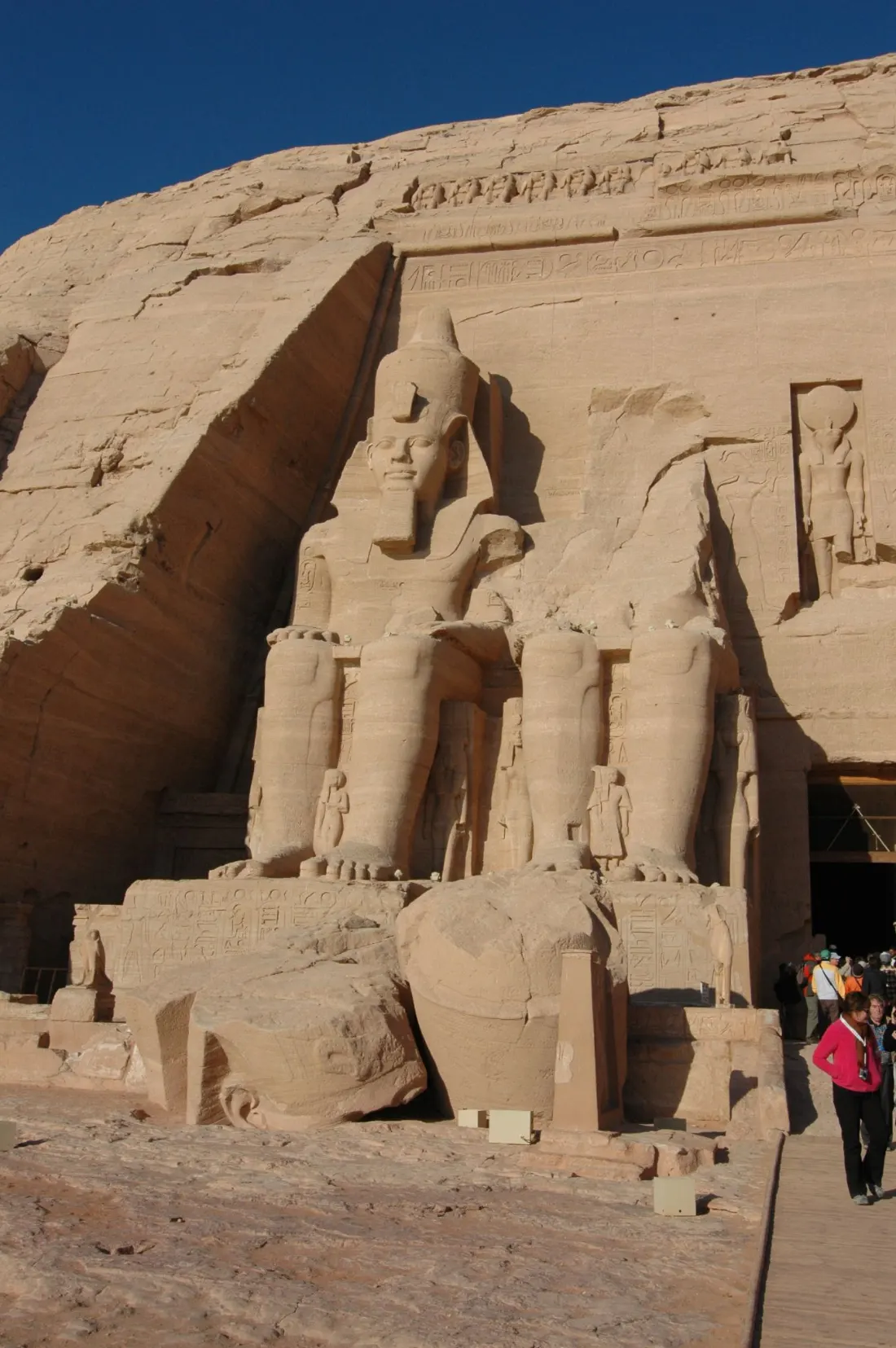
Ramses II fought the Hittites to a draw in 1274 BC, declared victory on every wall he owned — then signed the world’s first surviving peace treaty. A copy hangs in the UN; the propaganda version towers at Abu Simbel.
The High Dam: the ancient world’s true end
In 1970 the flood that had timed Egyptian life since Narmer simply stopped. The lake rose, Nubia moved, UNESCO lifted the temples — the whole story told at the Nubian Museum.
Touring the Timeline

Egypt’s genius for travelers: the eras stack geographically. Cairo holds the pyramid age, Luxor the empire, the cruise corridor the Greek twilight, Aswan the modern rupture — so the classic route of our 7-day itinerary is also a chronological one.
FAQs About Egypt’s History
What is the most important event in ancient Egyptian history?
Narmer’s unification (~3100 BC) — it created the state whose 3,000-year run produced everything else.
How long did ancient Egypt last?
From unification to Cleopatra: roughly 3,000 years — Cleopatra lived closer to the moon landing than to the Great Pyramid’s construction.
Who was Egypt’s greatest pharaoh?
By empire: Thutmose III; by monuments and fame: Ramses II; by mystery-per-square-meter: Tutankhamun.
Where is the history best explained?
At the sites with an Egyptologist — our Luxor tours are the timeline walked in stone.
Want 5,000 years in one week? WhatsApp us — arranging exactly that is the family business.
Further reading: the history of Egypt.
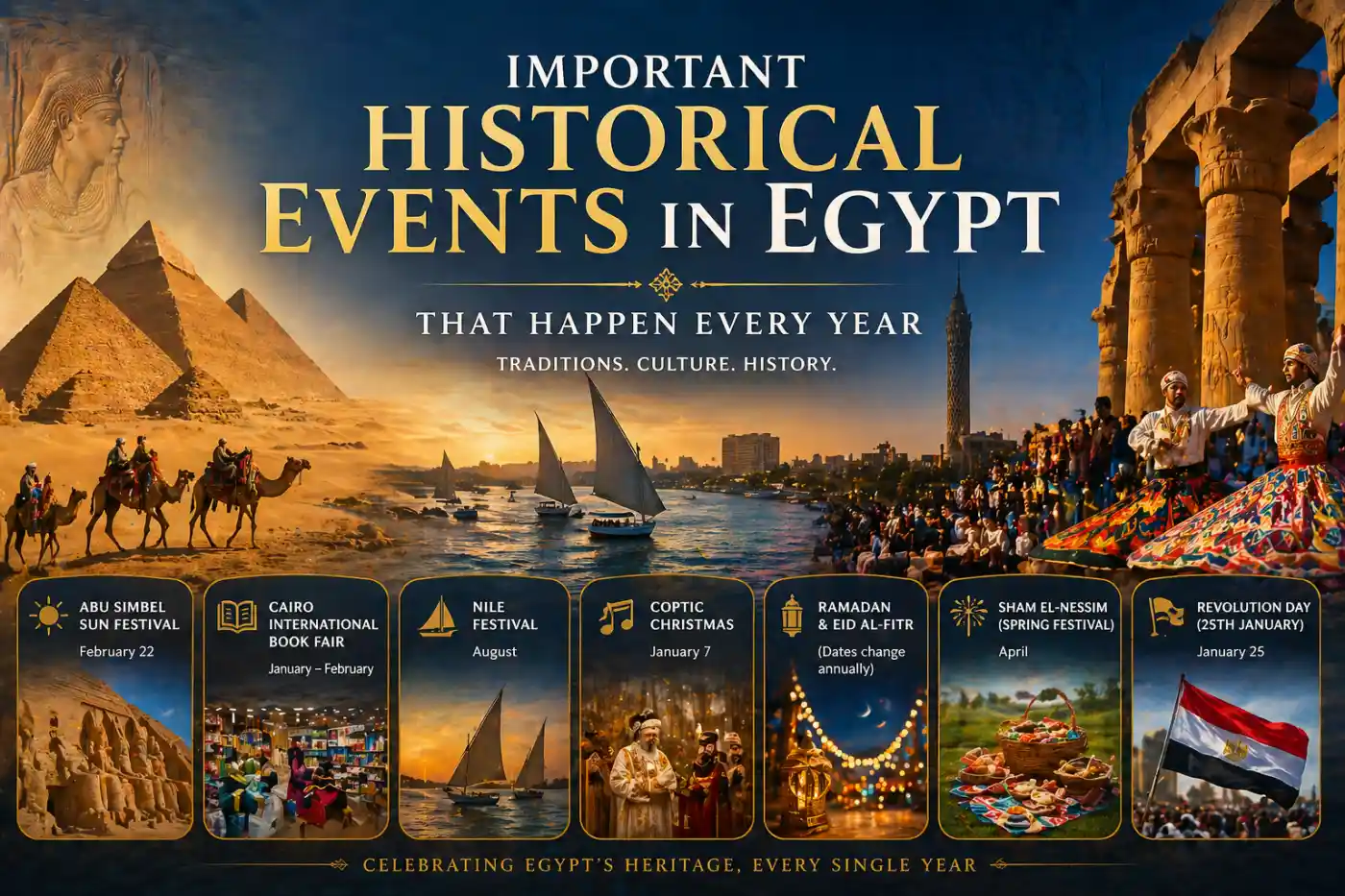
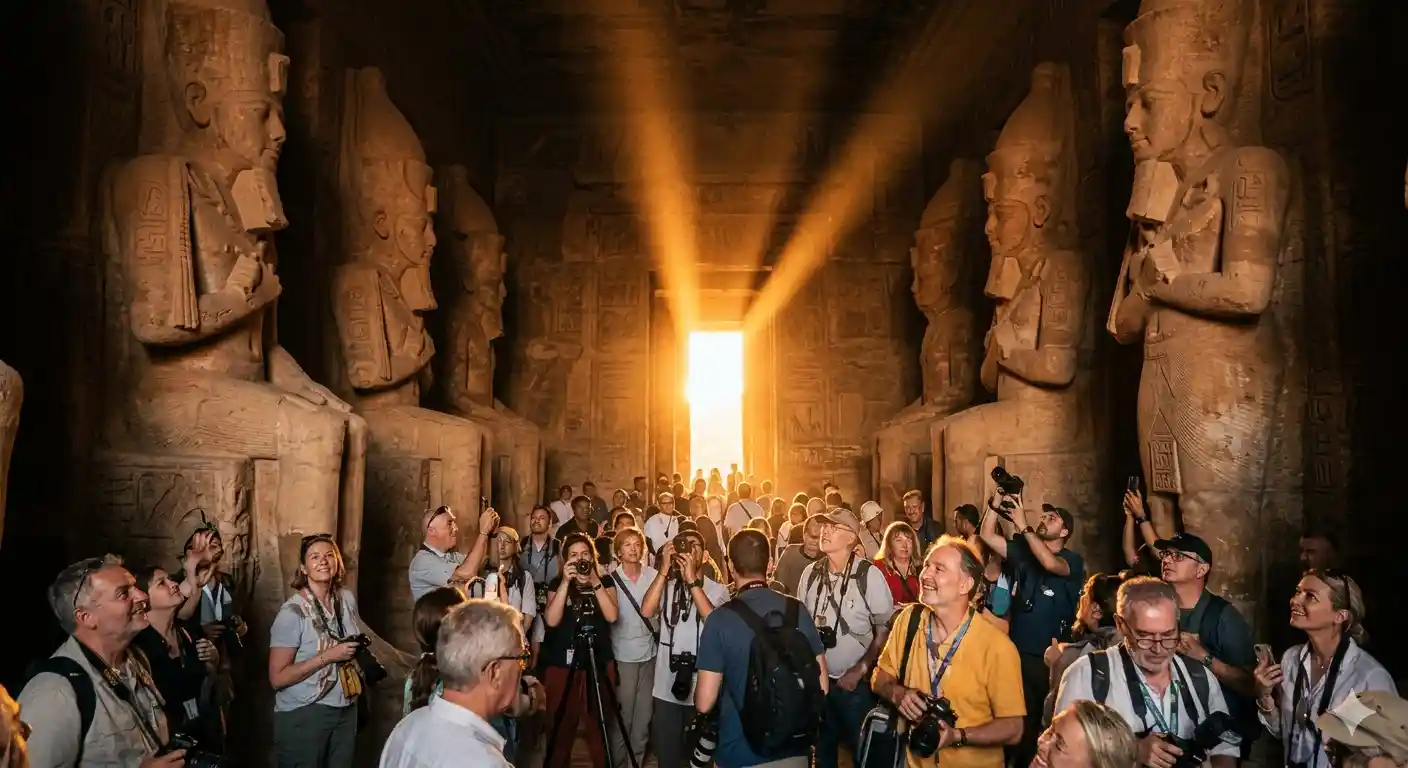
These important historical events in Egypt are living traditions, not museum pieces: the Abu Simbel Sun Festival still fills the temple twice a year, Sham El-Nessim still empties the cities into the parks, and Moulid celebrations still light up whole neighborhoods. If you can align your travel dates with any of the important historical events in Egypt above, you will see a side of the country most visitors miss — and the important historical events in Egypt tied to fixed solar dates (February 22 and October 22 at Abu Simbel) are the easiest to plan around.