Overview
A traditional dahabiya, the Turquoise, sails from Luxor to Aswan in six nights: one night in a Luxor hotel, then five nights aboard while the boat visits El Kab, Edfu, Gebel el-Silsila, Kom Ombo and Philae. Full board on the boat, a private English-speaking Egyptologist, from 1,600 USD per person. We reply within 24 hours.
Why a Dahabiya Nile Cruise
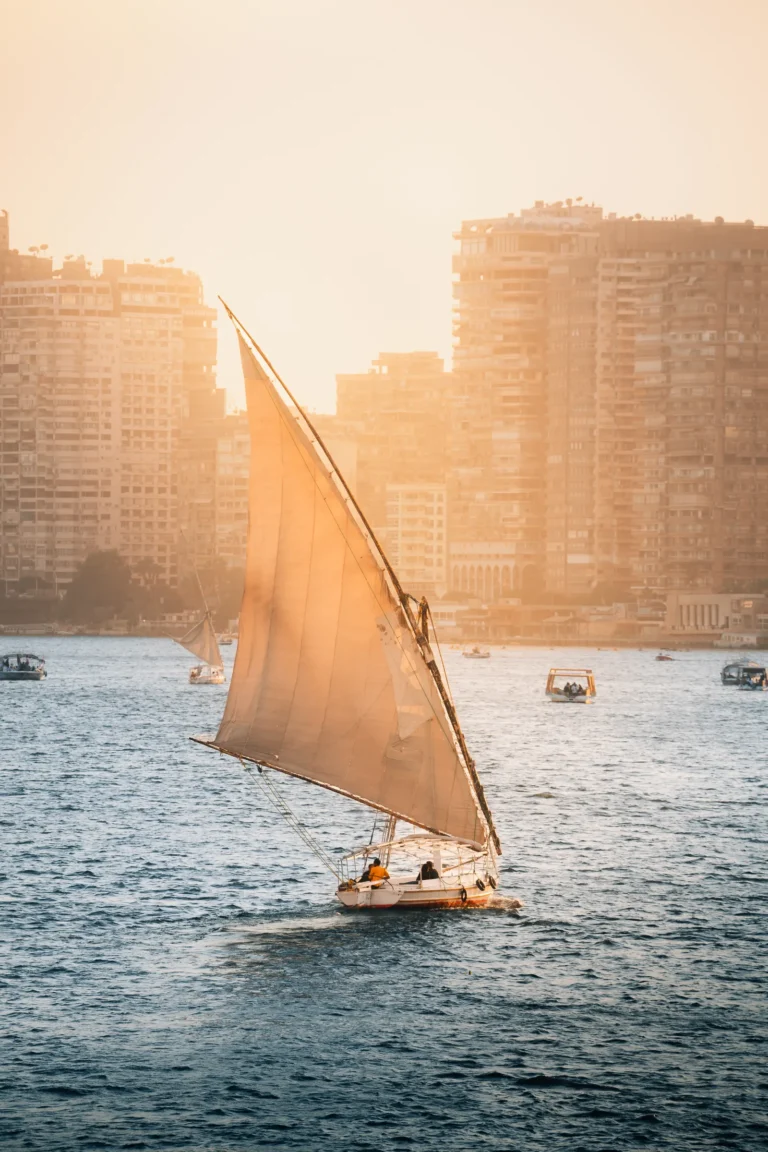
A dahabiya is a traditional sailing boat, and travelers have taken the dahabeah up the Nile since the 19th century. It is smaller than a Nile cruise ship, with 6 to 10 cabins, so it can moor at quiet banks and islands. Breakfast is served on deck while the riverbank passes.
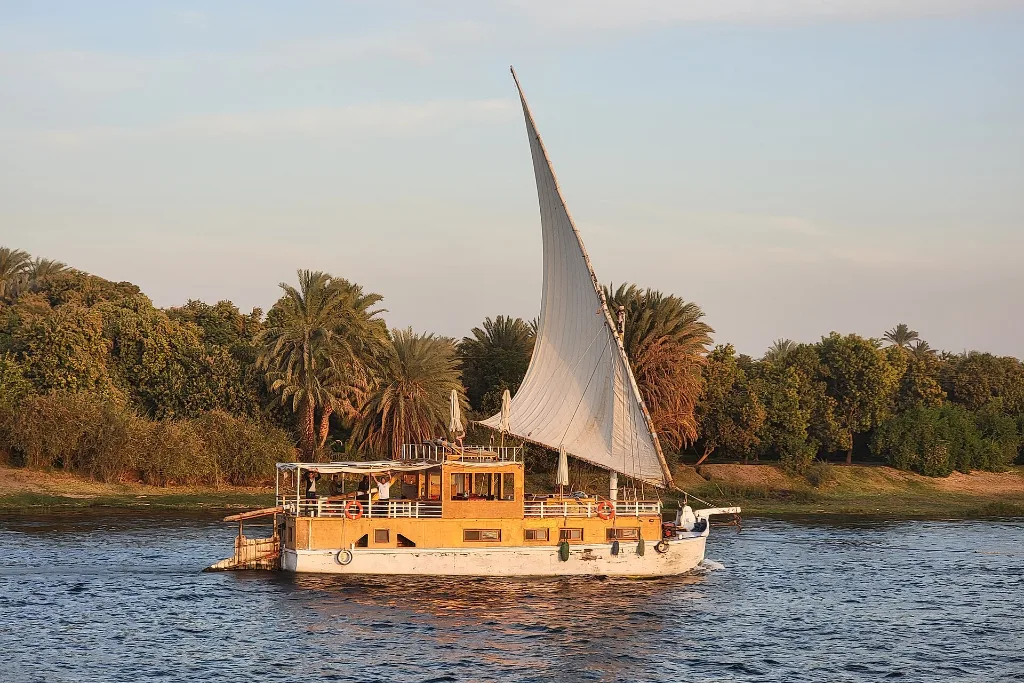
A traditional dahabiya under sail on the Nile.
Itinerary at a Glance
Day 1 is Karnak and Luxor Temple, then a night in a Luxor hotel. On Day 2 you visit the Valley of the Kings and Medinet Habu and board the dahabiya. The next days cover El Kab and Edfu, Gebel el-Silsila and Bisaw Island, Kom Ombo and the Daraw market, and Philae with the Aswan High Dam. You disembark in Aswan on Day 7. The full plan is in the itinerary tab below.
Dreaming of a quiet river over the holidays? Read how Christmas Eve on a Nile cruise feels, and browse our Christmas and New Year in Egypt guide.
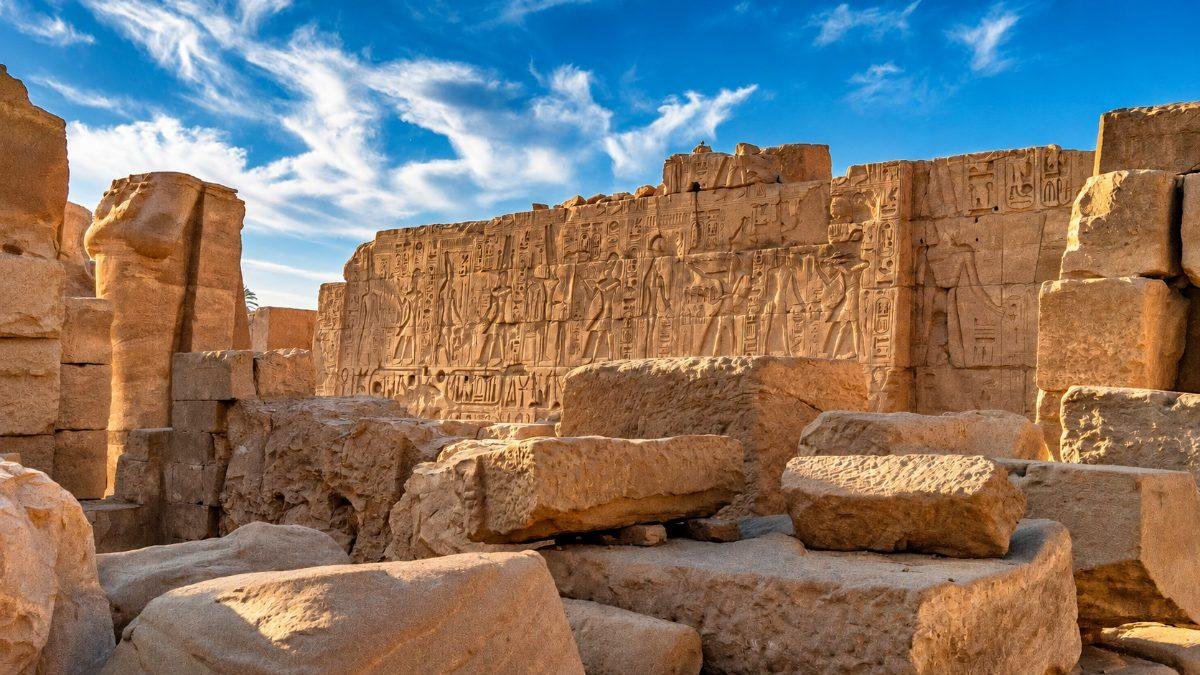
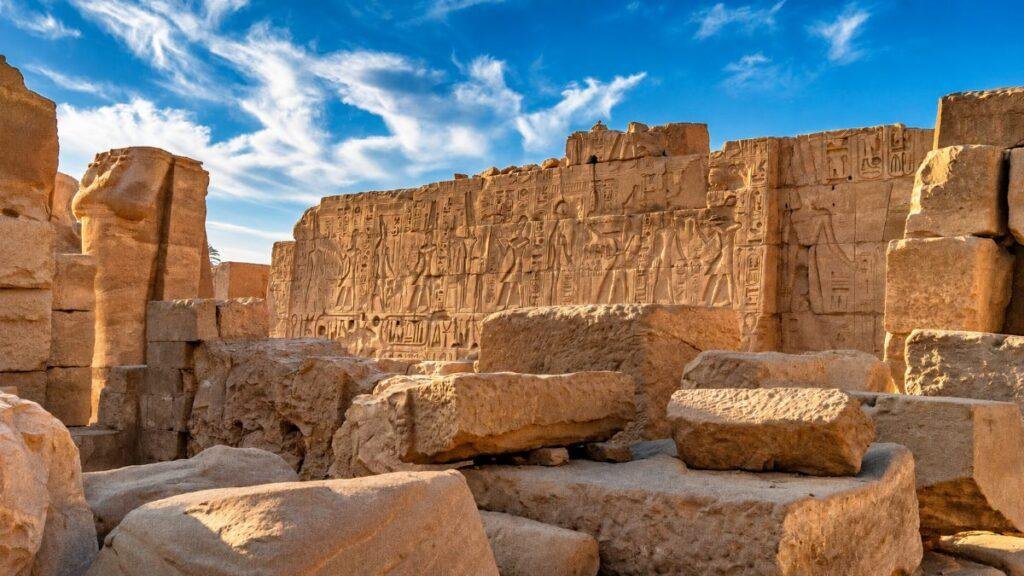
Carved reliefs among the ruins at Karnak Temple.
Life on Board the Dahabiya
Mornings start with breakfast on deck, and the sites are visited before the heat builds. Afternoons are for sailing and resting on deck, with swimming or walking stops where conditions allow. Lunch and dinner are served on board. Soft drinks, mineral water, tea and coffee are included; alcoholic drinks are not.
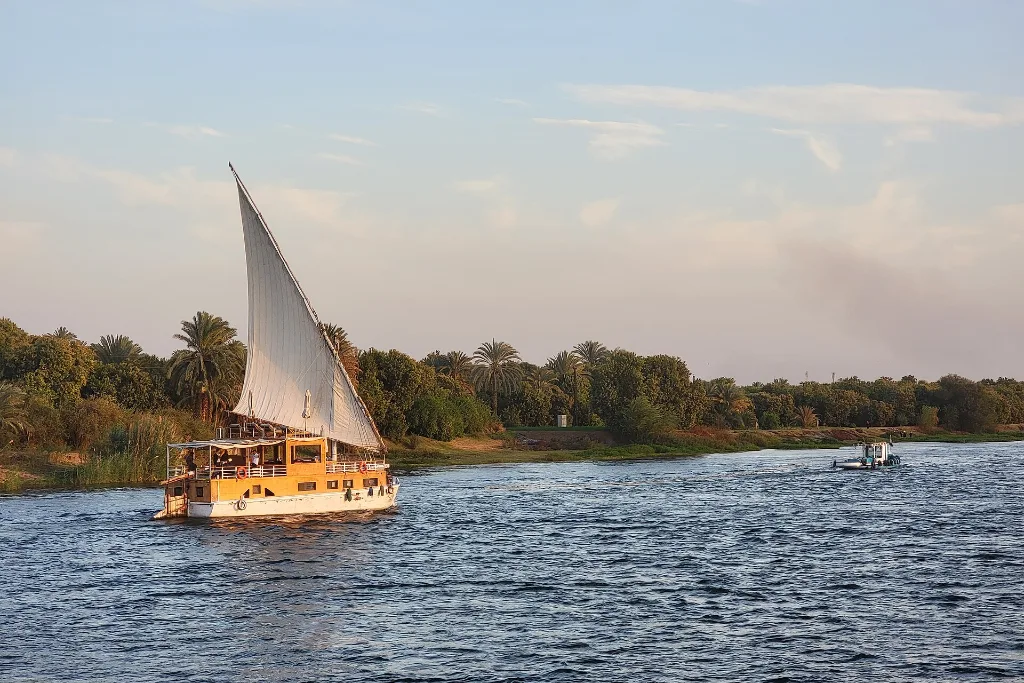
A dahabiya sailing the Nile at sunset.
Best Time to Sail
October to April is the cooler season, and December and January are the busiest weeks, so book early. May and September are shoulder months. In June to August the visits start early and the middle of the day is spent in the shade on deck.
Plan Around Your Cruise
Want more time on the West Bank? Ask us about our private Valley of the Kings tour in Luxor. Abu Simbel is an optional day trip from Aswan, arranged separately: see our Abu Simbel day trip from Aswan.
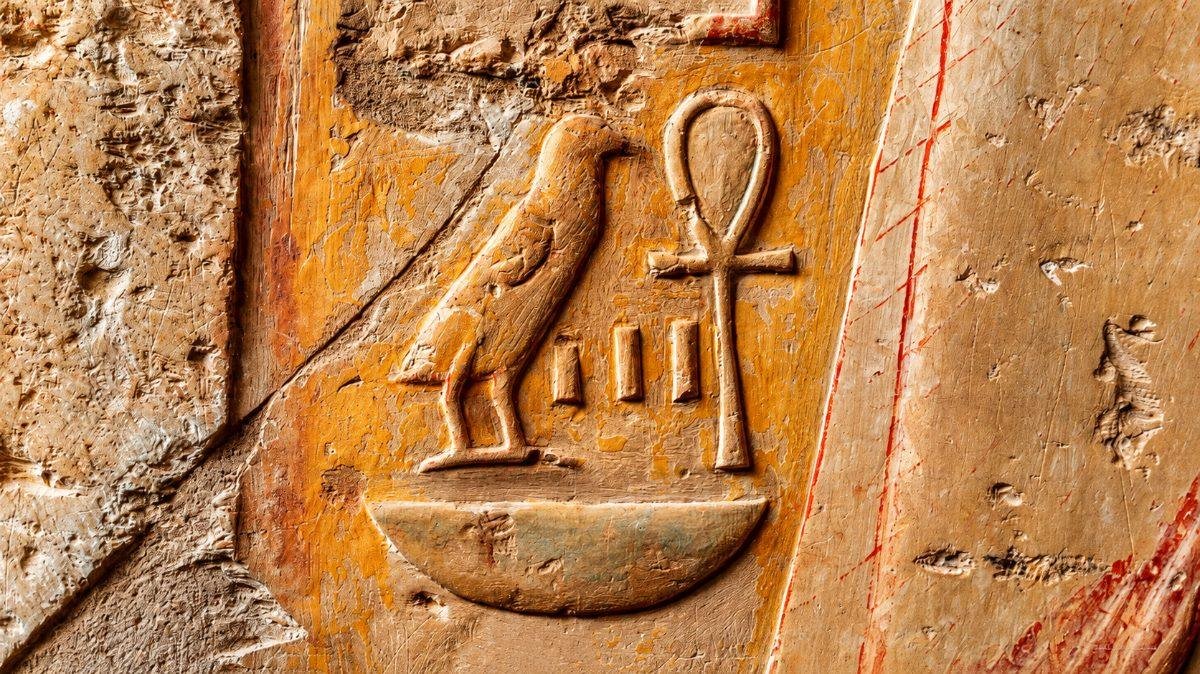
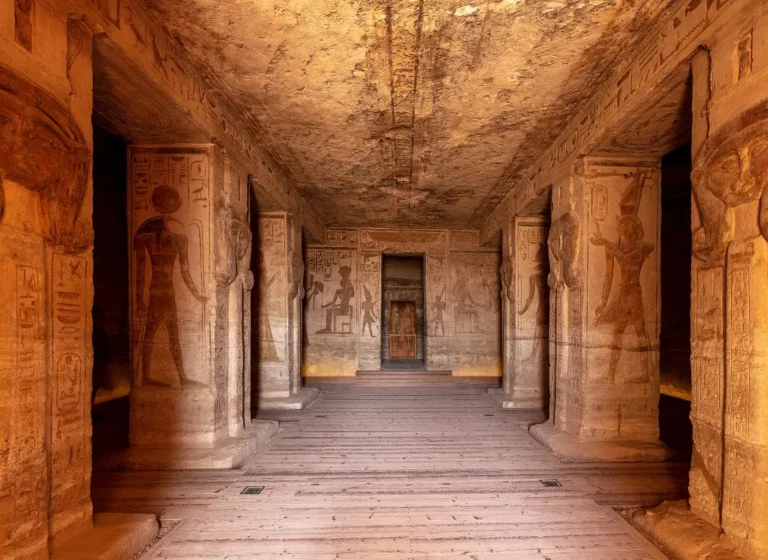
Painted hieroglyphs inside a tomb on Luxor’s West Bank.
What to Pack for a Dahabiya Nile Cruise
Pack light and soft: a small duffel is easier to stow than a hard case. Bring sun protection (hat, sunscreen, sunglasses), a warm layer for winter evenings on deck, comfortable walking shoes for temple visits and modest cover-ups for village visits. A swimsuit is useful for swimming stops in the warm months. Binoculars are useful for birdwatching along the banks.
Why Book Private with El Sultan?
A dahabiya is small and personal, so the people behind it matter. This is what booking privately gives you on this cruise:
- A private Egyptologist — a licensed, English-speaking guide on every visit, from Karnak to Philae. You set the pace at El Kab, Edfu, Gebel el-Silsila and Kom Ombo.
- A small boat, not a floating hotel — a dahabiya has only 6 to 10 cabins, so it can moor at quiet banks and islands instead of queuing at ship docks.
- Full board and a private vehicle — meals are served on the boat, and your land transfers are in a private air-conditioned vehicle.
- One booking, one team — the boat, your Luxor hotel night, the guide and the transfers are arranged together. Nobody sends you to another supplier.
- Direct support, 24/7 — our team is on WhatsApp from your first message to your final transfer. Send your dates and we reply within 24 hours.
Itinerary
Meet your private Egyptologist at Luxor airport or at your hotel. In the morning you visit Karnak Temple, one of the largest temple complexes in Egypt, with its great hypostyle hall, the obelisks and the sacred lake. Later you visit Luxor Temple at golden hour, when the low sun lights the colonnades. Both temples are on the East Bank, so the day needs no river crossing. You spend the night in a Luxor hotel with breakfast included, and you board the Turquoise the next day.
Cross the Nile to the West Bank. The Valley of the Kings holds the painted tombs of the pharaohs, and the standard ticket covers three tombs. Tickets for Tutankhamun and Seti I are optional and paid separately. Next is Medinet Habu, the very well preserved memorial temple of Ramses III. In the late afternoon you board the dahabiya Turquoise near Esna, where the crew welcomes you and the sails go up. Lunch and dinner are served on board, and you spend the night at El Hegz.
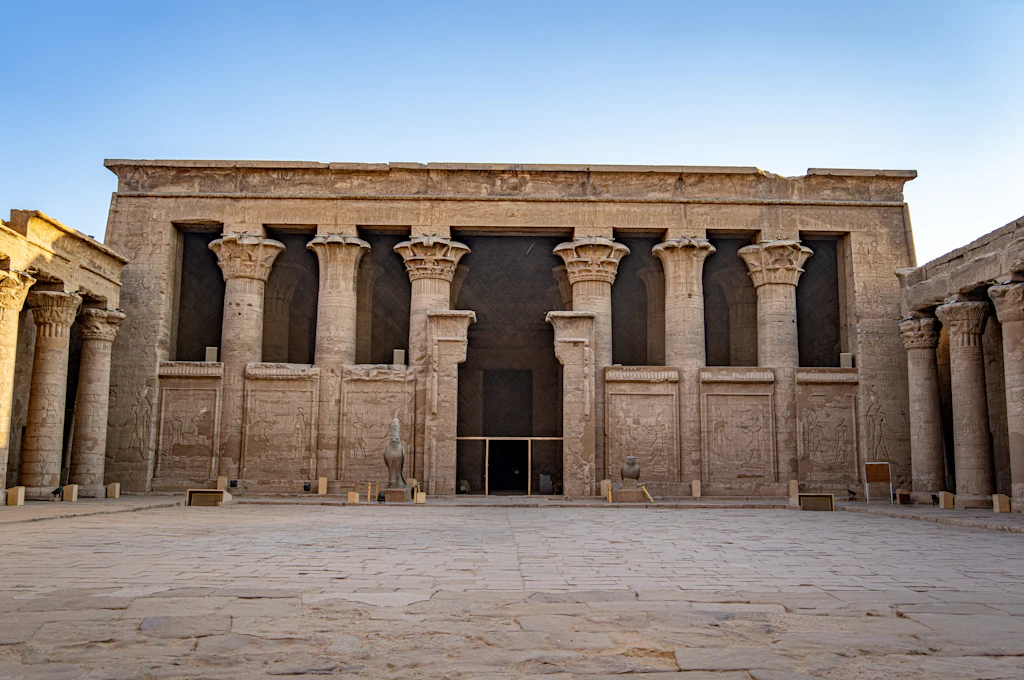
Start the day with an early breakfast on deck. At El Kab, one of Egypt's oldest towns, you walk to the rock-cut tombs of the nobles. Then you visit the Temple of Horus at Edfu, one of the best-preserved temples in Egypt, with its great pylon and open courtyard. The dahabiya sails on between the visits, and lunch and dinner are served on board. In the evening the boat anchors off Ramadi village, and you have dinner on deck under the stars.
Today you visit the sandstone quarries and rock chapels of Gebel el-Silsila, a major source of the stone used for temples such as Karnak. You walk among the cut walls with your Egyptologist and learn how the blocks were quarried and moved. In the afternoon you can swim or walk on quiet Bisaw Island, depending on the conditions. Lunch and dinner are served on board, and the dahabiya spends the night at Maniha.
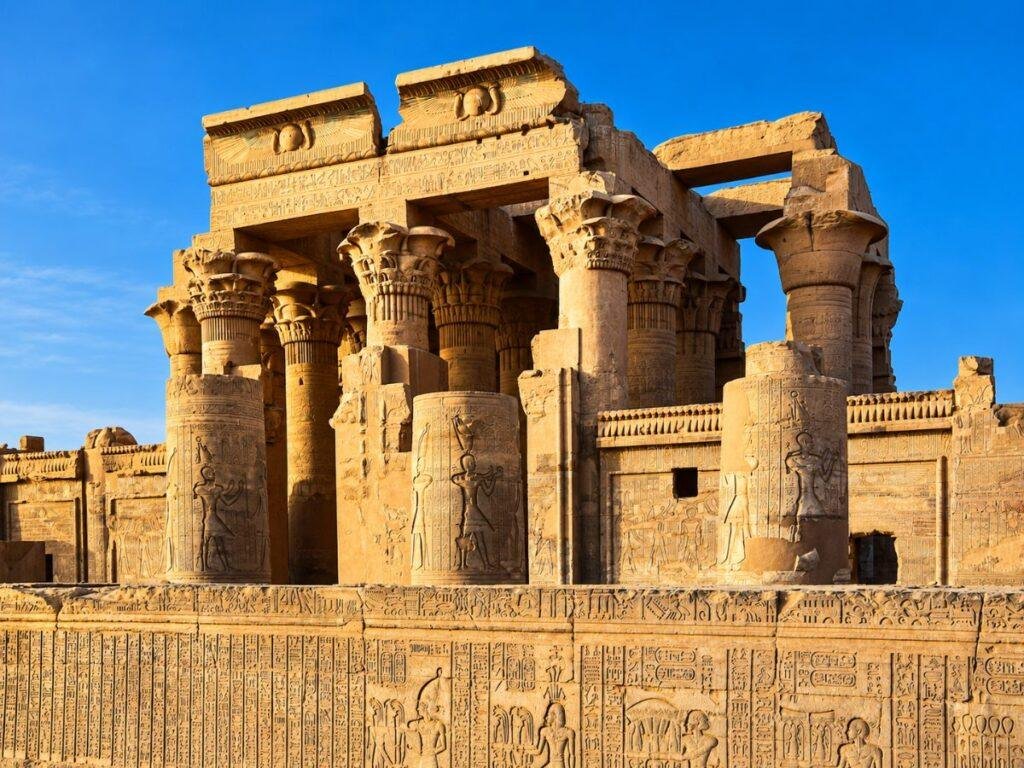
In the morning you visit the double temple of Sobek and Horus at Kom Ombo, built on the riverbank. The temple has two parallel halves, one for each god. The Crocodile Museum next to it displays mummified crocodiles. After the temple you stop at the Daraw market, a local market where people from the area shop. In the afternoon the dahabiya sails on to Aswan, where it spends the night. Lunch and dinner are served on board.
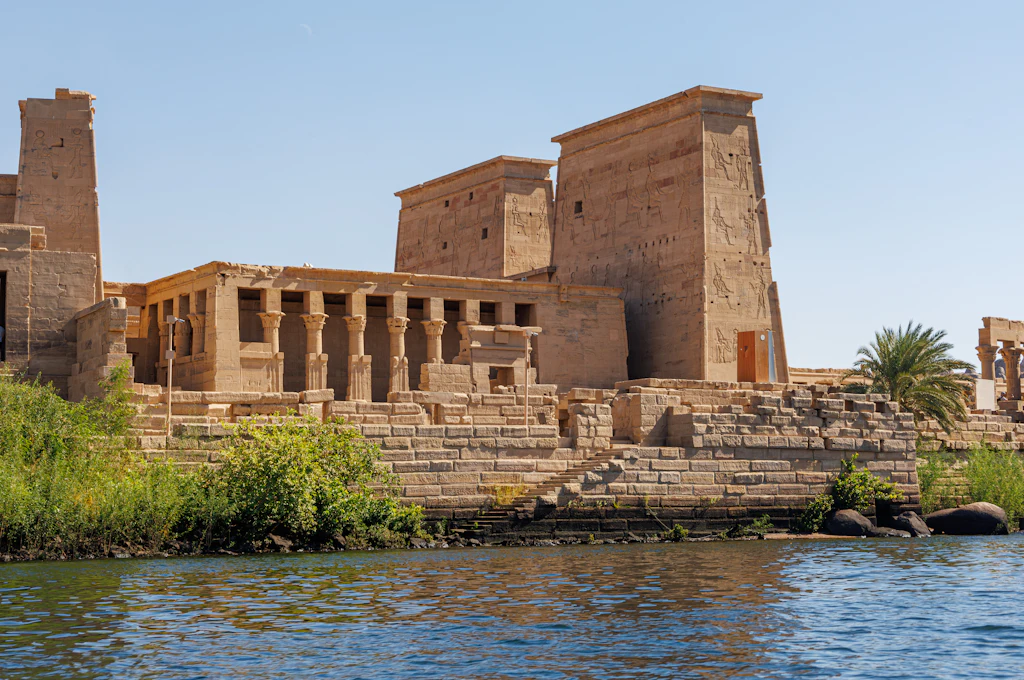
Take a short boat trip to the island temple of Isis at Philae. The temple was moved stone by stone to Agilkia Island when the High Dam raised the water, and your Egyptologist explains how the move was done. After Philae you stop at the Aswan High Dam. Then you return to the Turquoise for a farewell dinner on board, moored at Aswan. Lunch is also served on board, and the crew is there to say goodbye.
After a final breakfast on deck, you say goodbye to the crew and disembark in Aswan. A private air-conditioned vehicle takes you to your Aswan hotel, the train station or the airport. If you want to see Abu Simbel, ask our team about the optional day trip from Aswan. It is not included in the price and is arranged separately, so tell us your plans when you send your inquiry.
Included & Excluded
Included
- 1 hotel night in Luxor with breakfast
- 5 nights aboard the traditional dahabiya Turquoise, full board
- Soft drinks, mineral water, tea and coffee on board
- Private licensed English-speaking Egyptologist guide throughout
- Private air-conditioned transfers
- Entrance tickets to the sites in the program (the standard Valley of the Kings ticket covers three tombs)
Excluded
- Optional Valley of the Kings tomb tickets (Tutankhamun, Seti I, Ramses V/VI)
- International flights and Egypt visa
- Alcoholic drinks
- Optional Abu Simbel excursion
- Gratuities and personal expenses
Frequently Asked Questions
How many people share the dahabiya?
Boats carry 6–10 cabins. Private full-boat charters for families and groups are available on request.
Is the dahabiya Nile cruise suitable for children?
Yes, children can join. The pace is calm and there is open deck space. Tell us the children's ages when you send your inquiry, so we can confirm cabins and prices.
When is the best season?
October to April is the cooler season. Summer departures sail with shaded decks and early-morning visits.
Are drinks included?
Soft drinks, mineral water, tea and coffee are included on board. Alcoholic drinks are not included.
Is the Valley of the Kings ticket included?
The standard ticket (three tombs) is included. Tickets for Tutankhamun, Seti I and Ramses V/VI are optional and paid separately.
Gallery