Short on time but hungry for royal statues? Luxor Museum fits the best of ancient Thebes into about 90 minutes, on a quiet stretch of the Nile Corniche, and it often welcomes visitors in the cooler evening hours too.
The 90-Minute Route Through Luxor Museum
Start with the royal statues, then move to Akhenaten’s wall, then end with the funerary cases. This order keeps the biggest wow moments early, while your energy is high.
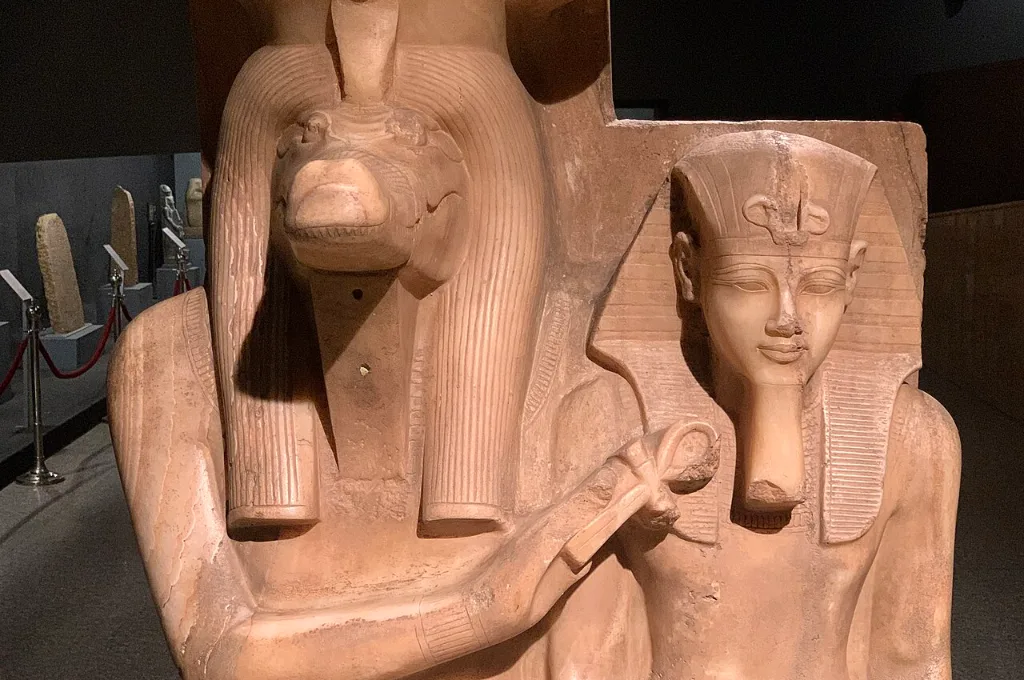
- Amenhotep III and Sobek: a rose-coloured double statue of the pharaoh beside the crocodile god.
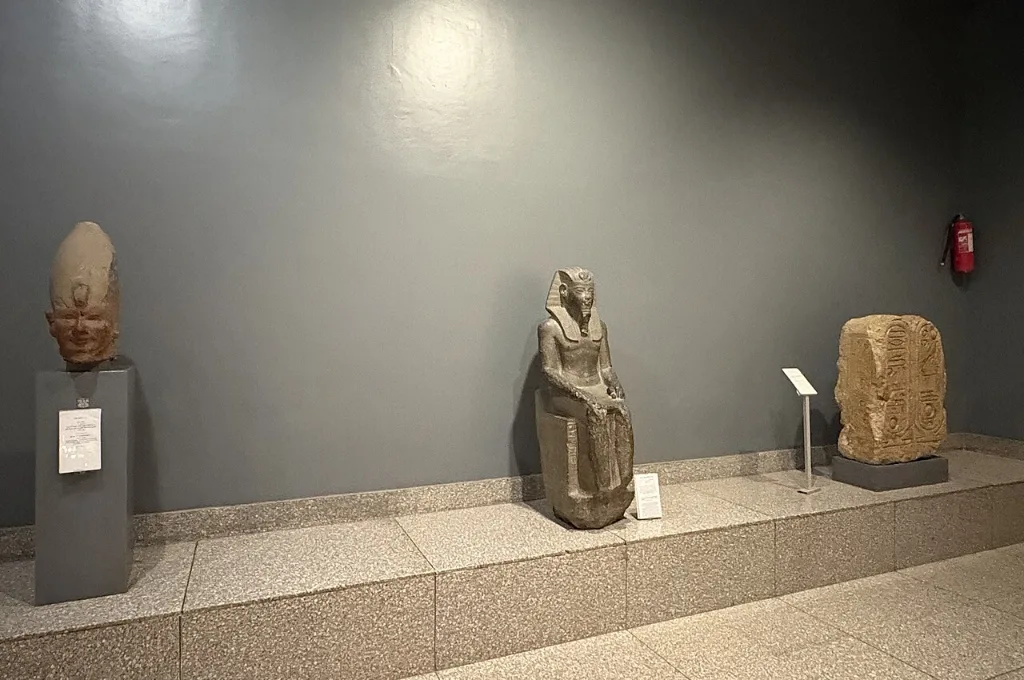
- The New Kingdom statue gallery: spotlit kings, queens and gods, each with room to breathe.
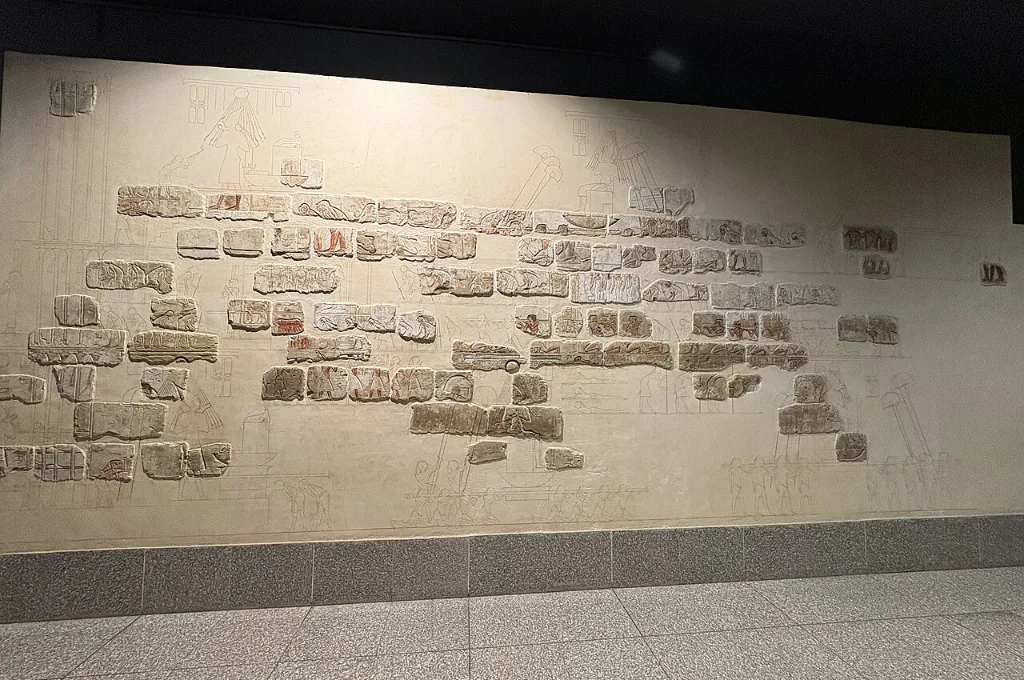
- The Akhenaten wall: small sandstone blocks rebuilt into a long carved scene.
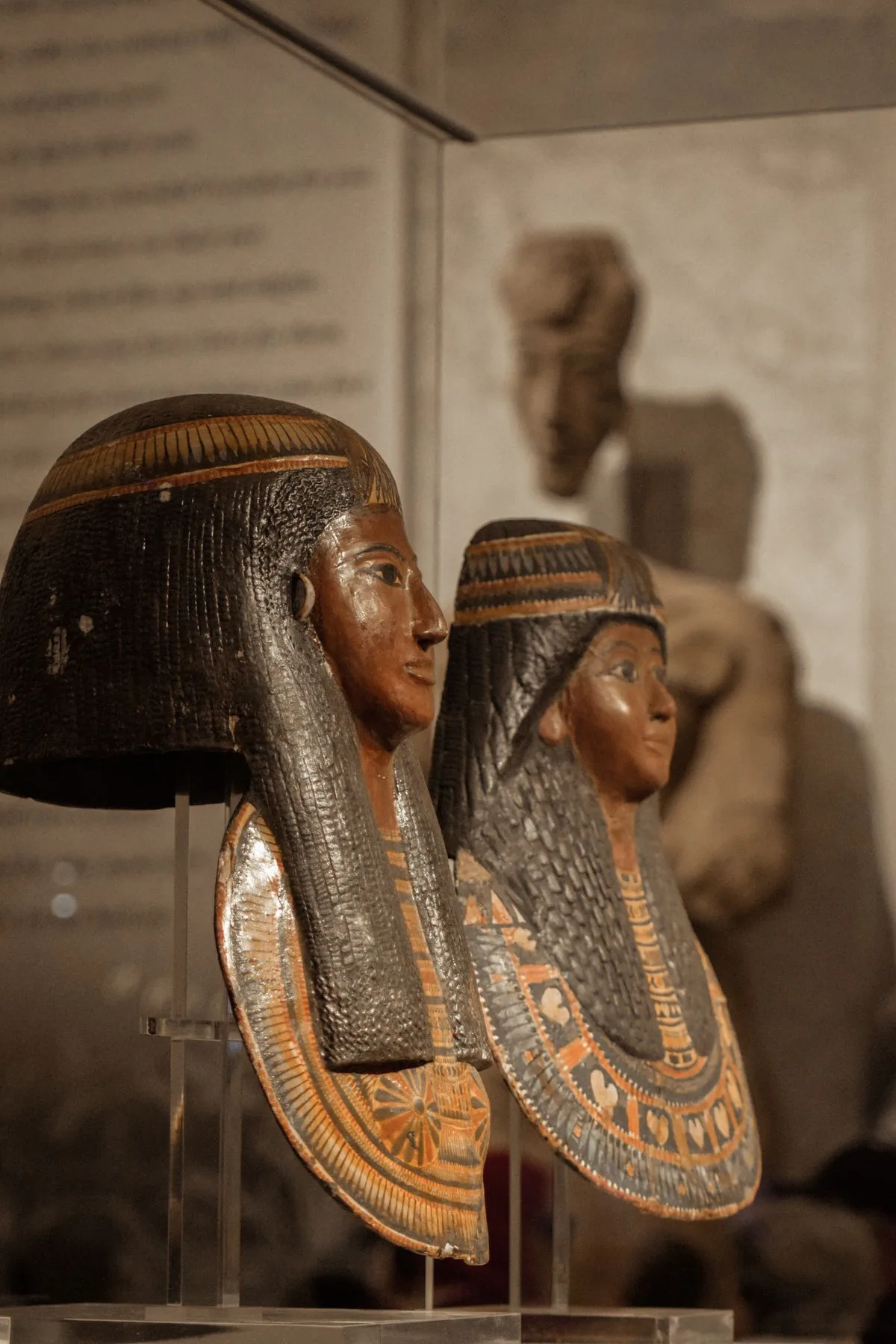
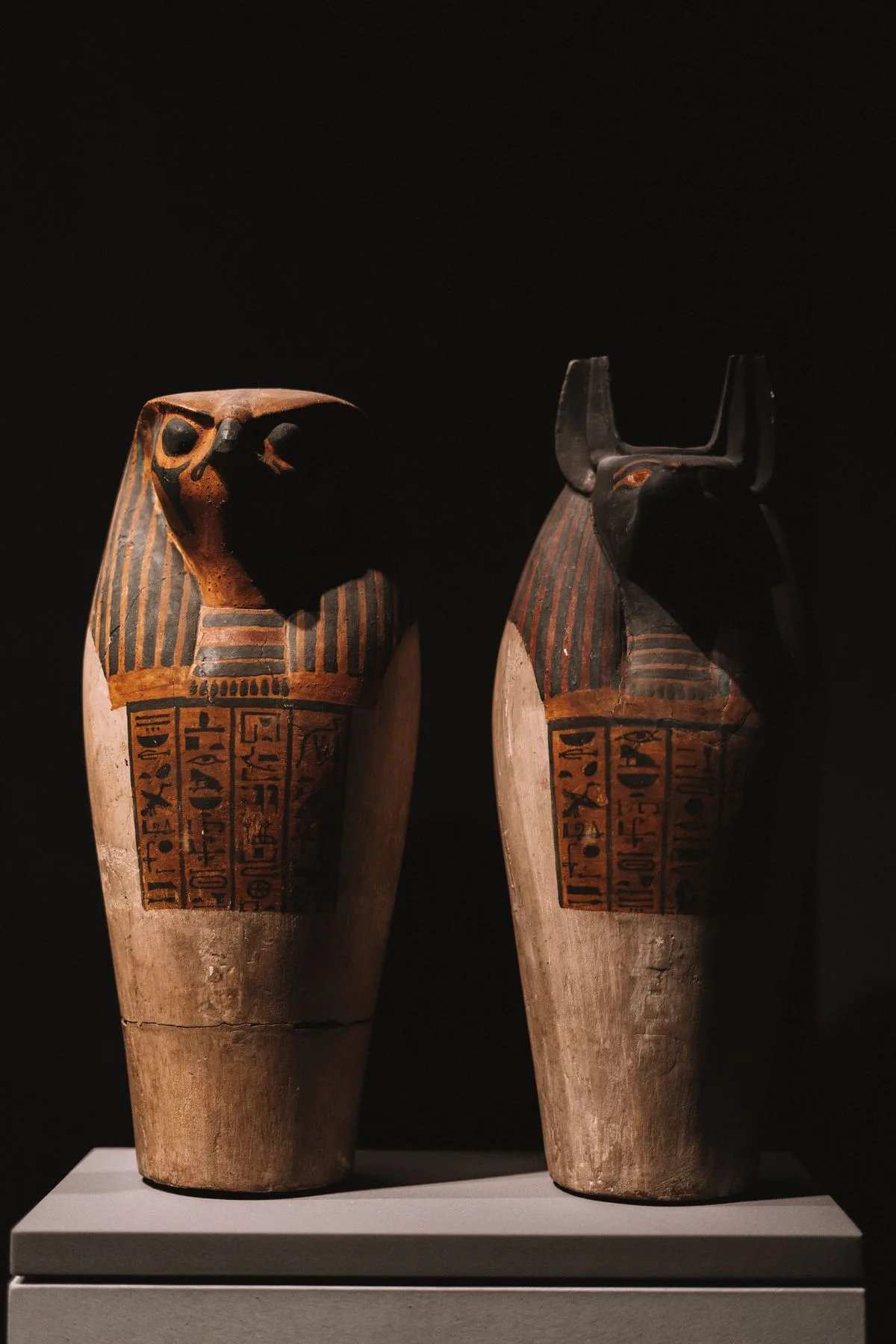
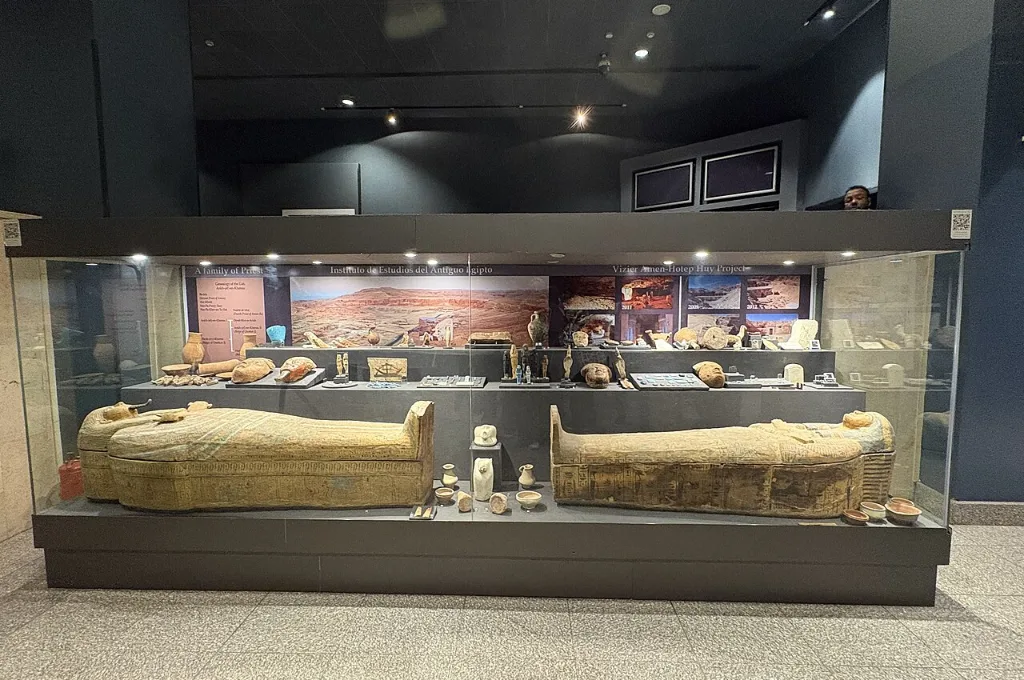
- Coffins and funerary pieces: painted wood and gilded details up close.
- The Sekhmet lioness head: a fierce goddess with a calm, steady stare.
The Wall That Rebuilt a Pharaoh Erased From History
It is a reassembled wall of small carved blocks called talatat, and it once belonged to Akhenaten’s temples at Karnak. After his reign, those temples were dismantled and the blocks were hidden inside later buildings. Archaeologists later pulled them out and pieced the scenes together.
Look for family scenes, offerings to the sun disc, and everyday life. Notice how relaxed the figures look compared with older, stiffer art. For a closer look at the blocks, see these photo notes on the Luxor Museum talatat wall.
Ready to stand where these blocks were found? Walk the temple with us on our Karnak and Luxor Temple tour.
The Courtyard Pit That Hid 26 Royal Statues
In 1989, workers digging in the court of Luxor Temple found a pit packed with statues. Twenty-six pieces came out, many almost unscratched. Priests had buried them long ago, perhaps to protect them.
Several of the finest now stand in Luxor Museum under dramatic light. Spend a few quiet minutes here. The faces are calm, the stone is smooth, and the craftsmanship is outstanding.
Guide’s tip: walk around each statue once. The back pillars and side details are often as beautiful as the front, and most visitors skip them.
Hours, Tickets and Getting There
Use this quick table to plan your visit. Opening times change by season, so always confirm them locally.
| Detail | What to know |
|---|---|
| Location | East Bank, on the Nile Corniche, about 15 minutes’ walk north of Luxor Temple. |
| Time needed | 60 to 90 minutes. |
| Best slot | The hot midday hours or an early-evening session. |
| Opening hours | Often a morning session and an evening session. Confirm on the day. |
| Tickets | Bought separately from Karnak and the West Bank. See our Luxor ticket prices guide. |
| Photos | Usually allowed without flash. |
Where Luxor Museum Fits in Your Day
Treat it as your midday rescue or your sunset warm-up. Visit after the Valley of the Kings, when the heat peaks. Or go in the early evening, then walk to Luxor Temple as the lights come on.
- Pair it with the nearby Mummification Museum for an indoor afternoon.
- Follow it with dinner on the Corniche.
- Use our one day in Luxor plan to slot it between big sites.
Why a Small Museum Beats a Big One Here
Big museums can blur into a long walk past endless cases. Luxor Museum does the opposite. Every object has space, clear lighting and a story, so your memory of each piece stays sharp.
Here is how to get more from your hour:
- Read the labels: they link each statue to a Theban temple you may visit later.
- Arrive with context: visit Karnak first, and the Akhenaten wall will make far more sense.
- Go slowly: choose six pieces to study, rather than sixty to glance at.
- Dress comfortably: the building is air-conditioned, so bring a light layer.

Luxor Museum Questions, Answered
Is Luxor Museum open in the evening?
Often, yes. The museum has usually run a second session after the heat of the day. Hours shift with the season, so check locally before you go.
Is photography allowed inside Luxor Museum?
Generally yes, without flash. Rules can change, so look for signs in each hall and ask a guard if you are unsure.
Which should I choose if I only have time for one museum in Luxor?
Choose Luxor Museum for royal statues and Akhenaten’s wall. Choose the Mummification Museum if you want to learn how ancient Egyptians preserved bodies.
How do I get to Luxor Museum from Karnak?
Take a taxi along the Corniche. It is a short ride, and it is a pleasant walk from Luxor Temple. See our guide to getting around Luxor.
One Small Museum, One Big Impression
Luxor Museum rewards slow looking. Come for Amenhotep III, stay for Akhenaten’s rebuilt wall, and leave with a clearer picture of ancient Thebes. Want your Luxor days planned for you? Explore our Luxor tours and enjoy the stories behind every statue.