Table of Contents: Abu Simbel
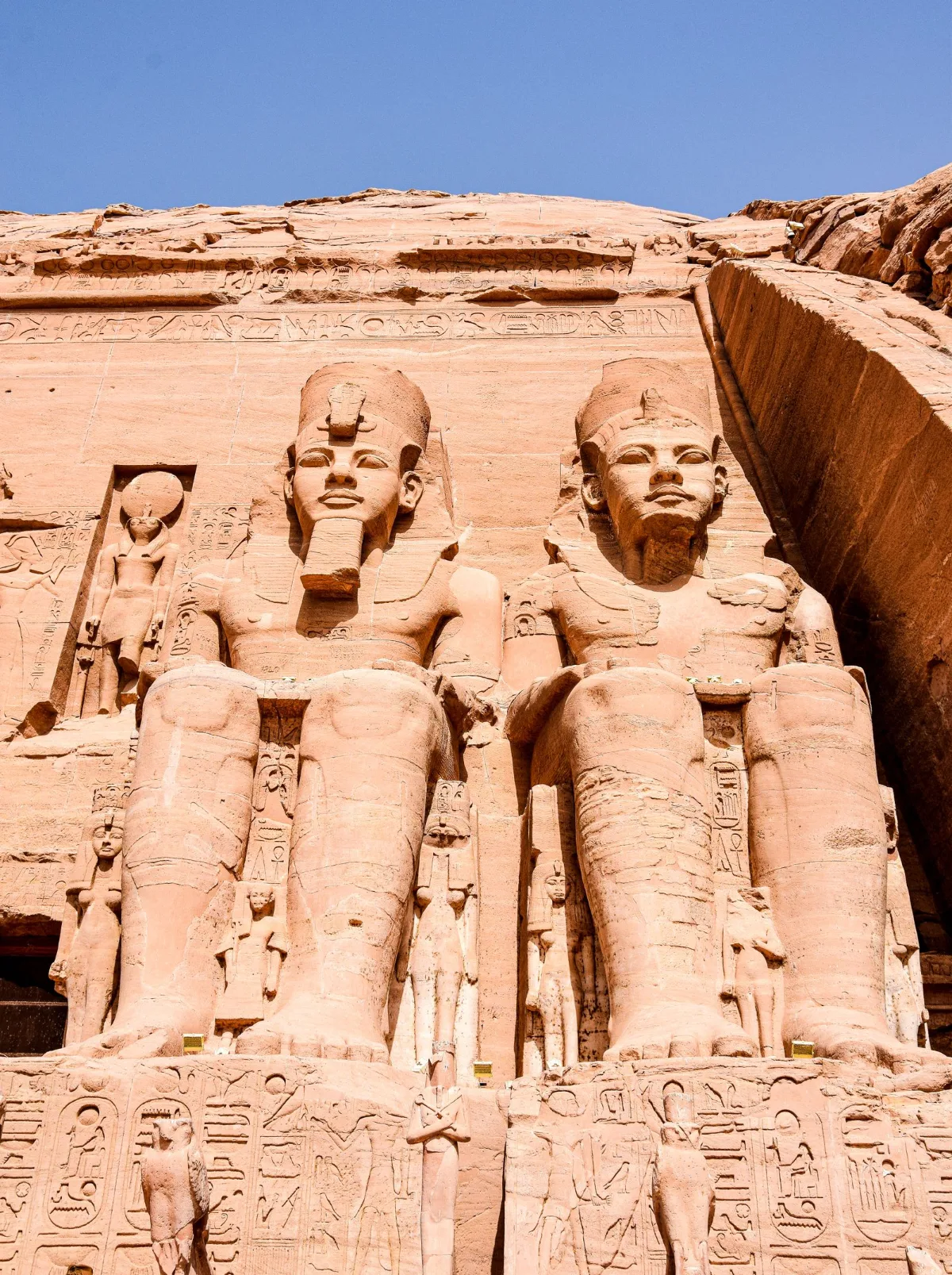
Abu Simbel is Egypt’s great exclamation mark: four colossi of Ramses II, twenty meters tall, carved into a Nubian mountain 3,200 years ago — then sawn apart and lifted up the cliff in the 1960s to escape Lake Nasser. It is remote, it takes commitment, and nobody who makes the trip regrets it.
Quick Answer: Abu Simbel is a pair of rock-cut temples built by Ramses II near Egypt’s southern border, about 280 km southwest of Aswan — the Great Temple fronted by four seated colossi of the king, and beside it the temple of his queen Nefertari. Most visitors come by road from Aswan (~3.5 hours each way) or a short flight; the site takes 1.5–2 hours.
- Twice a year the dawn sun penetrates 60 m to light the sanctuary statues.
- The 1960s UNESCO relocation was the greatest monument rescue in history.
- Go early: dawn convoys arrive with the best light and smallest crowds.
The Great Temple of Ramses II
The facade is the image everyone knows; the interior is the surprise. Eight Osiride pillars of the king line the great hall, walls blaze with the Battle of Kadesh, and the axis runs 60 meters into the mountain to the sanctuary where Ramses sits among the gods. On (traditionally) February 22 and October 22, sunrise reaches the seated figures — all except Ptah, god of darkness, who stays in shadow. Ancient engineering showing off, twice a year, forever.
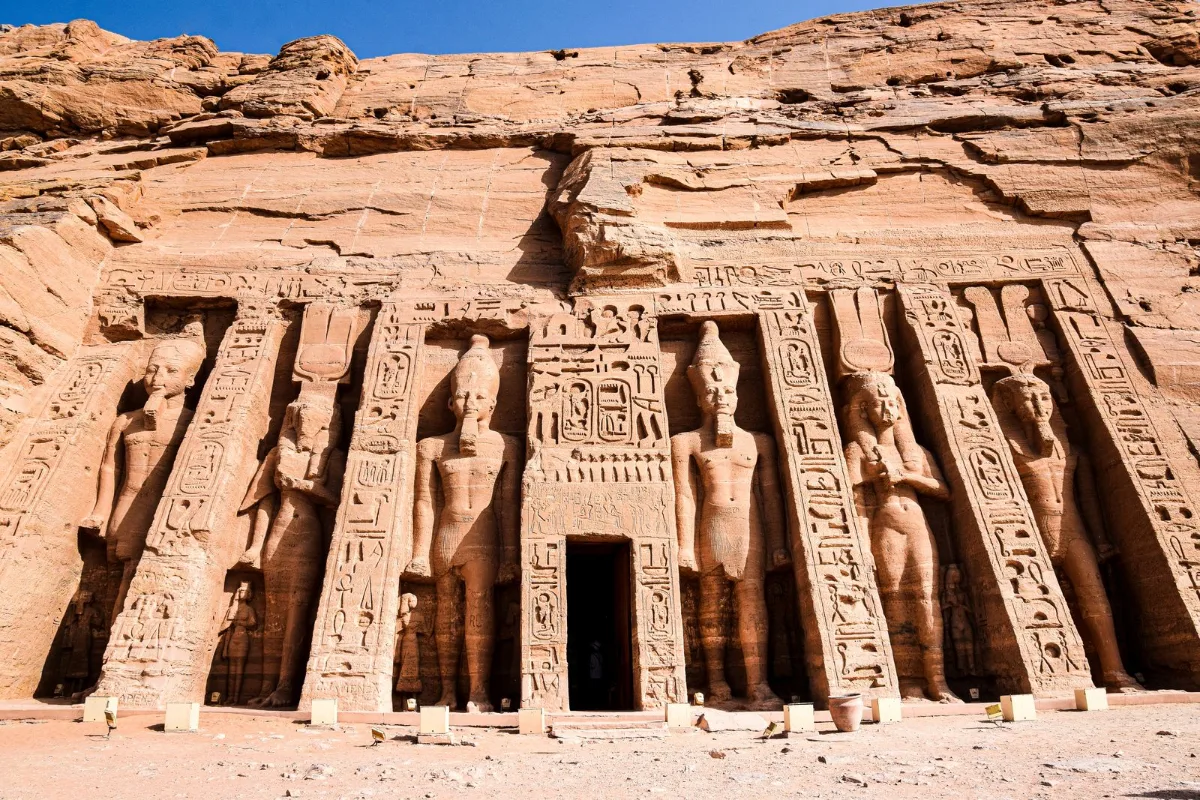
The Temple of Nefertari
Beside the Great Temple stands the smaller temple of Hathor and queen Nefertari — one of the only Egyptian temples where the queen’s colossi stand equal in size to the king’s. “The one for whose sake the very sun does shine,” reads her dedication. After this, see her tomb’s painting in the Valley of the Queens to complete the love story.
The Rescue That Equaled the Building
When the High Dam’s lake began to rise, an international UNESCO campaign cut both temples into over a thousand blocks — up to 30 tons each — and reassembled them 65 meters higher inside artificial mountains, aligned to preserve the solar phenomenon. Look for the fine seam lines: the scars are part of the story now.
Getting There
| Option | How it works |
|---|---|
| Road from Aswan | ~3.5 h each way; dawn departure, back by mid-afternoon — the standard |
| Flight from Aswan | Short hop over Lake Nasser; more cost, less road |
| From Luxor | Via Aswan — see Luxor to Abu Simbel |
| Overnight option | Sleep in Abu Simbel town, have the temples at dawn without the drive-day |
Visiting Notes
The site needs 1.5–2 hours. Bring water, a hat and patience for the facade photo queue. Interior photography rules change — check on arrival [verify current policy]. Combine the return with Philae or a felucca hour in Aswan; our drivers time it daily. It anchors the southern leg of our 7-day Egypt itinerary.
A visit to Abu Simbel is the highlight of any deep-south Egypt itinerary. Nothing prepares you for the scale of Abu Simbel at sunrise. Nubian Monuments (UNESCO World Heritage)
FAQs About Abu Simbel
Where is Abu Simbel?
In far southern Egypt near the Sudanese border, on Lake Nasser — about 280 km from Aswan.
Is Abu Simbel worth the long trip?
Emphatically. It is regularly the moment travelers rank alongside the Pyramids — and the early start becomes part of the tale.
How long do you spend at the temples?
1.5–2 hours covers both temples well.
What is the sun festival?
Around Feb 22 and Oct 22, sunrise reaches the sanctuary statues; the mornings draw crowds and celebration [dates can shift a day — verify locally].
Can you visit from Aswan in one day?
Yes — the dawn road trip is the classic, back in Aswan by mid-afternoon. Browse Aswan tours or ask us on WhatsApp.
Ready for the giants? Tell us your dates — we run the route weekly from both Aswan and Luxor.