Is a hot air balloon Valley of the Kings flight possible? In a sense, yes. You float over the Theban hills that hide the royal tombs, then walk inside them the same morning. Here is how the two experiences fit together.
Can You See the Valley of the Kings From a Hot Air Balloon?
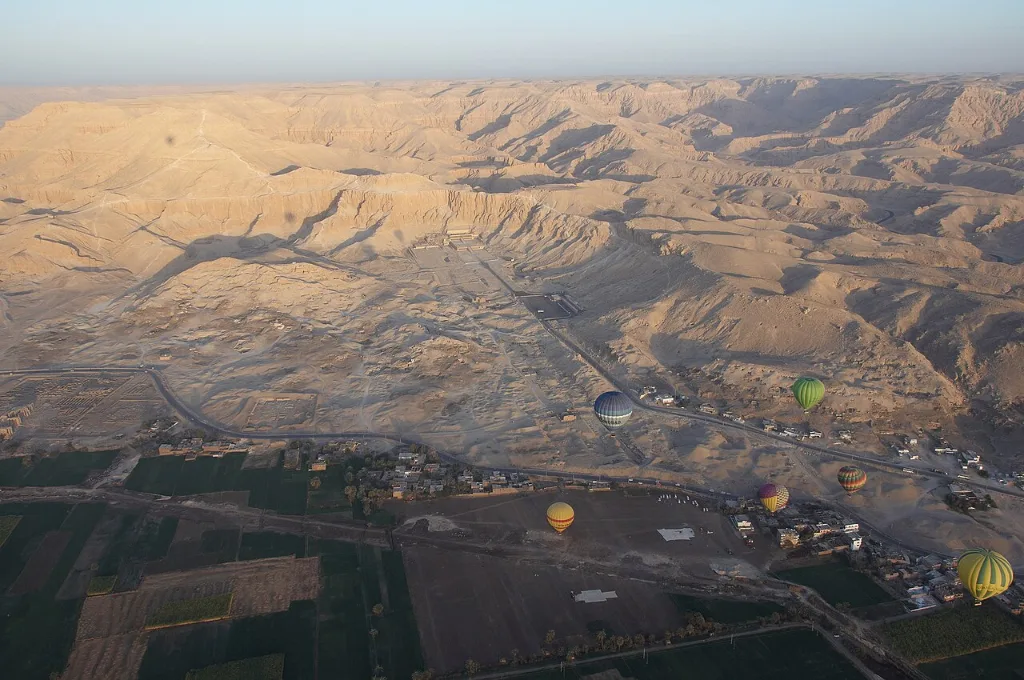
You can see the landscape around it, but not the tombs themselves. The royal burials lie deep underground, cut into the rock, so from the air you see only the pale, empty hills that guard them. The balloon follows the wind, so a pass near the valley is possible but never guaranteed.
Think of the flight as the opening scene. It shows the setting. The tombs themselves belong to your visit on foot.
What Do You See From the Balloon on the West Bank?
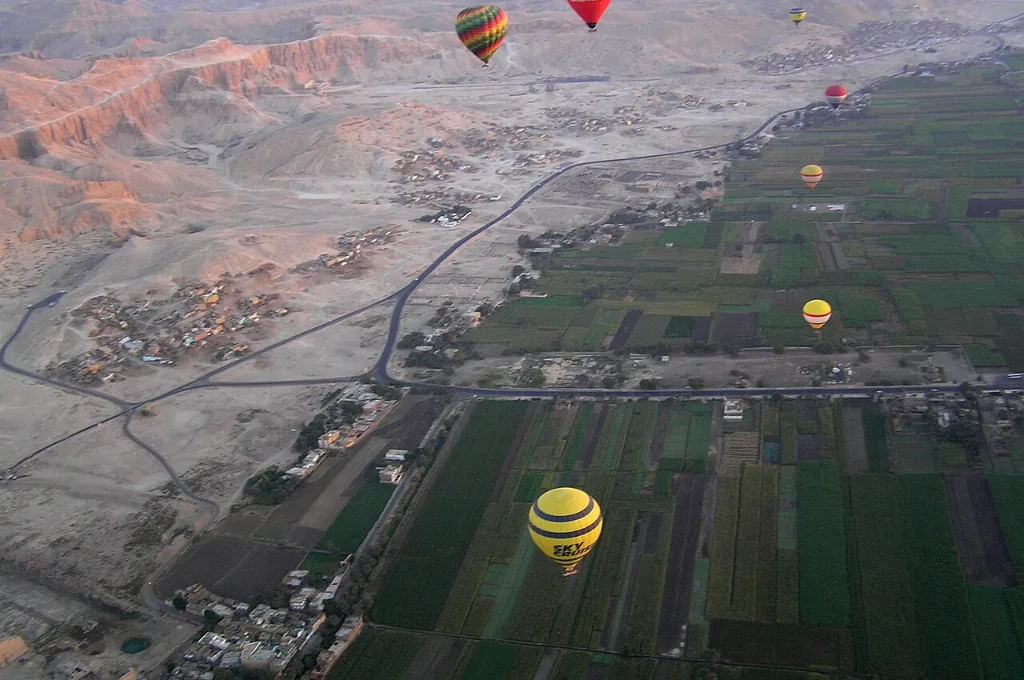
The West Bank is a compact, dramatic place. Within a few minutes of the sky you pass from green farmland to bare limestone. These are the sights most guests mention:
| Place | What it looks like from above |
|---|---|
| The Nile and farmland | A bright green strip with palm groves, canals and small villages |
| Hatshepsut Temple | Pale terraces set against a wall of cliffs |
| Colossi of Memnon | Two seated statues standing alone in the fields |
| The Theban hills | A rugged desert ridge with dry valleys |
| The royal tombs | Hidden underground, so not visible |
For close-ups of the first two, read our guides to Hatshepsut Temple and the Colossi of Memnon.
Why Does the Valley Sit Under a Pyramid-Shaped Peak?
Because the ancient Egyptians chose it on purpose. The hill above the valley, called al-Qurn, rises in a natural pyramid shape. Pharaohs of the New Kingdom, who ruled roughly from 1550 to 1070 BC, were buried below it in secret tombs instead of in pyramids. Once you spot that peak from the sky, the whole layout makes sense.
The UNESCO World Heritage listing for Ancient Thebes recognises the valley and its surrounding temples as one of Egypt’s great archaeological landscapes.
How Do You Combine the Balloon With a Valley of the Kings Visit?
Fly first, visit second. Cooler hours and fewer tour buses make the tombs far more enjoyable. This is how a smooth day usually runs:
| Time of day | Activity |
|---|---|
| Before dawn | Hotel pickup and the Nile crossing |
| Sunrise | The balloon flight, about 45 minutes |
| Mid-morning | Breakfast, then a drive to the Valley of the Kings |
| Late morning | Tombs, temples and a stop at Hatshepsut Temple |
| Afternoon | Rest at your hotel or continue to the East Bank |
Our Valley of the Kings tour and the East and West Banks day tour both slot in neatly after a dawn flight. You can also read our full Valley of the Kings guide before you go.
What Should You Know Before Entering the Tombs?
A few practical details save time and money:
- The standard entry ticket covers a limited number of tombs. A few of the most famous ones need an extra ticket.
- Photography rules inside the tombs change, so ask your guide before you lift a camera.
- The tombs can be hot and humid. Bring water and wear light clothes.
- Inside, the walls are painted. Do not touch them.
For current fees, see our Luxor ticket prices guide.
Local tip: choose tombs that match your interests. A guide can tell you which ones have the best paintings and the shortest queues.
Is It Better to Do the Balloon and the Valley on the Same Day?
For most travelers, yes. The two experiences complement each other. The balloon shows the scale of the West Bank, and the tombs show its secrets. Doing both in one morning also keeps your trip efficient, which matters if you have only one day in town. Planning a short stay? Our one day in Luxor plan shows how to fit it all in.

When Is the Best Season for This Combination?
Winter is the easiest time. From November to February, the air is cool for the flight and comfortable inside the tombs. Summer works too, but you must start earlier and finish before the heat peaks. Our best time to visit Luxor guide explains each season month by month.
Who Will Enjoy This Pairing the Most?
It suits several types of travelers:
- First-time visitors who want the big picture before the details
- Photographers who enjoy wide landscapes and fine painted detail
- Families with older children who can handle an early start
- Couples who want a memorable morning in a short stay
If you travel with small children or have limited mobility, tell us early so we can adapt the day.
Plan Your Balloon Morning With Us
We combine the flight, the transfers and the tombs into one calm schedule. Start with our Luxor hot air balloon tour and tell us what you want to see after landing.
Questions About the Balloon and the Valley
Does the balloon fly directly over the Valley of the Kings?
Not always. The pilot follows the wind, so some mornings pass near the valley and others drift toward the Nile. Every route shows the West Bank in its best light.
Should I fly in a balloon before visiting the royal tombs?
Yes. The balloon launches at dawn, and the tombs open later in the morning. You can finish the flight, have breakfast and arrive at the valley before the heat.
Do I need a guide after my hot air balloon Valley of the Kings morning?
A guide is not required, but it helps. The tombs have little signage, and a guide explains the paintings and the stories behind each king.
Why do the tombs feel quieter after an early balloon flight?
Because you arrive early. The large tour groups come later in the day, so you often enjoy shorter queues and cooler air inside the tombs.
One Morning, Sky and Stone
A hot air balloon Valley of the Kings morning pairs two sides of Luxor: the quiet view from above and the painted tombs below. You float, you land, and you walk into history before lunch. Ready to plan it? Book your balloon flight and we will build the rest around it.