
Why did the mightiest pharaohs of Egypt abandon the pyramid — the ultimate symbol of power — and instead hide their tombs inside a silent desert valley? The answer is written into every corridor of the Valley of the Kings, where sixty-three royal tombs were cut deep into the rock to outwit the robbers who had emptied the pyramids for centuries.
Quick Answer: The Valley of the Kings sits on Luxor’s West Bank, the burial ground of New Kingdom pharaohs including Tutankhamun, Ramesses II and Seti I. A standard ticket covers three tombs; a few (like Tutankhamun and Seti I) need separate tickets. Allow 2–3 hours, go early to beat the heat, and take a guide — the painted texts mean nothing without one.
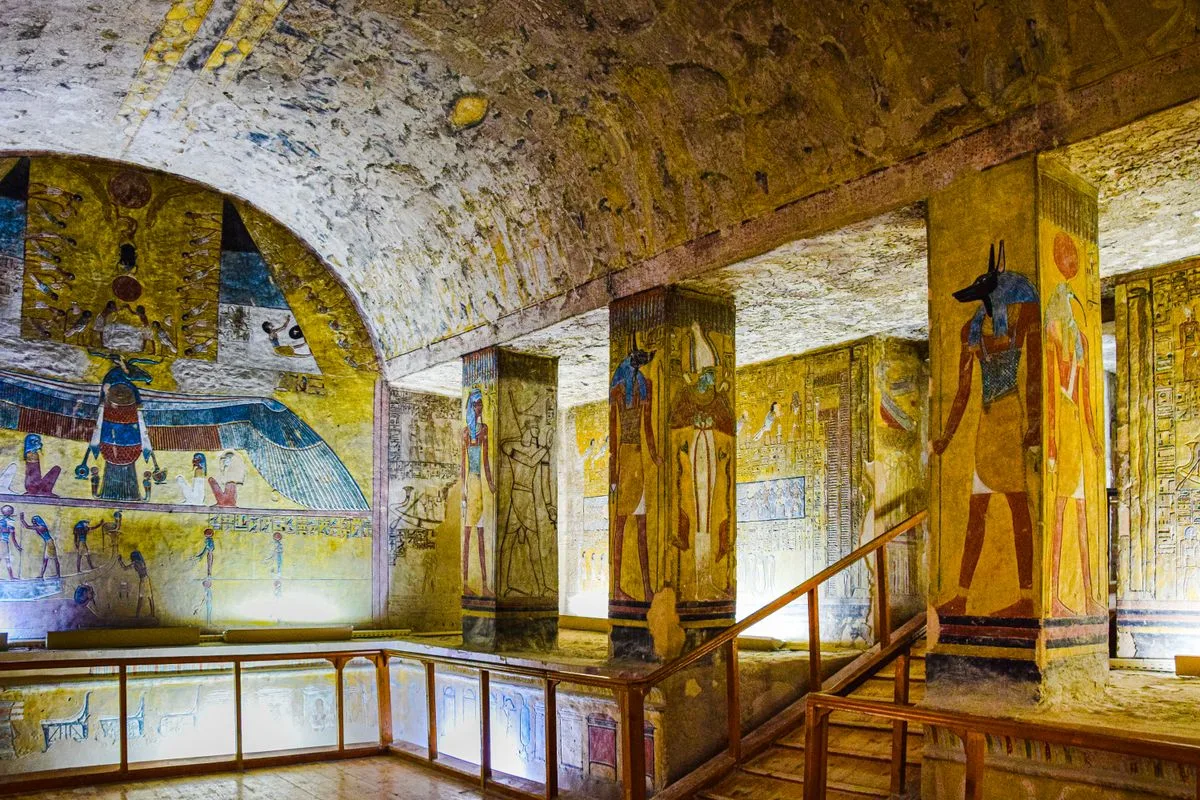
Plan Your Visit: The Valley at a Glance
Everything you need before crossing to the West Bank — tickets, timing, and the tomb system:
| Detail | What to know |
|---|---|
| Location | Luxor West Bank, behind the Theban hills (~30 min from the East Bank) |
| Ticket system | Standard ticket = any 3 open tombs; Tutankhamun, Seti I & Ramesses V/VI need separate tickets |
| Opening hours | 6:00 AM – 5:00 PM (earlier is cooler and quieter) |
| Entry fee | Standard from about EGP 600; extra tombs priced separately (check locally) |
| Photography | A separate photo ticket is required to shoot inside the tombs |
| Time needed | 2–3 hours for three or four tombs at a comfortable pace |
| Guide | Guides brief you outside; explanation inside the tombs is limited by rules |
Which Tombs Should You Actually Choose?
Tombs rotate open and closed to protect the paint, so the exact list changes — but this is how to pick well on the day:
- Ramesses V/VI (KV9) — often the most spectacular open tomb, its ceiling covered in the astronomical Book of the Night.
- Seti I (KV17) — the longest and finest tomb in the valley; worth the separate ticket when open.
- Tutankhamun (KV62) — small and plain, but the boy king’s mummy still lies inside — history, not decoration.
- Ramesses III (KV11) — vivid, well-preserved scenes and usually on the standard ticket.
- Merenptah or Ramesses IX — reliable, richly painted choices that reward the walk down.
Not sure which tombs are open today? Our private Valley of the Kings tour checks the daily rotation and picks the best three for you.
The Village That Built the Tombs — and Staged History’s First Strike
The tombs were not dug by slaves. They were carved by a skilled community of artists and workmen who lived just over the ridge at Deir el-Medina, passing the craft from father to son for generations. And in 1152 BC, when their grain rations arrived late under Ramesses III, these workers did something no one had ever recorded before: they downed tools, marched to the mortuary temples, and refused to work until they were paid. It is the first documented labour strike in human history — staged by the very men whose brushes decorated the walls you walk past today.
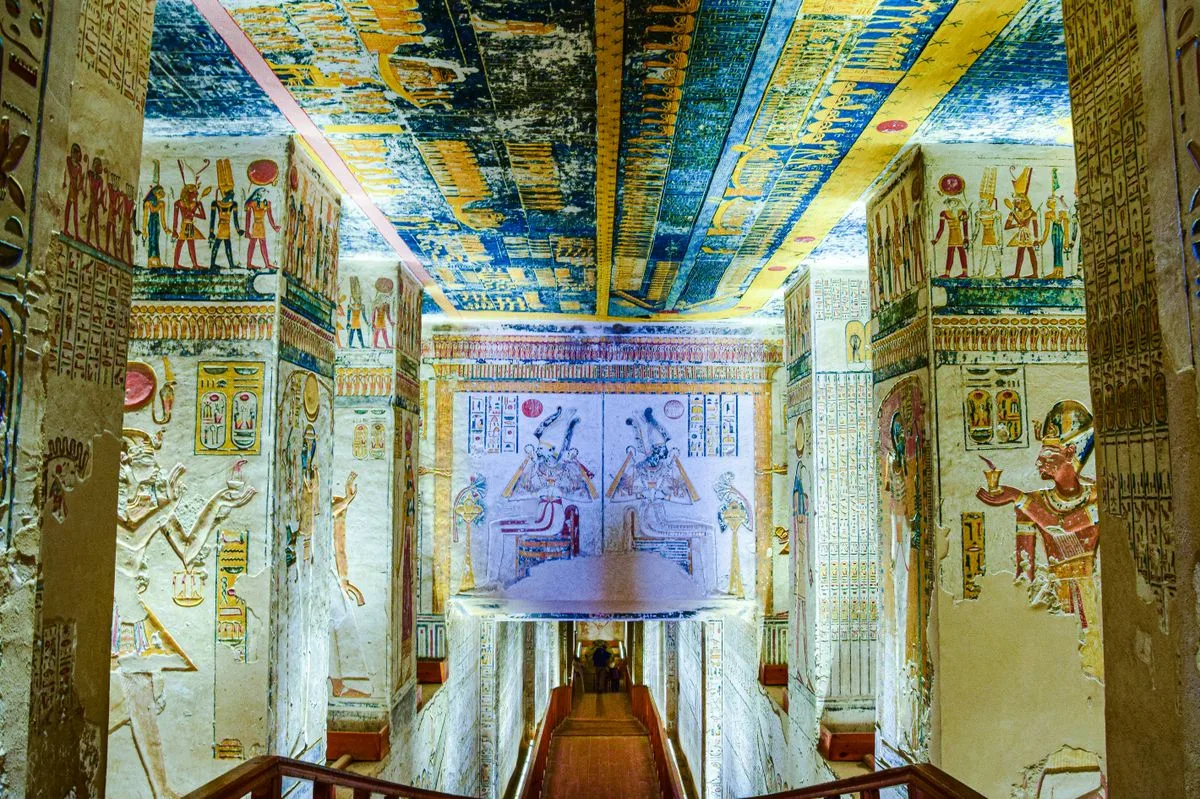
Ahmed Abdel Hamid, our founder and licensed Luxor guide, points to the detail visitors always miss: “Everyone stares at the gods and the pharaohs on the walls. But look closely at the corners and unfinished sections — you can still see the ancient artists’ grid lines in red, and sometimes a supervisor’s correction in black over a junior’s work. These tombs were a workplace. When I show my guests a 3,200-year-old ‘edit’ on the wall, they suddenly see the human hands behind the magic, not just kings and gods.”
Why Hide the Tombs Here at All?
Look up as you enter and you will see it: al-Qurn, the natural pyramid-shaped peak that crowns the valley. The pharaohs chose this hidden spot deliberately — a single guarded entrance, a sacred peak already shaped like a pyramid, and deep rock-cut corridors meant to defeat the tomb robbers who had looted the pyramids for a thousand years. It almost worked. Nearly every tomb was still robbed in antiquity — except one, buried by chance under the rubble of a later tomb: Tutankhamun’s.
Making a full West Bank day? Most travelers pair the valley with Hatshepsut’s temple and finish across the river at Karnak Temple — or float over the whole necropolis on a sunrise balloon flight. See all our Luxor day tours.
FAQs About the Valley of the Kings
Which tombs in the Valley of the Kings are open on any given day?
Tombs rotate to protect the fragile paint, so the open list changes weekly; a standard ticket lets you pick any three currently open, which is why a guide who tracks the daily rotation is so useful.
Is it true the tomb builders went on strike?
Yes — in 1152 BC the workmen of Deir el-Medina stopped work over late grain rations, the earliest recorded labour strike anywhere in the world. The definitive tomb-by-tomb archive is the Theban Mapping Project.
Why did pharaohs stop building pyramids and dig here instead?
Pyramids advertised exactly where the treasure lay and were all robbed; a hidden valley with one guarded entrance, crowned by the pyramid-shaped peak of al-Qurn, was meant to keep the royal dead — and their gold — safe.
Do you need a separate ticket to take photos inside the tombs?
Yes, a dedicated photography ticket is required to shoot inside; without it, phones and cameras must stay away, so buy it at the entrance if you plan to photograph the walls.
Why the Valley Still Guards Its Secrets
Hidden tombs, striking workmen, and a boy king who outlived them all by staying forgotten — the Valley of the Kings is Egypt’s greatest detective story, best read with someone who knows which door to open. Message us on WhatsApp to plan your West Bank morning.
