 Skip to main content

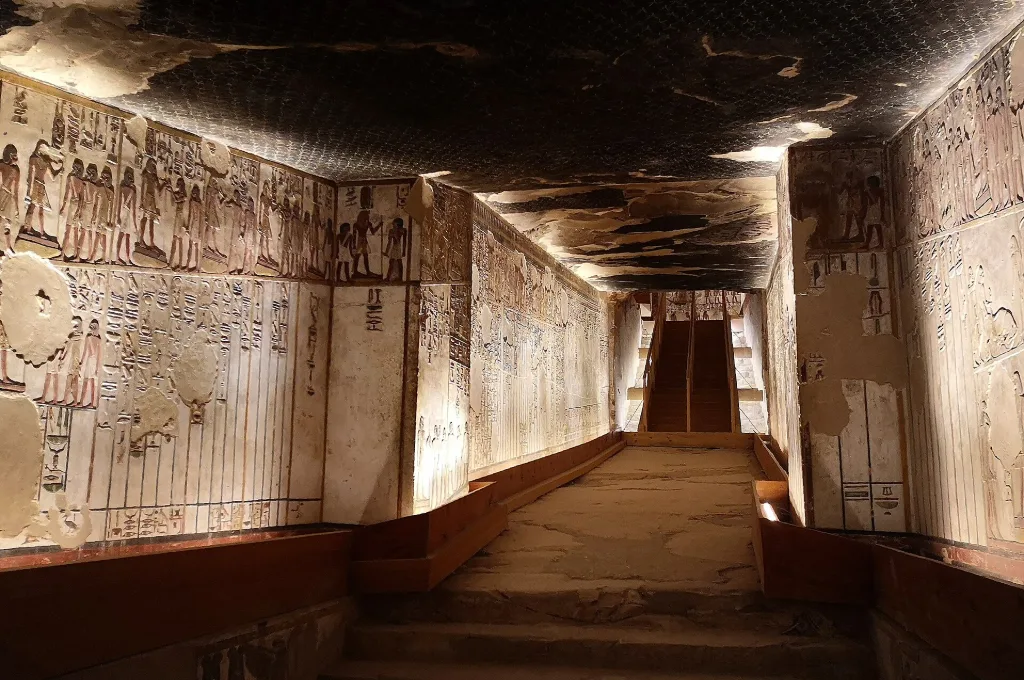
Is the Seti I tomb worth the premium price? For many visitors it is the finest chamber in the Valley of the Kings, and one of the priciest. Here is what the money buys and who should skip it.
Why Do Egyptologists Rate the Seti I Tomb So Highly?
Because nearly every wall is decorated, and the craft is superb. It was the first tomb in the Valley of the Kings decorated from entrance to burial chamber. Fine raised relief and bright paint cover the walls.
Seti I ruled in the 19th Dynasty and was the father of Ramesses II. His tomb, catalogued as KV17, set a standard that later kings followed.
Why Do the Walls Look Almost Three-Dimensional?
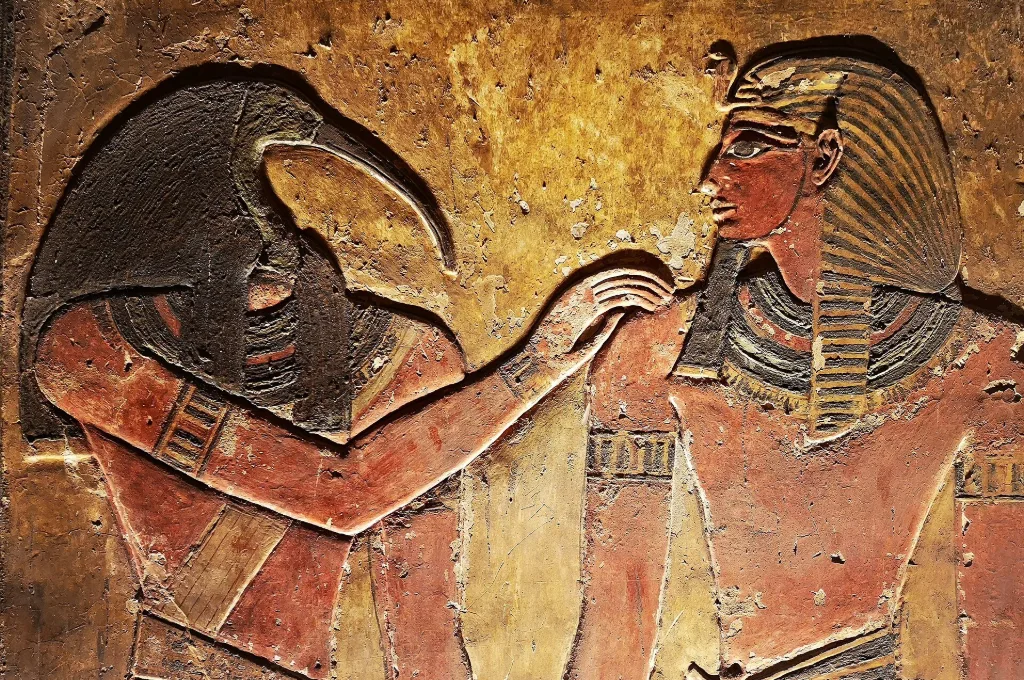
Many scenes were carved in low relief before they were painted. The raised lines catch the light. Figures seem to step off the wall as you pass.
What Will You See Walking Down the Tomb?
A long, sloping descent through staircases, corridors and pillared halls. In all, about seventeen chambers and side rooms branch off the route.
The Corridors and Staircases
Funerary texts line the way down. They include the Litany of Ra, the Amduat and the Book of the Divine Cow. Together they guide the king through the night journey of the sun.
The Pillared Hall
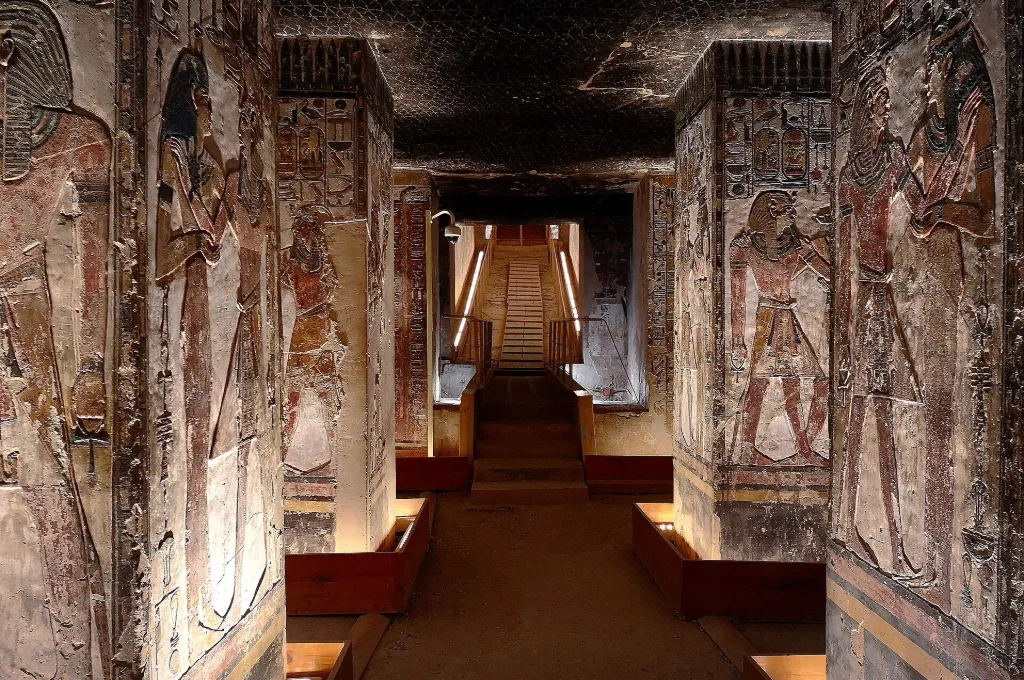
Painted pillars show the king greeting gods such as Osiris and Hathor. The colors survive in sharp detail, even where the plaster has flaked.
The Astronomical Ceiling
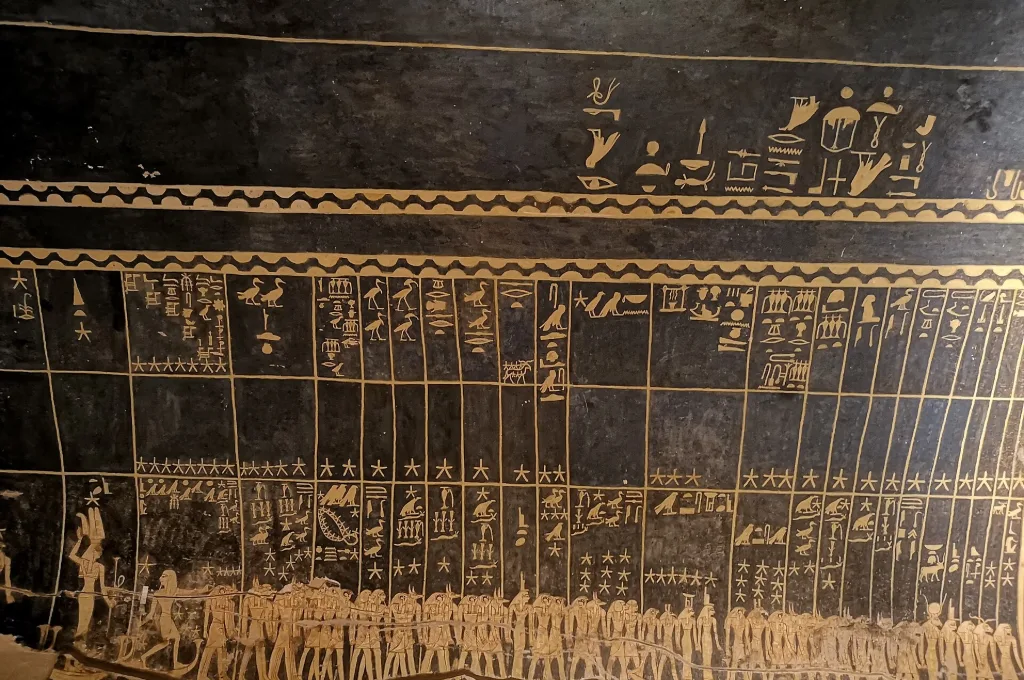
The vaulted burial chamber ceiling maps the night sky. Gold figures and star charts glow against a dark ground. Look up slowly, because this is the tomb’s showpiece.
The Tunnel Below the Burial Chamber
Beneath the burial chamber, a long tunnel slopes downward and stops abruptly. Explorers hoped it led to a hidden chamber. Teams have returned to it more than once, most recently between 2007 and 2010.
Is the Premium Ticket Worth It?
Yes, if you value painted detail over a famous name. Seti I, like Tutankhamun’s tomb, is an extra ticket on top of standard Valley of the Kings entry. The Ministry of Tourism and Antiquities lists EGP 2,000 for foreign visitors, so confirm the current price at the gate.
| If you… | Then… |
|---|---|
| Love painted detail and long descents | Choose the Seti I tomb |
| Want the boy king and his famous history | Choose Tutankhamun’s tomb instead |
| Want colorful tombs on a smaller budget | Visit the standard tombs, then the Valley of the Queens |
| Are short on time | Stay with the standard ticket and see three tombs |
Planning the whole budget? Our guide to Luxor ticket prices shows how the extras add up.
Want an Egyptologist to decide at the gate? Our Valley of the Kings tour compares the open tombs with you on the day.
Where Did the Famous Alabaster Sarcophagus Go?
To London. Giovanni Belzoni found the tomb on 16 October 1817 and lifted out a translucent alabaster sarcophagus. The British Museum declined his price of £2,000. Sir John Soane bought it instead.
Today it rests in the basement of Soane’s museum, covered in the Book of the Gates. The Sir John Soane’s Museum page tells the story. In Luxor, you walk through the empty chamber it once filled.
How Should You Plan Your Visit?
Go early. The ticket office opens at 6 am, and the tomb stays open until about 5 pm. Allow 30 to 45 minutes inside, because the stairs and slopes ask for a slow pace.
Access has been restricted at times for conservation, so check that the tomb is open on the day. Fit it into a two-day Luxor plan on the West Bank morning.
Pair the valley with Hatshepsut’s terraced temple just over the ridge. Then retreat to the East Bank for a long lunch and a rest. The sun is harshest between noon and 3 pm.
Tip: Wear shoes with grip. The steps and sloping floors can be slippery.
Seti I Tomb: Planning Questions
Who was the pharaoh buried in the Seti I tomb?
Seti I was the second king of the 19th Dynasty and the father of Ramesses II. He ruled around 1290 to 1279 BC.
Why is it called Belzoni’s tomb?
Because Giovanni Belzoni found it in October 1817. The name still appears in some older guidebooks.
Is it suitable for visitors with limited mobility?
Not ideal. The descent has stairs and sloping corridors. Confident walkers manage well, but ask your guide before you buy the ticket.
Does the standard Valley of the Kings ticket include it?
No. It needs its own ticket. The standard ticket covers three other open tombs.
Final Verdict on the Seti I Tomb
Choose it for color, craft and that starry ceiling. Skip it if the budget is tight or stairs are a worry. Either way, the Valley of the Kings rewards a slow morning. Ready to see it with a guide? Ask us about a private West Bank day.


