What if one pharaoh single-handedly erased thousands of years of Egyptian religion — and was then erased from history himself?
That’s the story of King Akhenaten — a ruler so radical, so ahead of his time, that his own successors tried to wipe his name from existence. Yet here we are, over 3,300 years later, still talking about him. And if you’re planning a journey through ancient Egypt, understanding the facts about King Akhenaten transforms every ruin you’ll visit into something far more extraordinary.
Who Was King Akhenaten?
King Akhenaten, originally named Amenhotep IV, was a pharaoh of Egypt’s 18th Dynasty who ruled from approximately 1353 to 1336 BCE — a period of just 17 years that changed the ancient world forever. His name, Akhenaten, translates to “Effective for the Aten” or “Living Spirit of Aten” — a name he gave himself in the fifth year of his reign when he abandoned both his birth name and the gods his ancestors had worshipped for millennia.
He was born the second son of the powerful Amenhotep III and his chief queen, Tiye. His older brother, Crown Prince Thutmose, was the intended heir — but when Thutmose died unexpectedly, Akhenaten found himself on a path to the most powerful throne in the ancient world.
12 Surprising Facts About King Akhenaten
1. He Invented the World’s First Monotheistic State Religion
Long before the Abrahamic faiths codified the concept, Akhenaten declared that only one god — Aten, the sun disk — was worthy of worship. He closed temples across Egypt, suppressed the powerful priesthood of Amun, and erased the names of other gods from monuments nationwide. Scholars debate whether this constitutes true monotheism or a form of monolatry, but the theological revolution he initiated is without precedent in recorded history.
This wasn’t a spiritual whim — it was a calculated political move. The priests of Amun had grown so wealthy they rivaled the power of the pharaoh himself. By abolishing their gods, Akhenaten reclaimed supreme authority.
2. He Built an Entire City From Scratch in Under 5 Years
In approximately 1346 BCE, Akhenaten chose a virgin site in Middle Egypt — a crescent of desert cliffs facing east toward the rising sun — and declared it the new capital of the empire. He named it Akhetaten (“Horizon of the Aten”), today known as Tell el-Amarna.
The city housed palaces, temples, administrative buildings, and a population of roughly 20,000 people. It was built using a revolutionary new small brick format called talatat blocks — lighter, faster to lay, and requiring less skilled labor. The entire capital rose from sand in just a few years. After Akhenaten’s death, it was abandoned completely and the desert reclaimed it — preserving it for modern archaeologists.
3. His Appearance Was Deliberately Unconventional — and Possibly Medical
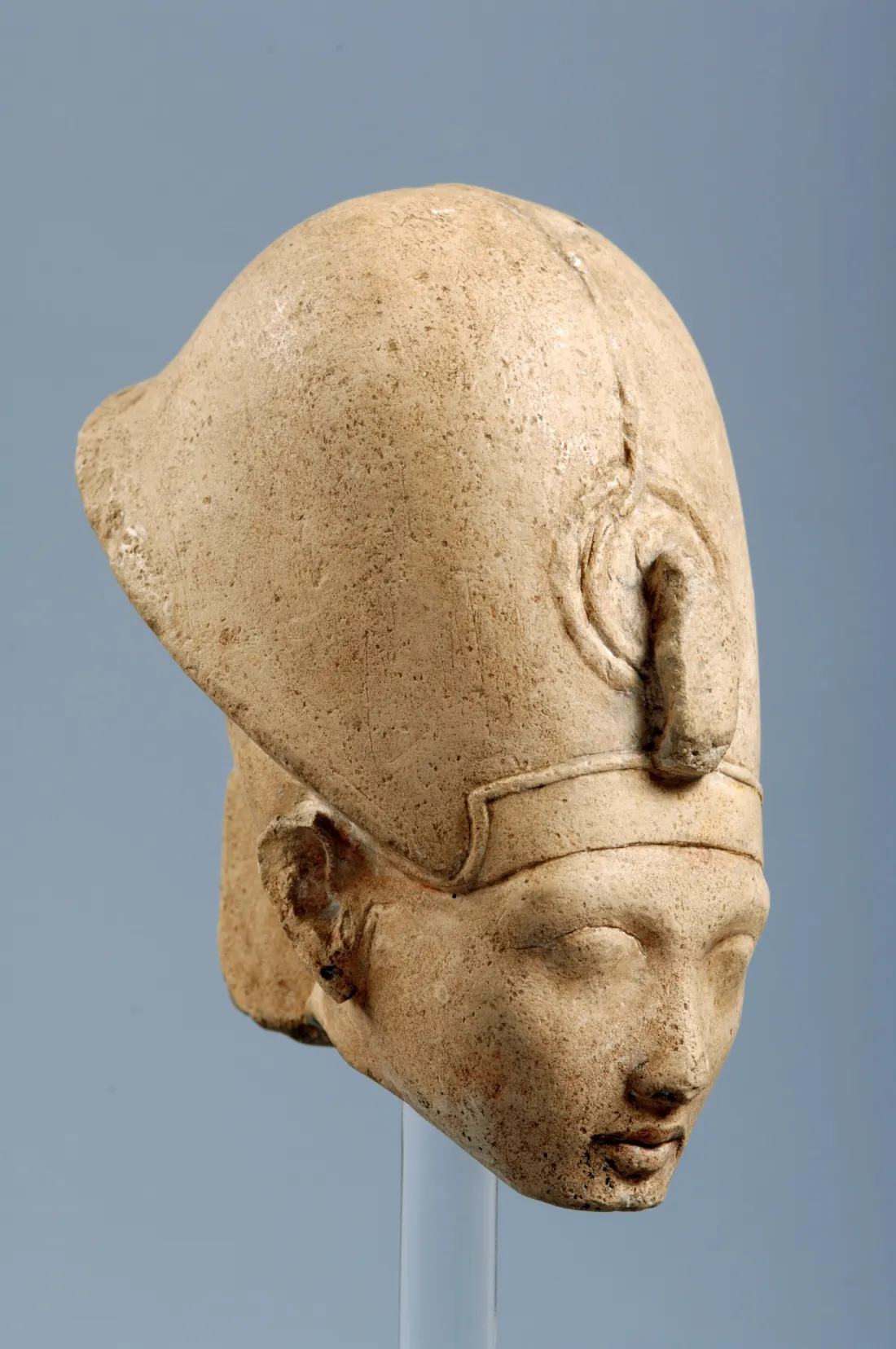
Sculptures and reliefs of Akhenaten depict him with a strikingly unusual physique: an elongated skull, narrow eyes, protruding belly, wide hips, and spindly limbs. These features extend to his entire royal family, including Queen Nefertiti and their daughters.
Many scholars believe he may have suffered from Marfan syndrome — a genetic disorder affecting connective tissue that can cause the exact features shown in royal art. Unlike every pharaoh before him, Akhenaten instructed his artists to portray him realistically rather than ideally — a revolutionary artistic philosophy that was unprecedented in 3,000 years of Egyptian tradition.
Some Egyptologists, however, argue the unusual depictions were purely symbolic — representing the male and female aspects of divinity combined in the royal body.
4. He Married the Most Famous Queen in History
Nefertiti — whose name means “A Beautiful Woman Has Come” — was Akhenaten’s chief royal wife. She wasn’t merely decorative. Nefertiti is depicted in reliefs smiting enemies, performing rituals once reserved exclusively for pharaohs, and ruling as a genuine co-regent.
Some scholars believe she may have briefly ruled Egypt as a pharaoh in her own right under the name Neferneferuaten after Akhenaten’s death. Her iconic limestone bust, now housed in Berlin’s Neues Museum, remains one of the most recognized faces from the ancient world.
5. He Was Tutankhamun’s Father
The most famous pharaoh in history — Tutankhamun — was almost certainly Akhenaten’s son. Born Tutankhaten (“Living image of Aten”), the boy-king inherited his father’s crumbling religious experiment and dismantled it entirely. He changed his name to Tutankhamun, restored the old gods, abandoned Amarna, and returned Egypt to Thebes.
The irony is complete: the world’s most famous pharaoh became famous partly because of what his controversial father created and he destroyed.
6. His Name Was Erased From History for Over 3,000 Years
After Akhenaten’s death, his successors — particularly Horemheb (c. 1320–1292 BCE) — undertook a systematic campaign to erase the Amarna Period from memory. Temples were demolished. Statues were smashed. His name and the names of his immediate successors were struck from the official king lists.
So thorough was this erasure that Akhenaten was completely unknown to Egyptologists until the discovery of Amarna in the 19th century CE. He went from founding pharaoh to historical ghost — and back again.
7. He Wrote One of History’s Greatest Religious Poems
The Great Hymn to the Aten, attributed directly to Akhenaten, is one of the oldest religious texts celebrating a single creator god. Written in poetic form, it praises Aten as the source of all life, light, and creation — with striking parallels to Psalm 104 of the Hebrew Bible, a connection that has fascinated scholars for over a century.
Whether this represents cultural exchange, shared sources, or coincidence remains one of Egyptology’s most debated mysteries.
8. His Tomb Was Never Properly Used
Akhenaten designed a Royal Tomb in the cliffs east of Amarna — today known as the Royal Tomb of Amarna. It was the only chamber in the complex that was fully finished. When the royal family abandoned the city after his death, work on the surrounding family chambers stopped. His sarcophagus was destroyed. His mummy was most likely removed and relocated — possibly to Tomb KV55 in the Valley of the Kings, though the identification of remains found there remains contested.
9. He Ignored His Empire While Focused on Religion
Archaeological finds known as the Amarna Letters — clay tablets discovered at the site — reveal a pharaoh drowning in diplomatic correspondence he largely ignored. Foreign allies in Canaan, Syria, and beyond pleaded for Egyptian military support as the Hittite Empire expanded aggressively. Akhenaten’s responses were slow, sparse, and often dismissive. Egypt lost key territories during his reign as a direct result.
The letters are currently among the most important documents in ancient Near Eastern history and provide a rare window into Akhenaten’s reign from the outside.
10. His Religious Revolution Died With Him — Almost Instantly
Within three years of Akhenaten’s death, Atenism was effectively over. His young son reversed every reform. Temples of the old gods reopened. Amarna was abandoned. The city he built with such urgency was dismantled — its talatat blocks reused as fill material inside later monuments, accidentally preserving detailed scenes of Amarna life for modern discovery.
Yet some scholars argue Akhenaten’s ideas didn’t die at all — they traveled. The theological concept of a single, universal, loving creator god may have influenced Egyptian-born communities in Canaan who would go on to shape the foundations of Western religion.
11. He Was Called “History’s First Individual”
The historian James Henry Breasted famously described Akhenaten as the first individual in history — meaning the first ruler whose personal theological vision, artistic sensibility, and interior life are clearly reflected in the archaeological record. Before Akhenaten, pharaohs expressed themselves through conventions. Akhenaten broke them all.
12. His Legacy Survives in Luxor’s Karnak Temple
Despite every effort to erase him, Akhenaten left traces that couldn’t be fully removed. At Karnak Temple in Luxor — one of the largest temple complexes ever built — archaeologists have reassembled thousands of talatat blocks depicting Akhenaten’s early reign, reconstructed from where they were used as fill inside later pylon construction. The Luxor Museum displays some of the finest Amarna Period artifacts, including a remarkable colossal statue of Akhenaten himself.
If you visit Luxor, you walk through Akhenaten’s shadow whether you realize it or not.
Where to Experience the World of Akhenaten in Egypt
Amarna (Tell el-Amarna), Middle Egypt
The remains of Akhenaten’s capital city lie along the east bank of the Nile in modern-day Minya Governorate. The site includes the boundary stelae Akhenaten carved to mark his city, the remains of the North Palace, and the rock-cut tombs of Amarna’s nobles — decorated with some of the most distinctive artwork ever produced in ancient Egypt.
Luxor Museum
The Luxor Museum houses a dedicated Amarna gallery with beautifully preserved colossal statues of Akhenaten and rare artifacts from his reign — far less crowded than Cairo’s Egyptian Museum and often overlooked by tourists.
Egyptian Museum, Cairo
The ground floor of Cairo’s Egyptian Museum contains the Amarna Room, displaying royal busts, boundary stelae, and Akhenaten’s reconstructed sarcophagus.
Valley of the Kings, Luxor
KV55 — the most mysterious tomb in the Valley of the Kings — may contain the relocated remains of Akhenaten himself. The tomb is rarely open to visitors, but standing at its entrance carries an atmosphere unlike any other in the Valley.
If you’re planning a journey to Luxor, our full-day East and West Bank Luxor tour takes you deep into this extraordinary landscape with a private expert Egyptologist who can bring the Amarna Period to life in context.
Plan Your Ancient Egypt Journey With El Sultan Travel
Understanding Akhenaten changes the way you see Egypt. His story runs through Karnak Temple’s hidden walls, through Luxor Museum’s quiet galleries, through the Valley of the Kings’ most enigmatic tomb. It connects to Nefertiti, to Tutankhamun, to questions about the origins of monotheism itself.
This is the kind of history that deserves more than a rushed tour. Our Nile Cruise packages between Luxor and Aswan combine iconic sites with the slower, more personal experience of sailing the same river Akhenaten’s court traveled. Our private Egypt tour packages are built around your interests — whether that’s Amarna, Karnak, or the Valley of the Kings.
Explore our Luxor destination page and Aswan tours to start building your journey.
FAQs About King Akhenaten
What is King Akhenaten best known for?
Akhenaten is best known for abolishing Egypt’s traditional polytheistic religion and replacing it with the worship of a single god, Aten the sun disk — considered the earliest known state-sponsored monotheism in recorded history.
Was Akhenaten really Tutankhamun’s father?
Yes, DNA analysis and historical records strongly support that Akhenaten was Tutankhamun’s father, though the identity of Tutankhamun’s mother remains debated among Egyptologists.
Where is Akhenaten’s tomb located?
Akhenaten’s royal tomb was carved in the cliffs near Amarna in Middle Egypt, but his mummy was likely moved after his death, possibly to Tomb KV55 in the Valley of the Kings near Luxor.
Why was Akhenaten erased from history?
His successors — especially Pharaoh Horemheb — systematically destroyed his monuments, struck his name from king lists, and dismantled his capital to reverse his radical religious reforms and restore traditional Egyptian religion.
Can tourists visit Amarna today?
Yes. The site of ancient Amarna (Tell el-Amarna) in Minya is open to visitors. For travelers focusing on Luxor and Aswan, the Luxor Museum offers one of the finest Amarna Period artifact collections in Egypt.
The Pharaoh Who Rewrote History — and Was Rewritten Out of It
King Akhenaten remains one of the most compelling, controversial, and intellectually fascinating figures in all of human history. He was visionary enough to reshape civilization — and threatening enough that civilization tried to forget him entirely. That he survived, in fragments and ruins and reassembled stone blocks, is itself a kind of miracle.
Traveling through Egypt with this story in mind transforms the experience. The stones of Karnak, the galleries of Luxor Museum, the cliffs above Amarna — they all speak differently when you know who Akhenaten was, what he built, and what was done to erase him.
Ready to walk in the shadow of the heretic pharaoh? Explore El Sultan Travel’s Egypt tour packages, Nile cruises, and Luxor day tours — all led by expert local Egyptologists who know how to make history unforgettable.
Start Planning Your Egypt Journey →
Further reading: Akhenaten.
These facts about King Akhenaten explain why he remains Egypt’s most debated ruler — and why the facts about King Akhenaten keep shifting with every new excavation at Amarna. See where his story fits in our timeline of Egyptian history.
Quick recap of the essential facts about King Akhenaten: he ruled c. 1353–1336 BC, founded Amarna, fathered Tutankhamun by most evidence, and vanished from official king lists. The deeper facts about King Akhenaten — the theology, the art revolution, the erasure — are told above; the strangest facts about King Akhenaten still surface as Amarna gives up its secrets.