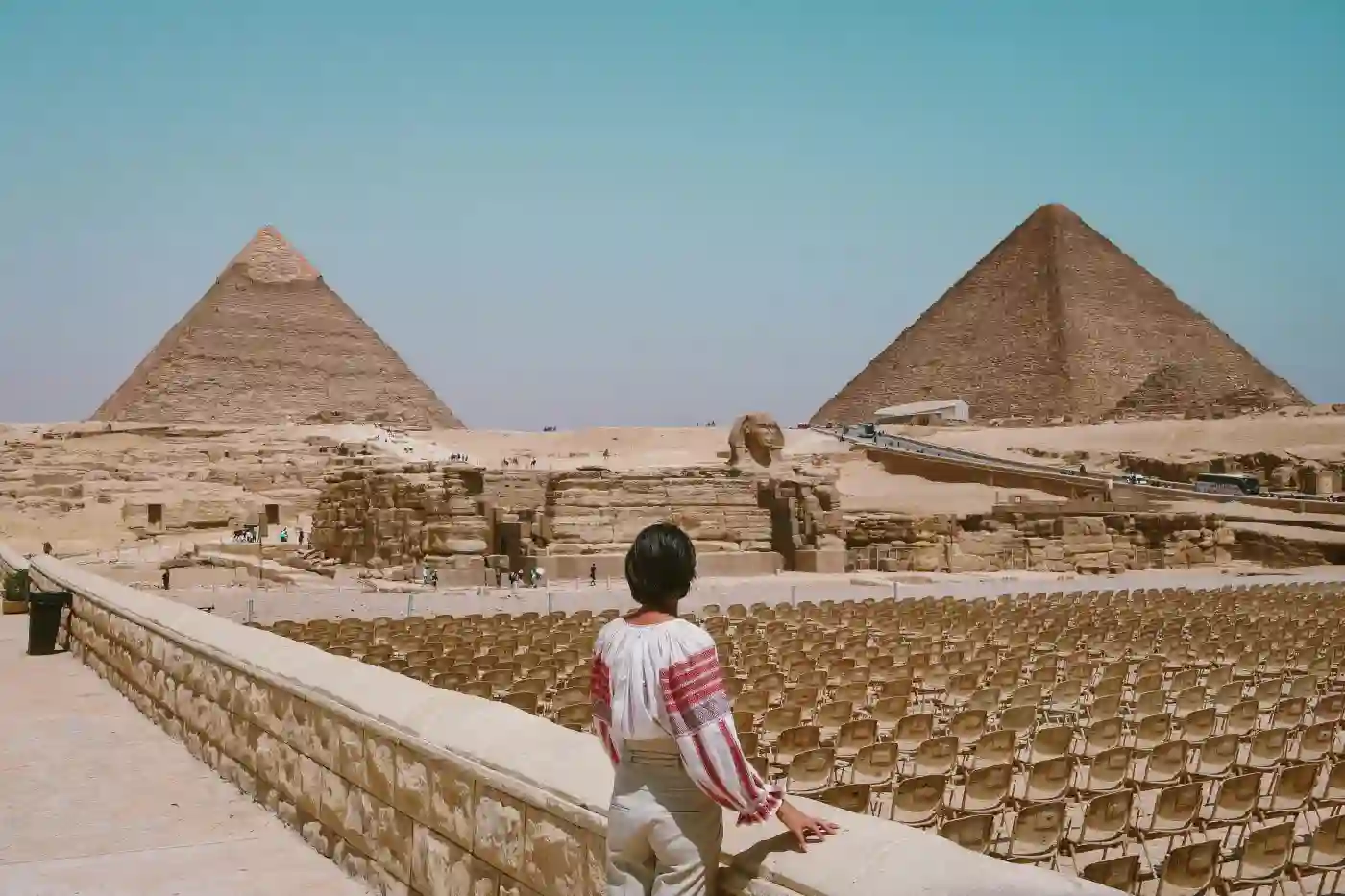
The Egyptian pyramids explained for travelers — not as a physics lecture, but as the answers you actually want standing on the Giza plateau: why they built them, how (as far as we truly know), why the shape, why they stopped, and what to look for that most visitors walk right past.
Quick Answer: The pyramids were royal resurrection machines — monumental tombs designed to launch the pharaoh into eternity, their shape echoing the primeval mound of creation and the sun’s rays turned to stone. They were built over roughly a thousand years (c. 2650–1650 BC) by paid, organized Egyptian labor — not slaves — peaking at Giza, and were abandoned when hidden rock-cut tombs like the Valley of the Kings proved safer from robbers.
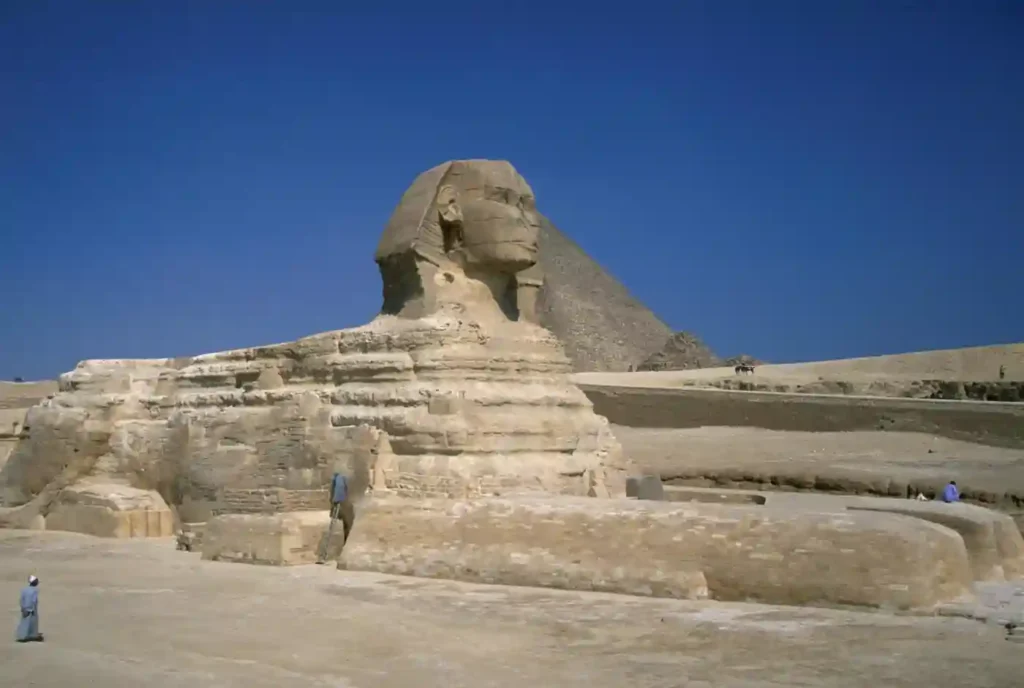
Why Build a Pyramid at All?
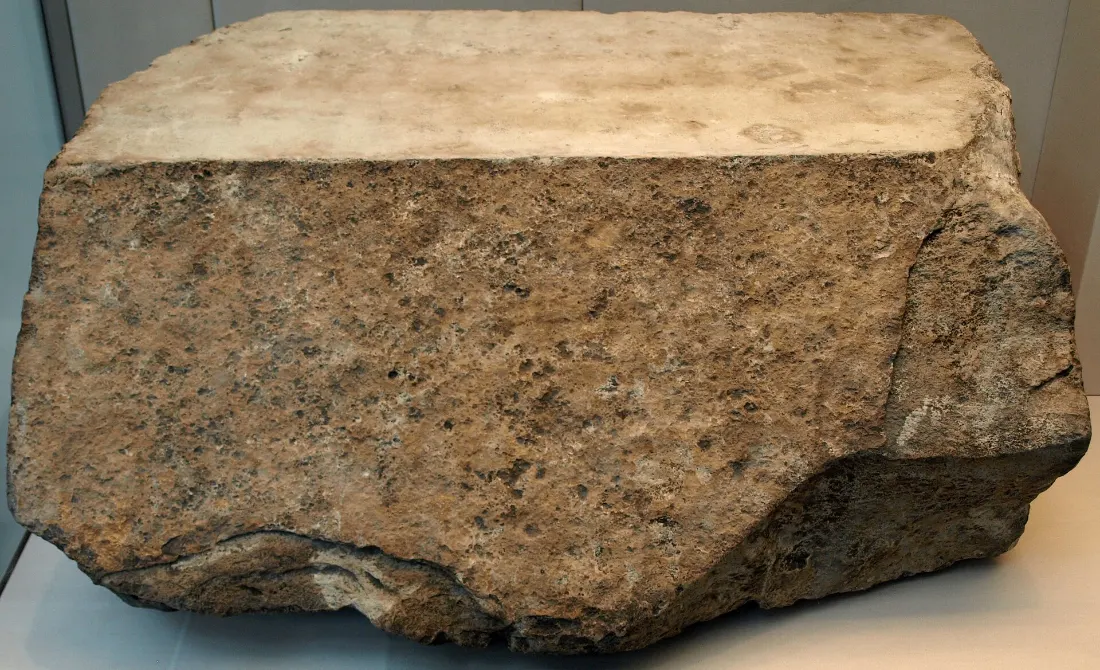
CaptMondo, CC BY 2.5, via Wikimedia Commons
Egyptian religion made the king’s afterlife everyone’s business: a pharaoh who reached eternity kept the cosmos running — the floods, the harvest, order itself. The pyramid was infrastructure for that ascent: tomb, resurrection engine and eternal billboard in one. Its shape stacked meanings — the first mound rising from creation’s waters, and the sun’s rays descending as a stone ramp to the sky.
How They Actually Built Them
What the evidence shows: organized crews of thousands of paid, well-fed workers (their bakeries, breweries and honored tombs sit beside Giza), copper tools plus dolerite pounders, sledges over wetted sand, and ramps whose exact geometry scholars still argue about. What it wasn’t: slaves, aliens, or lost magic. The engineering genius was logistics — feeding, housing and coordinating a workforce for decades. The Unfinished Obelisk at Aswan shows the stone-working half of the answer frozen mid-process.
The Evolution in Five Steps
| Stage | Monument | The leap |
|---|---|---|
| 1. Mastaba | Early flat tombs | The starting block |
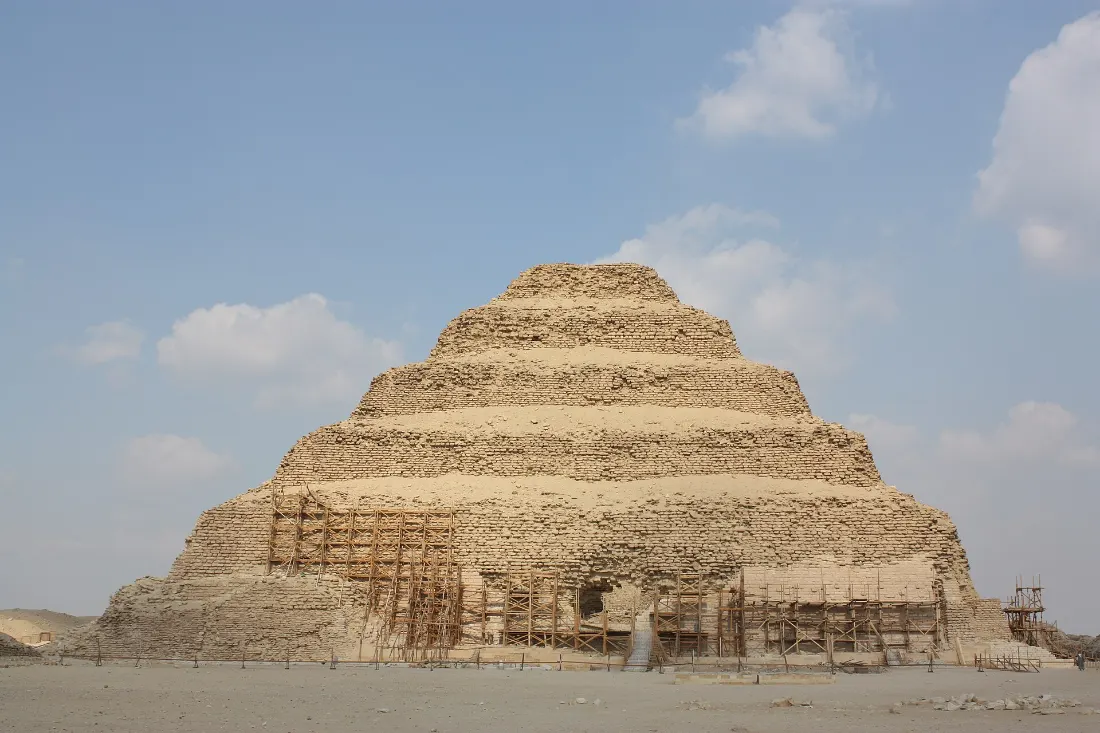
| 2. Step Pyramid | Djoser at Saqqara (c. 2650 BC) | Six mastabas stacked — the first pyramid |
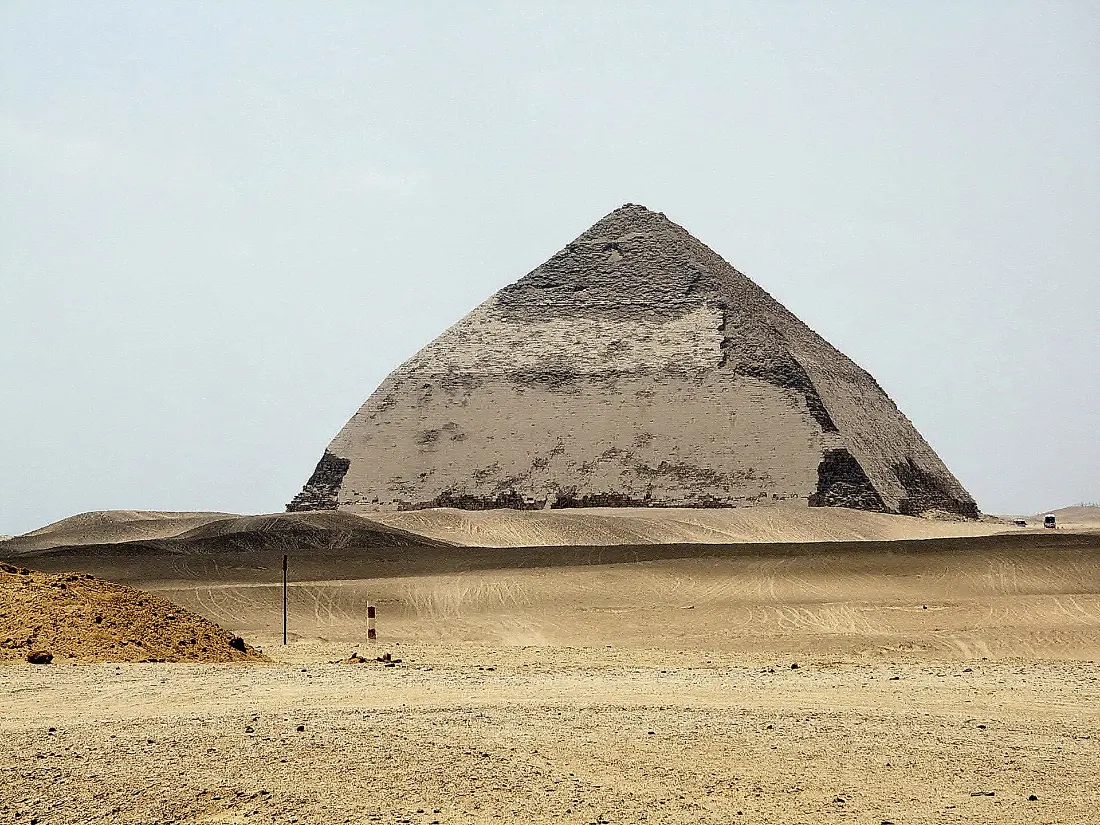
| 3. Bent Pyramid | Sneferu at Dahshur | The angle miscalculated, corrected mid-build |
| 4. Red Pyramid | Sneferu again | The first true smooth pyramid |
| 5. Giza | Khufu, Khafre, Menkaure | The perfected peak — never exceeded |
Seeing the sequence in stone is the point of pairing Saqqara and Dahshur with Giza on a full pyramid day — the whole R&D program in one afternoon.
Why They Stopped
Pyramids had one fatal flaw: they advertise exactly where the treasure is. Every one was robbed, most within centuries. By the New Kingdom, pharaohs switched strategy — hidden rock-cut tombs in a guarded desert valley at Thebes. That valley is the Valley of the Kings, and its painted corridors are the pyramid’s true sequel.
What Travelers Miss at Giza
The basalt paving of the vanished funerary temples; boat pits that held real 40-meter cedar ships (one rebuilt for display); Khafre’s surviving granite valley temple beside the Sphinx; and the workers’ cemetery that quietly demolished the slave myth. A guide turns these from rubble into revelation — the difference our Pyramids Cairo tour exists to make.
FAQs: Pyramids, Explained
Who really built the pyramids?
Egyptian work crews — paid, organized, honored with burial beside their project. Their own graffiti names their gangs (“Friends of Khufu”).
How long did the Great Pyramid take?
Ancient sources and modern estimates converge around 20–27 years of continuous work.
What was inside?
Originally: the king, his goods, and granite plugs meant to stop robbers. Today: magnificently engineered empty chambers — the treasures went millennia ago.
Are there pyramids beyond Giza?
Over a hundred across Egypt — Saqqara and Dahshur hold the essential chapters, and Sudan holds hundreds more from the Kushite kings.
Pyramids first or museum first?
Either works; museum-after lets the objects answer questions the stones raised. Full Egypt planning: things to do in Egypt.
Want the explanation at the stones themselves? WhatsApp us — our Egyptologists have heard every question, including the alien ones.
Further reading: Egyptian pyramids.
Egyptian Pyramids Explained for Travelers: The Takeaway
That is the heart of Egyptian pyramids explained for travelers: they are tombs, built over a single century of experimentation, and everything you see at Giza makes sense once you know Saqqara came first. Keep this page of Egyptian pyramids explained for travelers open on your phone at the plateau — matching the step, bent and true pyramids to the story turns a hot morning of stones into one of the best history lessons on earth.