 Skip to main content

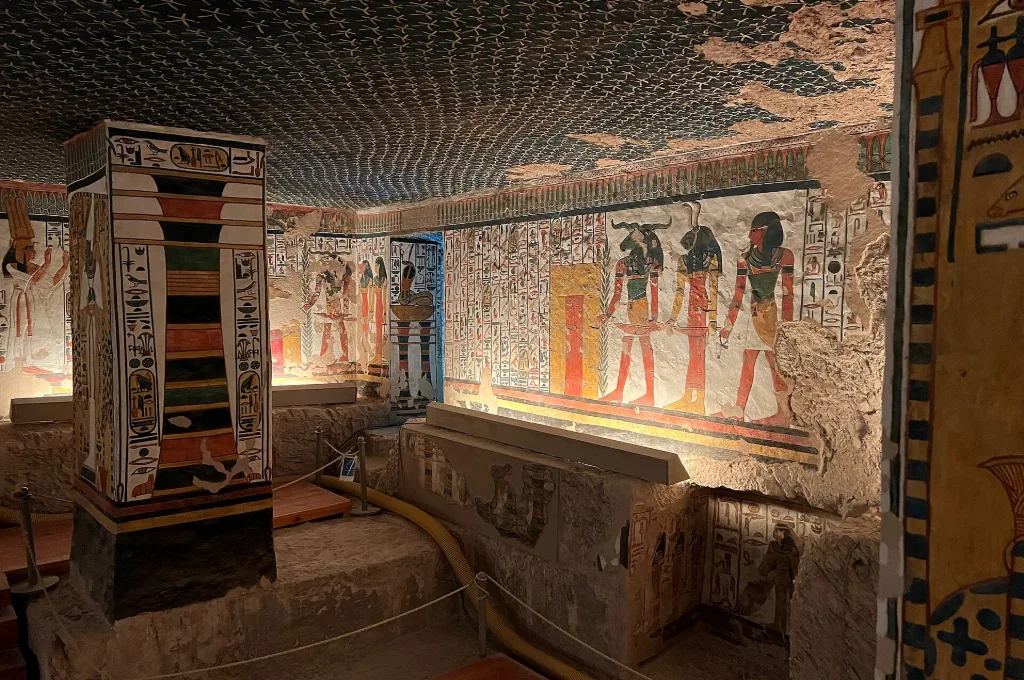
Is the Valley of the Queens worth your limited time on the West Bank? Yes, if you come for one painted masterpiece and stay for a few quiet tombs. Here is which chambers to enter and which ticket to buy.
What Sets the Valley of the Queens Apart From the Valley of the Kings?
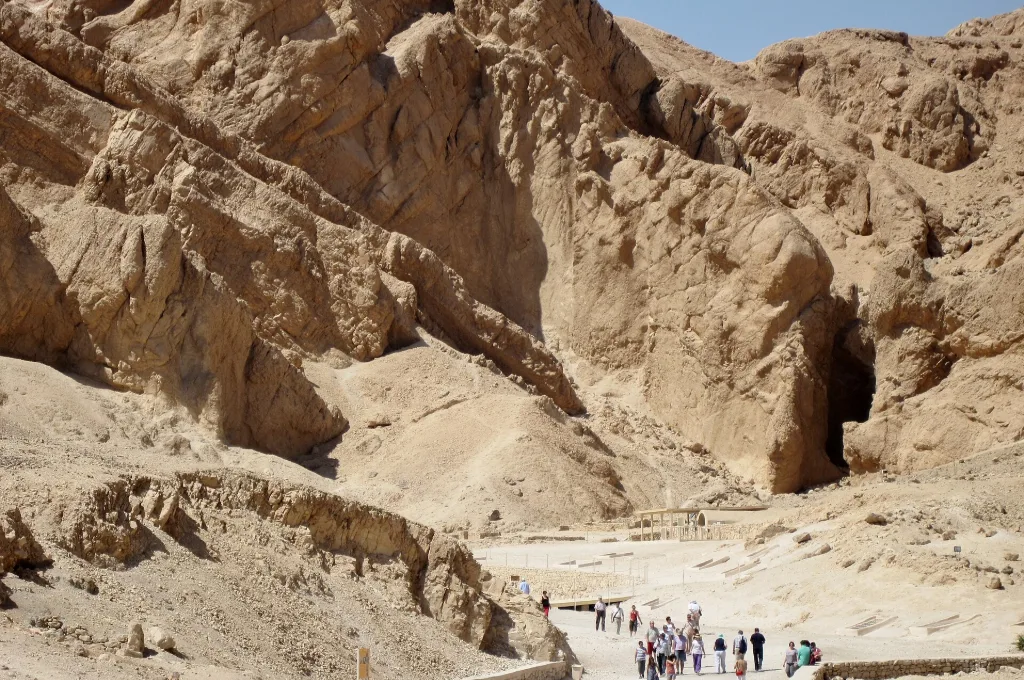
Its residents. This wadi holds queens, princes and princesses, not pharaohs. The ancient name, Ta-Set-Neferu, means “the Place of Beauty.” The name fits.
About 110 tombs lie here, and most are closed. The mood is calmer, the crowds are thinner, and the paintings often look fresher than those in the royal valley. If the Valley of the Kings feels like a queue, this place feels like a secret.
Why Were Royal Women and Children Buried Here?
Because royal families wanted a protected burial ground of their own. The earliest tombs date to the 18th Dynasty, including one for a daughter of King Seqenenre Tao.
Under the 19th and 20th Dynasties the valley grew. Great wives were buried here, and later so were princes. Roman burials and Coptic homes followed, which is why some chambers show later changes.
Which Tombs Can You Enter on a Standard Ticket?
Usually three. The open tombs rotate for conservation, so confirm the list at the gate. These are the ones visitors have recently been able to enter.
Queen Titi (QV52)
A queen of the 20th Dynasty rests here. The chamber is small and the scenes are easy to read, so it makes a gentle warm-up.
Prince Amunherkhepshef (QV55)
He was a son of Ramesses III. The reliefs show the king presenting his young boy to the gods. It is one of the most human scenes in Luxor.
Prince Khaemwaset (QV44)
Another son of Ramesses III. The paintings are compact and well kept, and the visit takes only minutes.
Is Nefertari’s Tomb Worth the Premium Ticket?
For most travelers, yes, if it is open and you love painted art. Many guides call QV66 the finest tomb in Egypt. The ticket is separate and costly. Recent guides quote well over EGP 1,000, so check the current price at the ticket office.
Prefer a royal alternative? Our Seti I tomb guide weighs the Valley of the Kings’ top premium tomb.
What Will You See Inside?
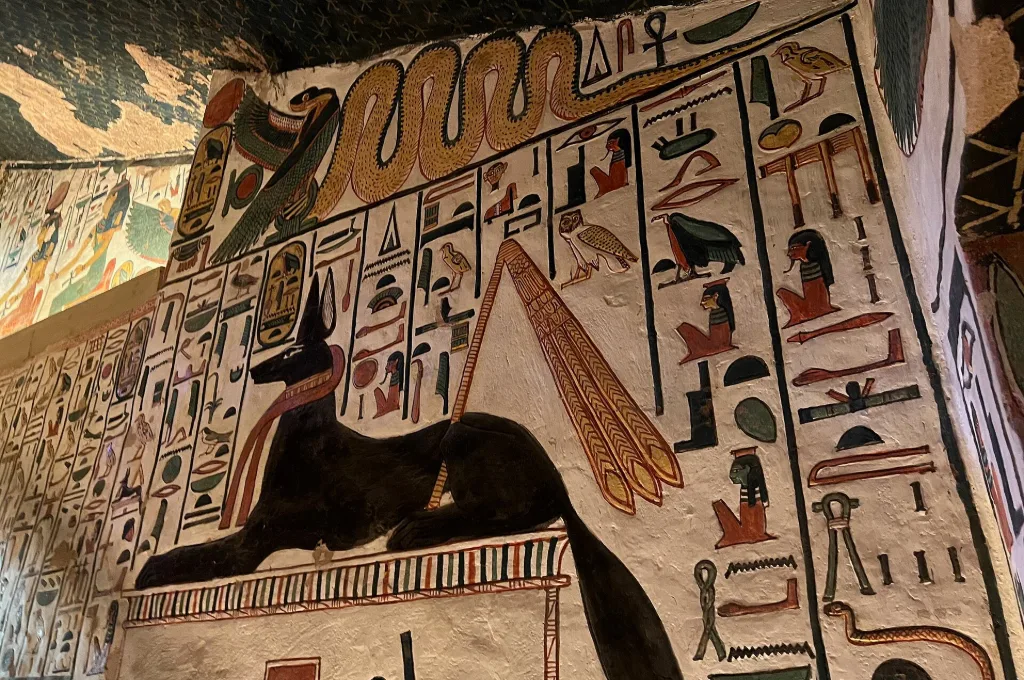
A deep blue ceiling scattered with golden stars. Walls glowing in red, yellow and white. Nefertari appears with Osiris, Isis and Hathor, while Anubis crouches in black beside the staircase. Scenes from the Book of the Dead guide her through the afterlife.
Why Is the Visit So Short?
Breath and humidity harm old plaster. Visits are timed, usually to about ten or fifteen minutes. Spend them looking up and moving slowly.
Who Was Nefertari?
She was the Great Royal Wife of Ramesses II. He honored her with a temple at Abu Simbel. Italian archaeologist Ernesto Schiaparelli found her tomb in 1904. From 1986 to 1992, the Getty Conservation Institute and Egypt’s antiquities authority cleaned and stabilized the paintings. The Getty’s project summary explains how.
Unsure which extra ticket deserves your budget? Our Egyptologist-led Valley of the Kings tour settles it with you at the gate.
Which Ticket Fits Your Trip?
Match the ticket to your priority. This table keeps the choice simple.
| If you are… | Choose this |
|---|---|
| An art lover | Nefertari’s premium ticket, plus the standard tombs |
| Traveling with children | Standard tombs only, since the visits are short |
| On a tight budget | The standard ticket, then Medinet Habu nearby |
| Short on time | Skip the Queens and spend the hour at Deir el-Medina |
How Do You Fit the Valley of the Queens Into a West Bank Day?
Pair it with its neighbors. Deir el-Medina, the workmen’s village, and Medinet Habu sit close by. Together they make a calm southern loop.
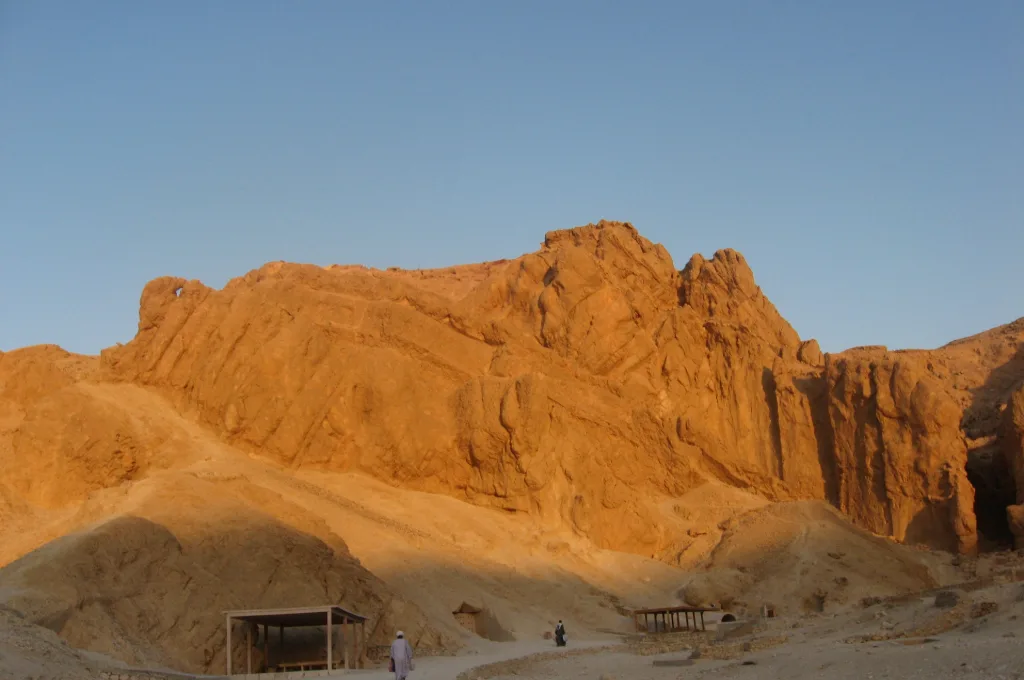
Arrive when the gates open at 6 am. Shade is scarce, and tomb air is cooler than the wadi. Hours follow the seasons and usually end around 4 or 5 pm.
Need transport between sites? See getting around Luxor. Want day-by-day options? Compare them in our Luxor itinerary guide.
Prefer a private driver and an Egyptologist? Our East and West Banks of Luxor tour covers the West Bank at your pace.
Tip: Carry water and small notes. Ask at the entrance about photography rules before you raise a camera.
Valley of the Queens: Practical Questions
How much time should you plan for the Valley of the Queens?
Allow one to one and a half hours. That covers the standard tombs and a timed look at Nefertari’s. Add more if there is a queue.
Is it good for children?
Yes, for short stays. The tombs are brief and colorful, so children rarely get bored. Keep them hydrated, as the wadi has little shade.
Can you photograph Nefertari’s paintings?
Rules vary, so ask at the entrance. Flash damages pigments and is never welcome.
Should you arrive early or late in the day?
Early. At opening the wadi is cool, the tombs are quiet, and the light is soft for outdoor photos.
Is the Valley of the Queens Worth It? Our Verdict
Yes. One tomb ranks among the most beautiful you will ever enter. The rest are small, calm and full of human touches. Add it to a West Bank morning and Luxor feels deeper. Ready to shape your West Bank day? Explore our Luxor experiences or ask our team to build a private route.


