Ever stood in front of a temple wall and wondered what the gods are actually doing? Egyptian god myths are the stories carved there: a murdered king, a mother’s magic and a sun boat that fights a serpent every night, and you can follow them stone by stone from Abydos to Edfu.
What Are the Main Egyptian God Myths in Plain English?
Five stories carry almost everything you will see on a wall. Learn these and the reliefs start to read like a comic strip:
- Creation: the world rises from dark water and a first mound appears.
- Osiris: a good king is murdered by his brother and revived by his wife.
- Horus and Seth: a son fights his uncle for the throne.
- Ra’s night voyage: the sun god battles chaos through the underworld until dawn.
- Sekhmet: a lioness goddess nearly ends humanity, then is tricked into sleep.
The Egyptians never fixed a single canon. Different temple cities told different versions, and they stacked them without worry. Expert note: think of it as layered truth, not broken truth.
How Did the World Begin in Egyptian Myth?
It began with Nun, a dark and limitless sea. From it rose a first mound, and on that mound the creator Atum stood and brought forth the first divine pair, Shu and Tefnut. They bore Geb and Nut, earth and sky, and their children were Osiris, Isis, Seth and Nephthys: the family whose drama powers everything else. Memphis told it differently and credited Ptah.
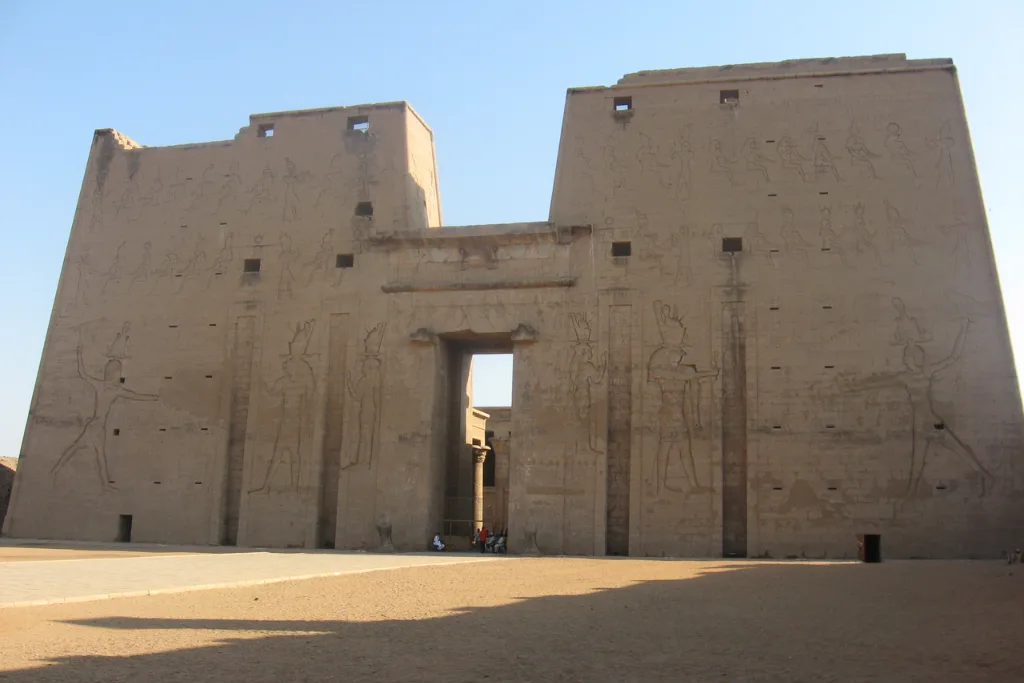
Look for this scene at Edfu Temple, where the inner faces of the perimeter walls show a falcon Horus landing on a reed-grown mound as the world emerges from the waters.
Why Was Osiris Murdered, and How Did Isis Bring Him Back?
Because his brother Seth envied his throne. Seth tricked Osiris into lying in a chest made to his exact measurements, sealed it and threw it into the Nile. Isis found the chest, but Seth seized the body and cut it into pieces. Isis and her sister Nephthys gathered what they could, and one lost piece was restored by Isis’s magic.
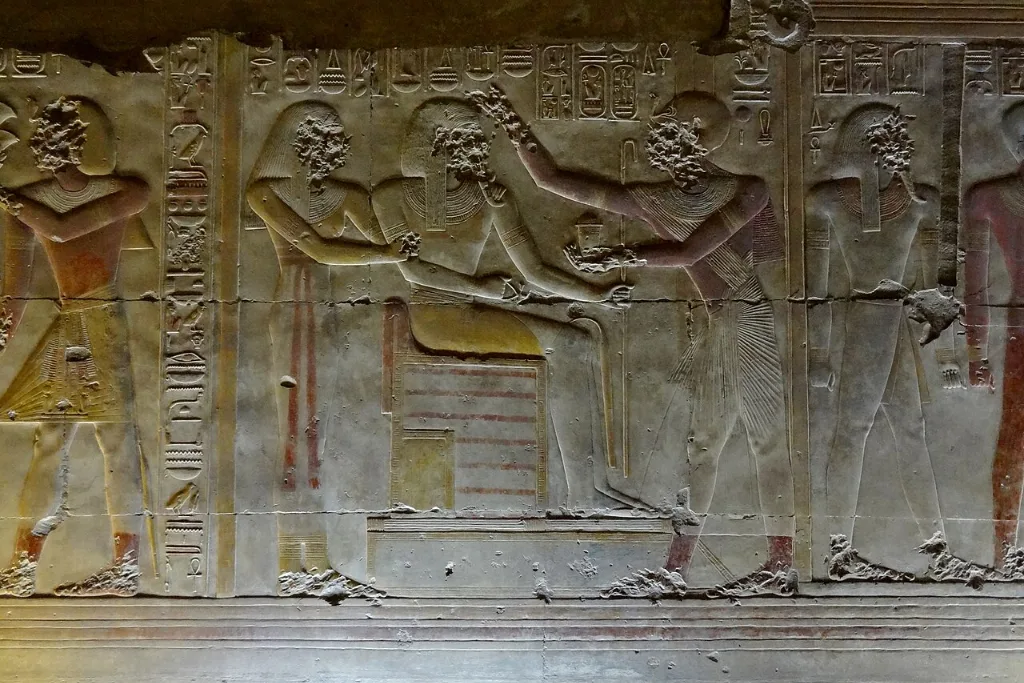
Osiris was revived long enough for Isis to conceive Horus, then descended to rule the dead. That is why every mummification echoes her work, and why a dead Egyptian hoped to “become an Osiris”. You will meet him everywhere: wrapped like a mummy, crowned and often painted green, the colour of renewal.
Did Ancient Egyptians Stage Their Gods’ Murder as Theatre?
Yes, at Abydos. From the Twelfth Dynasty, the mysteries of Osiris were acted out each year by priests and townspeople. The performance opened with lamentations, moved through his death and mummification, staged mock battles between followers of Horus and followers of Seth, and ended when a golden statue of Osiris was carried out in procession to symbolise his return to life.
Abydos was the cult centre of Osiris, and the tomb of the First Dynasty king Djer was later honoured as his burial place, drawing an annual procession for around 1,500 years. The World History Encyclopedia article on Osiris traces how these mysteries worked.
Field tip: go to Abydos Temple early, when the Osiris chapels are quiet, and read the painted reliefs slowly. Ready to step into the oldest passion play in the world? Explore our curated Luxor day tours.
Who Really Won the Fight for the Throne, Horus or Seth?
Horus won, but only after a long and messy trial. The story survives on Chester Beatty Papyrus I, written in the Twentieth Dynasty under Ramesses V. The gods of the Ennead hear the case with Ra presiding, and the rivals compete in contests, including a hippopotamus dive in which Isis harpoons Seth. Seth gouges out one of Horus’s eyes, and Isis heals it. Finally Osiris, consulted from the underworld, backs his son.
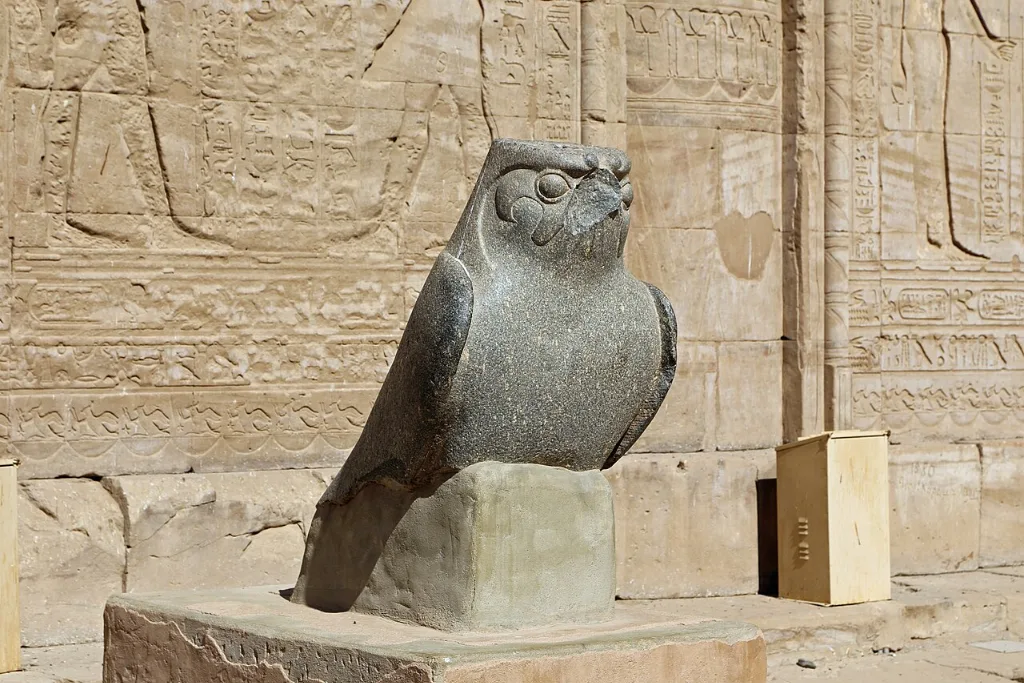
The healed eye became the wedjat, Egypt’s great protective amulet, and every living pharaoh ruled as Horus. At Edfu, the inscriptions preserve scenes of the Sacred Drama, and each year Hathor travelled from Dendera to visit Horus in a festival celebrated as their sacred marriage.
What Happens to the Sun Every Night?
Ra sails through the underworld in twelve hours, and the serpent Apophis tries to stop him. That journey is the Amduat, “That Which Is in the Underworld”, carved on royal tomb walls so the dead king could ride along. In the seventh hour Apophis tries to swallow the waters and halt the sun, and the gods drive him back. Dawn is the daily victory of order over chaos.
The earliest complete version sits in the tomb of Thutmose III, with others in the tombs of Amenhotep II and Amenhotep III. It was a royal text, which is why you meet it in the Valley of the Kings and not in ordinary tombs.
Why Did Egypt’s Gods Brew Beer to Save Humanity?
Because it was the only way to stop Sekhmet. When humans plotted against an ageing Ra, he sent his daughter Hathor to punish them. She became the lioness Sekhmet and her rampage grew so fierce that the gods feared no one would be left to make offerings. Ra ordered a huge quantity of beer dyed red and set out at Dendera. Sekhmet took it for blood, drank, fell asleep and woke as gentle Hathor.
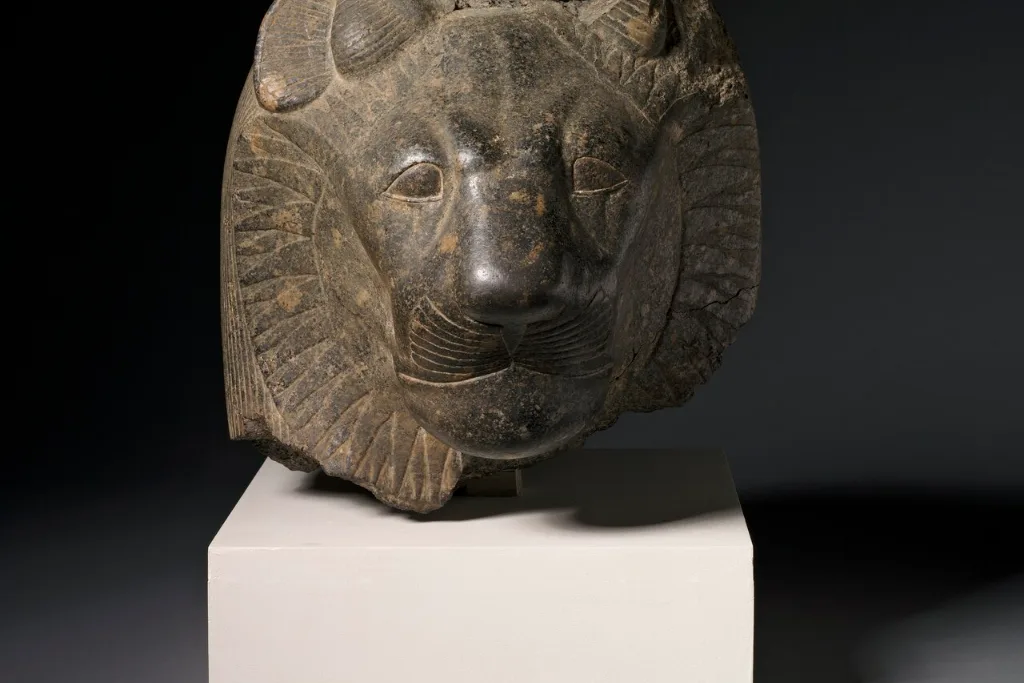
The tale belongs to the Book of the Heavenly Cow of the New Kingdom, carved in tombs including those of Seti I and Ramesses II, and the Tekh Festival remembered it. Meet the goddesses behind the story in our guide to Egyptian goddesses. Ready to sail the river of the gods? Book your Aswan and Luxor Nile cruise and see Edfu and Philae for yourself.
What Happens to the Heart in the Afterlife Court?
It is weighed against the feather of Maat, truth and order. Anubis steadies the scales, Thoth records the result, and the monster Ammit waits to devour any heart made heavy by lies. A heart that balances is led to Osiris and the fields beyond. The Papyrus of Hunefer, now in the British Museum, shows the scene in vivid colour.

It is the myth behind the burial rites: a person was judged as Osiris had been. Learn how the body was prepared in our facts about a mummy.
Which Temple Shows Which Myth?
Use this table to plan your route. Each stop shows a different chapter of the same story.
| Myth | Where to read it | What to look for |
|---|---|---|
| Creation from the first mound | Edfu Temple | A falcon Horus landing on a reed-grown mound on the perimeter walls |
| Osiris and the Abydos mysteries | Abydos Temple | The Osiris chapels and painted reliefs |
| Isis, mother of Horus | Philae Temple, Aswan | The island sanctuary of Isis |
| Horus against Seth | Edfu Temple | The Sacred Drama inscriptions and Hathor’s yearly visit |
| Ra’s night voyage | Valley of the Kings | The twelve hours of the Amduat on royal tomb walls |
| Sekhmet and the red beer | Karnak area; Dendera | Lioness statues; the temple where the beer was set out |
Most of these stops sit on the Luxor to Aswan stretch, so start with our things to do in Luxor and our Aswan city guide. The full cast is in our gods and goddesses guide.
FAQs About Egyptian God Myths
Did ancient Egyptians take Egyptian god myths literally?
They did not treat them as a single fixed script. Temples kept different versions, and each one explained the world and powered rituals at the same time.
Why is Osiris often painted green?
Green was the colour of renewal and new growth. Painting Osiris this way marked him as the god of rebirth and the fertile Nile fields.
What is the Eye of Horus, and why is it on so many amulets?
It is the wedjat, the eye Seth injured and Isis healed in the story. It became a symbol of protection and healing.
Which temple shows the Osiris story best?
Abydos, the main cult centre of Osiris, where the yearly mysteries were staged. Philae adds the Isis side of the story.
Wrapping Up: Stories Written in Stone
Egyptian god myths are not locked in the past. They are carved on walls you can stand in front of this week: Osiris at Abydos, Horus at Edfu and Ra in the royal tombs. Read them before you travel, and every temple turns from beautiful stone into an open storybook. Book a Luxor tour with El Sultan Travel and read the walls with an expert.