Egyptian God Myths: The Living Stories Behind Egypt’s Sacred Temples

Egyptian-god-myths
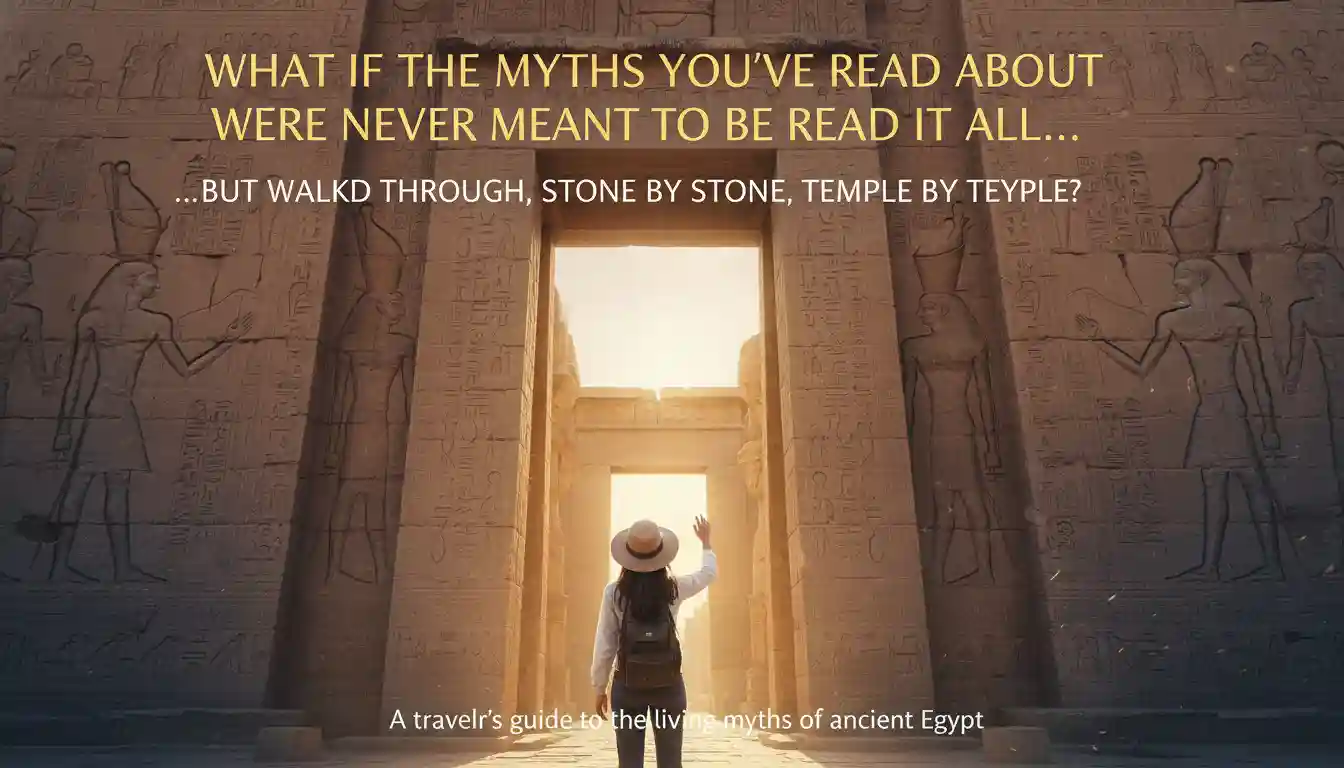
“What if the myths you’ve read about were never meant to be read at all — but walked through, stone by stone, temple by temple?”

Most people who search for Egyptian god myths are looking for the stories. But travelers who come to Egypt discover something the textbooks never capture: these myths were not written to be read in books. They were carved into the walls of living temples, depicted in the tombs of pharaohs, and performed in festivals that filled entire cities with incense and light.

Ancient Egypt was home to over 2,000 deities — each with a distinct mythology, a physical home in a temple or city, and a role in the cosmic order that governed everything from the Nile’s flooding to the sun’s daily rising. This guide explores the most significant Egyptian god myths and, crucially, tells you exactly where to stand in Egypt to see them with your own eyes.

What Made Egyptian God Myths Different from Other Mythologies?

Most ancient mythologies position the gods in a separate, unreachable realm — Mount Olympus, Valhalla, the heavens. Egyptian god myths did something radical instead: they embedded the divine into the observable world. The rising sun was Ra in his solar barque. The annual flooding of the Nile was the tears of Isis. The western horizon was the mouth of the underworld.

This philosophy had an extraordinary architectural consequence. Every temple in Egypt was not merely a place of worship — it was literally the physical house of a god. The inner sanctuary held the god’s statue, which was fed, dressed, and consulted daily by priests. When you walk through the hypostyle hall of Karnak or stand at the entrance of Edfu Temple, you are stepping inside what ancient Egyptians believed was a living, breathing divine residence.

A Detail Most Guides Skip

The animal-headed depictions of Egyptian gods weren’t meant to be taken literally. Each animal form was a hieroglyphic code — a visual shorthand for the god’s core power. Anubis’s jackal head symbolized keen perception in darkness (jackals were seen in cemeteries at night). Thoth’s ibis beak represented precise, measured thought. Horus’s falcon eyes represented the sharpest sight in the sky. Ancient Egyptians were encoding theology in zoology.

The 8 Most Important Egyptian God Myths — And Where to Find Them

Rather than a dry list of deities, here are the myths that actually shaped Egypt’s landscape — and the places you can visit to experience them firsthand.

Ra — The Sun’s Daily Death and Rebirth

Ra, the supreme sun god, sailed across the sky each day in his solar barque. Each night, he descended into the underworld (Duat) to battle the chaos serpent Apep — and was reborn at dawn. This daily struggle explained the sunrise to millions of Egyptians for over 3,000 years.

See at: Karnak Temple, Luxor + Obelisk of Heliopolis, Cairo

Osiris — The First Resurrection

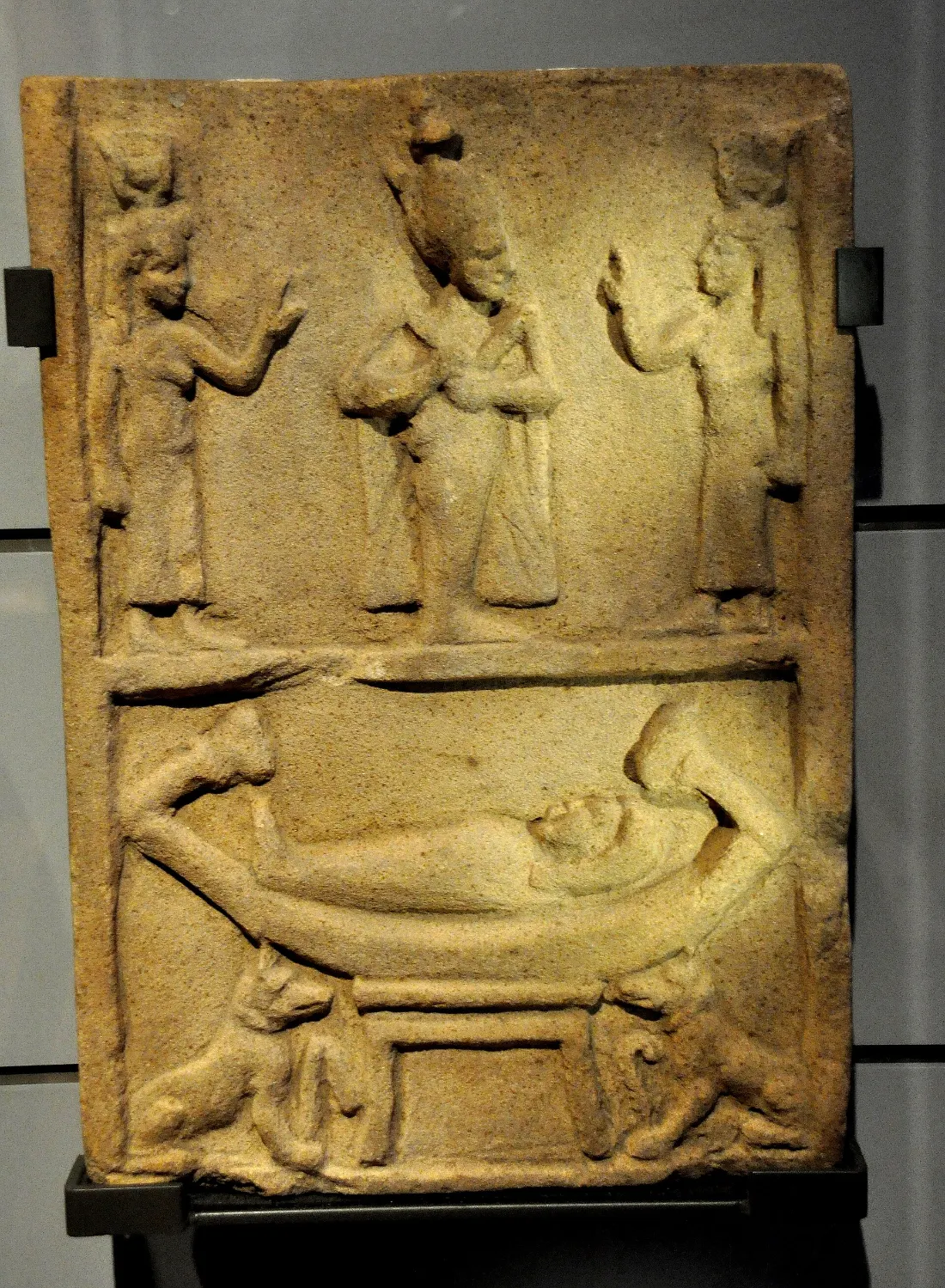
Murdered by his jealous brother Set, dismembered into 14 pieces scattered across Egypt, and then miraculously restored by his wife Isis — Osiris became the god of the afterlife and the promise of resurrection. His myth is the spiritual backbone of all Egyptian funerary tradition.

See at: Philae Temple, Aswan + Abydos Temple

Horus — The Eternal Battle for the Throne

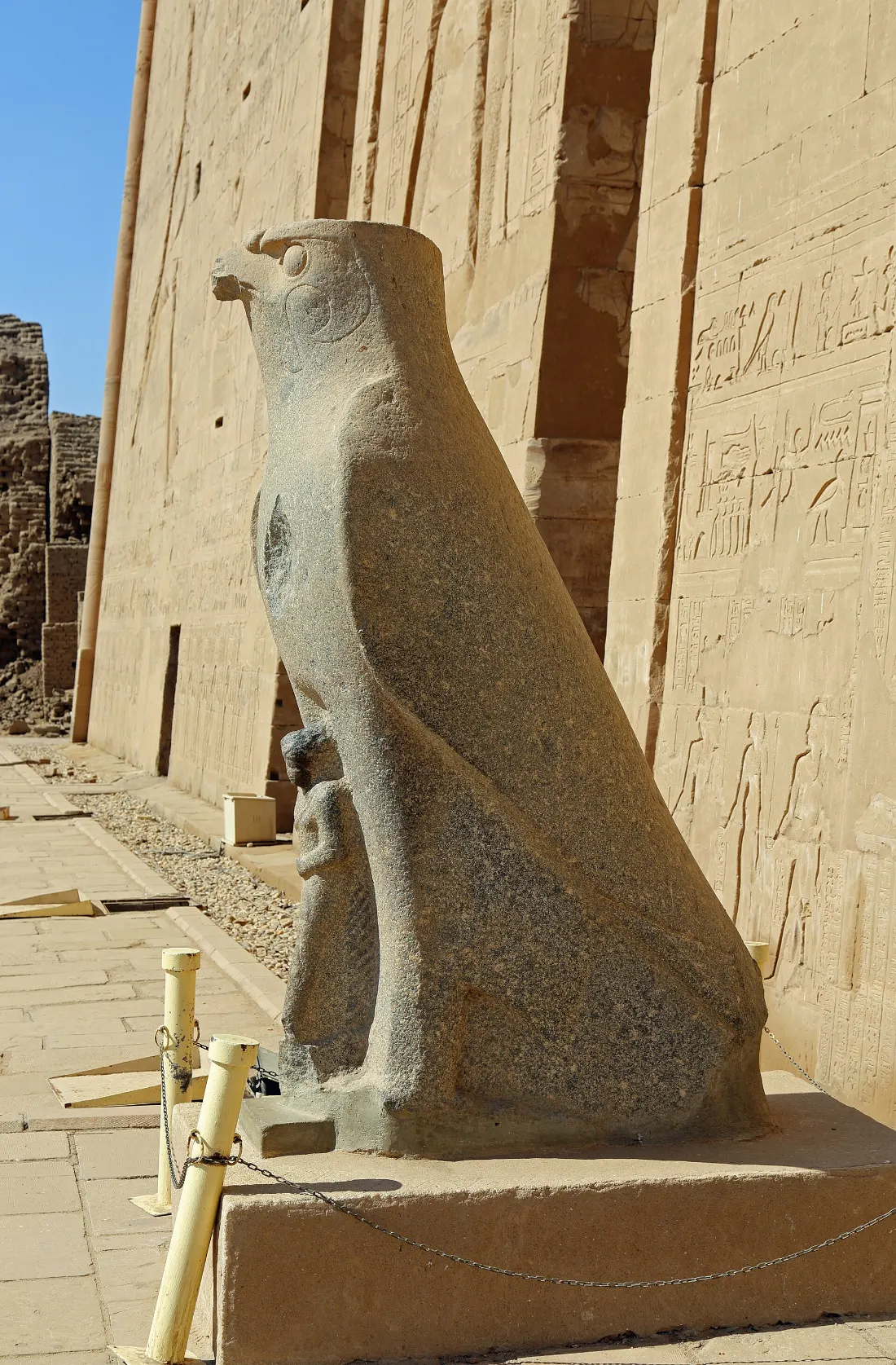
Son of Osiris and Isis, Horus spent decades fighting Set to reclaim his father’s throne. He lost an eye in battle — the Eye of Horus — which became the most recognized symbol of protection in ancient Egypt. His victory made every pharaoh a living incarnation of Horus.

 See at: Edfu Temple (the best-preserved Horus temple in Egypt)

Isis — The Goddess Who Defied Death

Isis was the most venerated goddess in ancient Egypt — and her influence spread throughout the Roman world. Her mythological role as a healer, a grieving wife, and a fierce mother shaped the ideal of divine feminine power. She used secret knowledge of Ra’s true name to gain power even over the sun god himself.

See at: Philae Temple, Aswan (entirely dedicated to Isis)

Sobek — The God Who Tamed the Nile

The crocodile-headed Sobek represented both the danger and the fertility of the Nile. In some myths, he helped reassemble the body of Osiris after it was scattered. Communities along the river kept live sacred crocodiles in his temples — animals that were mummified upon death and given full burial rites.

See at: Kom Ombo Temple + the adjacent Crocodile Museum

Anubis — Guide of the Dead

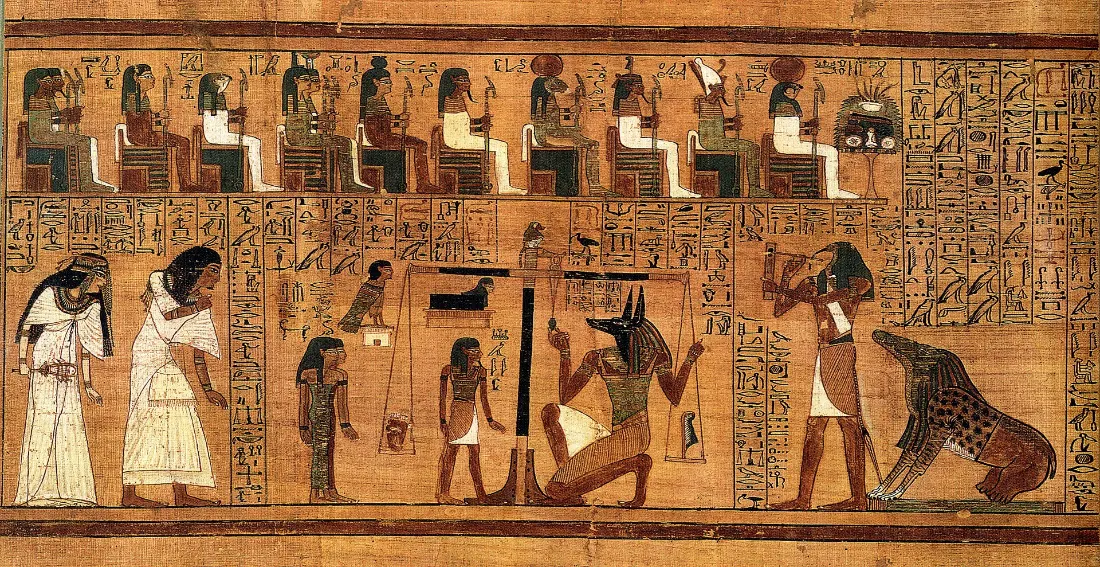
Before Osiris took over the underworld, Anubis was its ruler. His role shifted to divine embalmer and guide — the jackal-headed god who weighed souls against the Feather of Ma’at in the Hall of Two Truths. A light heart meant paradise. A heavy heart was devoured by the monster Ammit.

See at: Valley of the Kings tombs, Luxor West Bank

Thoth — The Inventor of Language

Thoth, the ibis-headed god of writing, wisdom, and the moon, was believed to have invented hieroglyphics and the calendar. He served as divine scribe during the weighing of the heart ceremony, recording every soul’s judgment. Without Thoth, Egyptian civilization as we know it would not have existed.

See at: Hermopolis ruins, Minya + inscriptions across all major temples

Bastet — The Protector Who Became a Paradox

Originally depicted as a fierce lioness warrior goddess, Bastet’s image softened over centuries into a domestic cat — a transition from destroyer to protector. She was the guardian of the home, women, and children. The ancient city of Bubastis hosted Egypt’s most joyful annual festival in her honor, reportedly drawing hundreds of thousands of visitors.

See at: Tell Basta ruins, Zagazig (Nile Delta)

The Myth of Osiris: Egypt’s Greatest Story, Told in Stone

Of all the Egyptian god myths, the Osiris myth is the most architecturally present — you can trace its narrative arc across multiple sites in a single journey along the Nile.

Act I — The Murder (Set’s Betrayal)Set, driven by envy, tricked Osiris into lying inside a golden coffin, then sealed it and threw it into the Nile. This act represents the annual drought — the death of fertility.
Act II — The Search (Isis’s Grief)Isis searched all of Egypt and beyond for her husband’s body, eventually finding it in the Phoenician city of Byblos. Her tears as she searched were said to cause the Nile’s annual flooding — the return of life.
Act III — The Desecration (Set’s Rage)Set discovered the body and dismembered it into 14 pieces, scattering them across Egypt. Different Egyptian cities later claimed to hold a piece of Osiris — making every temple in Egypt potentially a fragment of this story.
Act IV — The Resurrection (Isis’s Magic)Isis, with her sister Nephthys and the help of Anubis and Thoth, found every fragment, reassembled Osiris, and used her magical powers to briefly restore him to life — long enough to conceive their son Horus.
Act V — The Judgment (Eternal Kingship)Osiris became lord of the underworld and judge of the dead. Every pharaoh upon death became Osiris. Every living pharaoh was Horus. This divine succession legitimized all royal power in ancient Egypt for 3,000 years.

This myth isn’t abstract theology. A Nile cruise between Luxor and Aswan literally traces the geography of this story — the temples at each stop illustrate different chapters of Osiris’s journey.

Egyptian Mythology Sites: A Traveler’s Map

Here’s a practical guide to the best places in Egypt to experience Egyptian god myths as living architecture — not museum exhibits.

Sacred Site Primary Deity Key Mythology Best Feature
Karnak Temple, Luxor Amun-Ra, Mut, Khonsu Solar creation myth; the Opet Festival Largest ancient religious complex ever built
Edfu Temple Horus The battle of Horus vs. Set — depicted in full on the walls Best-preserved temple in Egypt; walls tell the complete myth
Philae Island, Aswan Isis (& Osiris) Isis’s resurrection of Osiris; her search across Egypt Island temple with magical atmosphere; reached by boat
Kom Ombo Temple Sobek & Horus Dual temple — two deities, two mythological traditions, side by side Crocodile mummies museum on-site
Valley of the Kings, Luxor Osiris, Ra, Anubis The Amduat — Ra’s nightly journey through the 12 hours of the underworld Royal tombs painted with complete mythological narratives
Abydos Temple Osiris The most sacred site in all of Egypt — Osiris’s burial place Seti I temple; the Abydos King List; extraordinary wall reliefs
Dendera Temple Hathor Cosmic birth myths; celestial ceiling with the Dendera Zodiac Stunning ceiling; secret underground crypts
Abu Simbel, Aswan Ra-Horakhty, Amun, Ptah Ramses II as living god; solar alignment miracle twice yearly Rock-cut temple; colossal 20-meter statues of Ramses II

🏛️ Explore These Sites with El Sultan Travel

We offer private, Egyptologist-guided tours to every mythology site mentioned in this article.

The Hidden Mythology of the Eye of Horus — What Your Guide Might Not Tell You

Of all the symbols that emerge from Egyptian god myths, the Eye of Horus is the most universally recognized — and the most misunderstood. Most descriptions frame it simply as a symbol of protection. But its story is far more specific.

During the great battle between Horus and Set, Set tore out Horus’s left eye and shattered it into 64 pieces. The god Thoth retrieved all the fragments, reassembled them, and restored the eye to wholeness — an act that gave the symbol its deeper meaning: restoration, healing, and the mathematical concept of completeness.

In ancient Egyptian mathematics, each fragment of the Eye of Horus corresponded to a fraction: 1/2, 1/4, 1/8, 1/16, 1/32, and 1/64 — used specifically in measuring grain. The eye was literally encoded into commerce and agriculture. This is Egyptian mythology functioning not as fantasy, but as applied cosmology — a system that made daily life sacred.

What Competitors Don’t Tell You: The Myth Layers Hidden in Plain Sight

Most travel guides and mythology articles cover the major gods well. What they tend to skip are the experiential layers — the things you can only discover by being in these spaces with someone who truly understands what they’re looking at.

The orientation of temples was deliberate mythology. Karnak Temple’s main axis aligns with the midsummer sunset — because the sun god’s death in the west was ritually honored. Abu Simbel’s inner sanctuary is aligned so that twice a year (October 22 and February 22), the rising sun penetrates 60 meters into the rock to illuminate three of the four seated statues — Ra, Amun, and the deified Ramses himself. The fourth statue, representing Ptah — god of the underworld — deliberately remains in shadow.

The color system was mythological code. Green skin (Osiris) meant fertility and resurrection. Blue (Amun) meant mystery and cosmic infinity. Black (Anubis) was the color of the Nile’s fertile silt — meaning life and renewal, not death. Yellow-gold represented divine skin and the eternal nature of the sun.

When you sail the Nile from Aswan to Luxor with an expert Egyptologist, these details transform from interesting facts into a coherent reading of the landscape — as if the entire valley is one continuous text.

Why Egyptian God Myths Still Matter for Modern Travelers

There is a reason that Egyptian god myths have outlasted every empire that tried to replace them — including Alexander’s Greece, Rome’s empire, and centuries of later transformations. These stories addressed the deepest human questions: Why does the sun rise? What happens when we die? How should power be justified? What does it mean to grieve?

The answers Egypt’s theologians developed were sophisticated, flexible, and encoded in architecture meant to last eternity. The temples weren’t built to impress tourists — they were built to anchor cosmic order. And yet here we are, thousands of years later, standing inside them. Still asking the same questions.

Traveling through Egypt with these myths in mind is an entirely different experience from a standard sightseeing tour. The hieroglyphs on the walls stop being decoration. The carvings become conversations. The entire country reads differently — as one enormous, open-air mythological text that only reveals itself slowly, layer by layer, to those who come prepared.

A Note on the Myth of Set — Egypt’s Most Misunderstood God

Set is almost always portrayed as the villain of Egyptian mythology. But for the first two dynasties of Egyptian history, Set was actually the primary protector of the pharaoh — a warrior god who protected Ra’s solar barque from the serpent Apep each night. His demonization came later, linked to foreign invasions and political shifts. A genuinely expert guide will give you both versions of Set — the protector and the destroyer — and help you understand how one culture’s mythology evolved over 3,000 years. That’s the depth of story waiting for you in Egypt.

Frequently Asked Questions

What are the most important Egyptian god myths?

The most important include the Osiris resurrection myth, Ra’s daily solar journey through the underworld, the battle of Horus vs. Set, and Isis’s use of magic and secret knowledge. These stories shaped ancient Egyptian religion, royal succession, burial practices, and temple architecture for over 3,000 years.

Where can I see Egyptian god myths depicted in real temples?

The best sites are Karnak Temple (Amun-Ra), Edfu Temple (Horus vs. Set), Philae Island (Isis & Osiris), Kom Ombo (Sobek & Horus), and the Valley of the Kings tombs (Ra’s underworld journey). Each tells a different chapter of the mythological story.

Who is the most powerful god in Egyptian mythology?

Ra, the sun god, was supreme. Over time he merged with Amun to become Amun-Ra — king of all gods. Pharaohs claimed descent from Ra to legitimize their rule, and his daily solar cycle was the fundamental rhythm around which all Egyptian theology was organized.

What is the myth of Osiris and why does it matter to travelers?

Osiris was murdered by Set, resurrected by Isis, and became god of the afterlife — the foundation of all Egyptian burial customs. For travelers, it matters because the Nile route from Luxor to Aswan literally traces the geography of this myth, with major temples illustrating each chapter of the story.

Can I book a mythology-focused tour of Egypt?

Yes. El Sultan Travel offers private, Egyptologist-led tours designed around Egypt’s mythological sites — from Karnak and the Valley of the Kings in Luxor to Philae and Abu Simbel near Aswan. Tours are fully customized to your pace and interests.

The Myths Are Still There. Are You Ready to Find Them?

The temples, the carvings, the stories carved in stone 3,000 years ago — they’re waiting. Let El Sultan Travel’s expert Egyptologists take you inside them, not just past them.

Plan Your Egypt Mythology Tour Browse All Tours

The-Hanging-Church-in-Cairo Previous The Hanging Church in Cairo: Egypt’s Most Sacred Secret

Leave a Reply

Your email address will not be published. Required fields are marked *