Who was the goddess behind the temple of Hathor Dendera, Egypt, and why did even Cleopatra court her? Step into the home of the lady of love, music and healing. Here is how she was worshipped, what her walls say and where to meet her.
Who Was Hathor, the Lady of Dendera?
Hathor was the goddess of love, music, joy and motherhood. Dendera Hathor worship was among the oldest and richest in Egypt, which is why the site is called the land of the goddess Hathor.
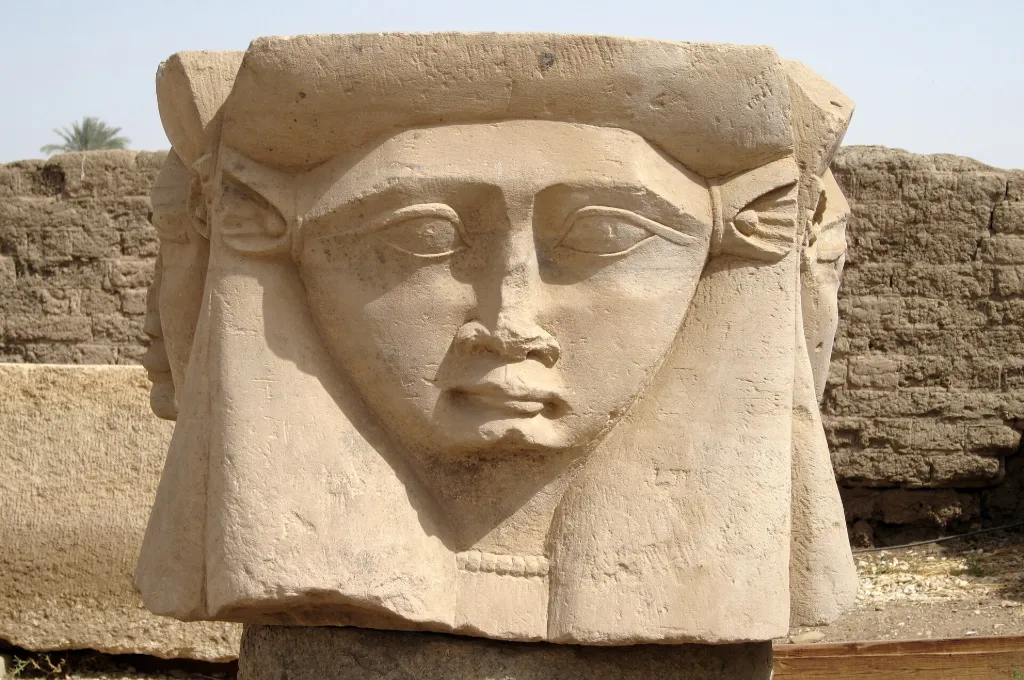
Artists drew her as a woman with cow horns and a sun disc, or as a cow. At Dendera she gazes calmly from every column.
| Symbol | What it means |
|---|---|
| Cow horns and sun disc | Her link to the sun god and motherhood |
| Sistrum | The sacred rattle of music, dance and joy |
| Mirror | Beauty and love |
| Hathor-faced column | Her presence, holding up the temple |
The Dendera Hathor temple is her best-preserved home. It was built on older foundations, a true Dendera temple to Hathor that grew for centuries.
What Did Worship Look Like at Dendera?
It sounded like a festival. Priests and priestesses sang, danced and shook sistra to please the goddess.
Her son Ihy was the child god of music, so the courtyards echoed with rattles and hymns. A carved family portrait on the outer wall shows Hathor with Horus and Ihy. The University of Memphis Institute of Egyptian Art and Archaeology explains the scene and its symbols.
Her statue also travelled. Each year she sailed upriver to meet Horus at Edfu. Our guide to Edfu Temple follows that river journey.
Our guides say the best way to feel it is simple. Stand in the hall for a minute of silence, then imagine the rattles.
Want the goddess explained on site? Our private Dendera and Abydos day trip from Luxor comes with an Egyptologist guide.
Where Do You Meet Hathor Inside the Temple?
Almost everywhere. The temple of Hathor at the Dendera temple complex, Egypt, is built around her.
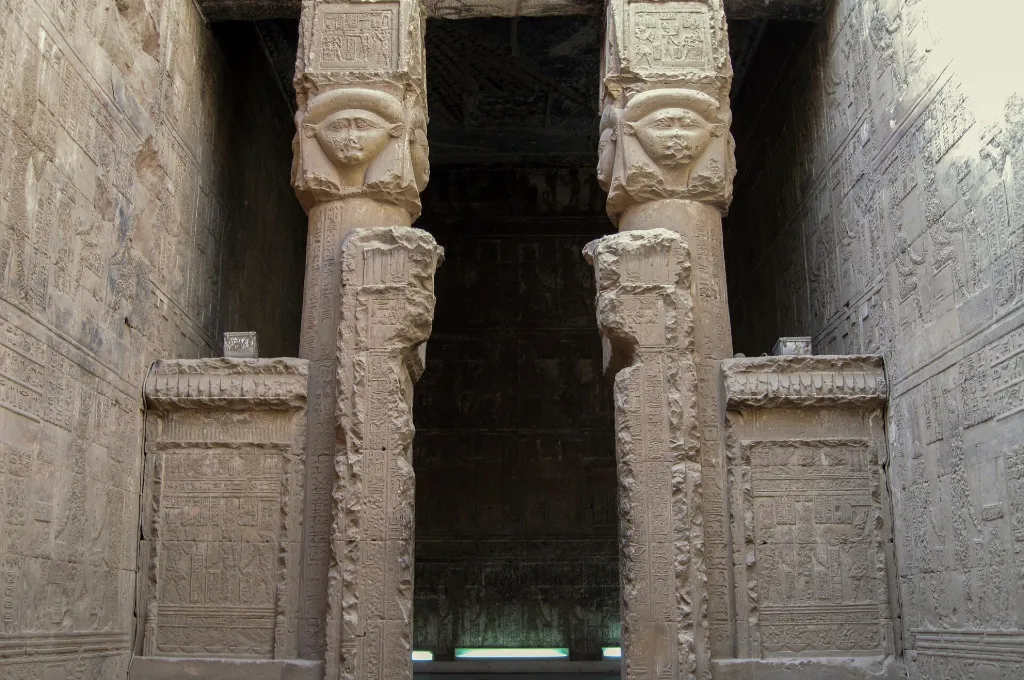
- The columned hall: faces with cow ears look down from the capitals.
- The Wabet: a ritual “pure place” framed by Hathor columns.
- The sanctuary: the innermost room, where her main statue stood.
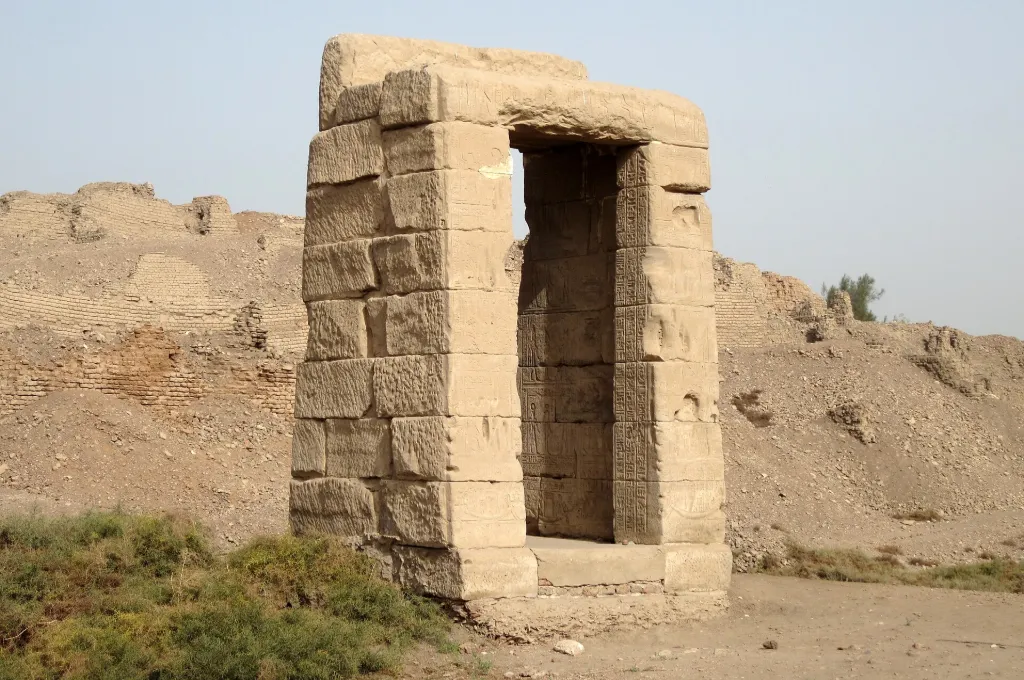
- The small sanctuary: a freestanding gateway shrine outside the main building.
- The roof kiosk: a little shrine for Hathor, open to the sky.
Guide’s tip: the Wabet and the small sanctuary are easy to skip. Ask your guide to include both. They are quieter than the main hall.
What Do the Dendera Hieroglyphs Say?
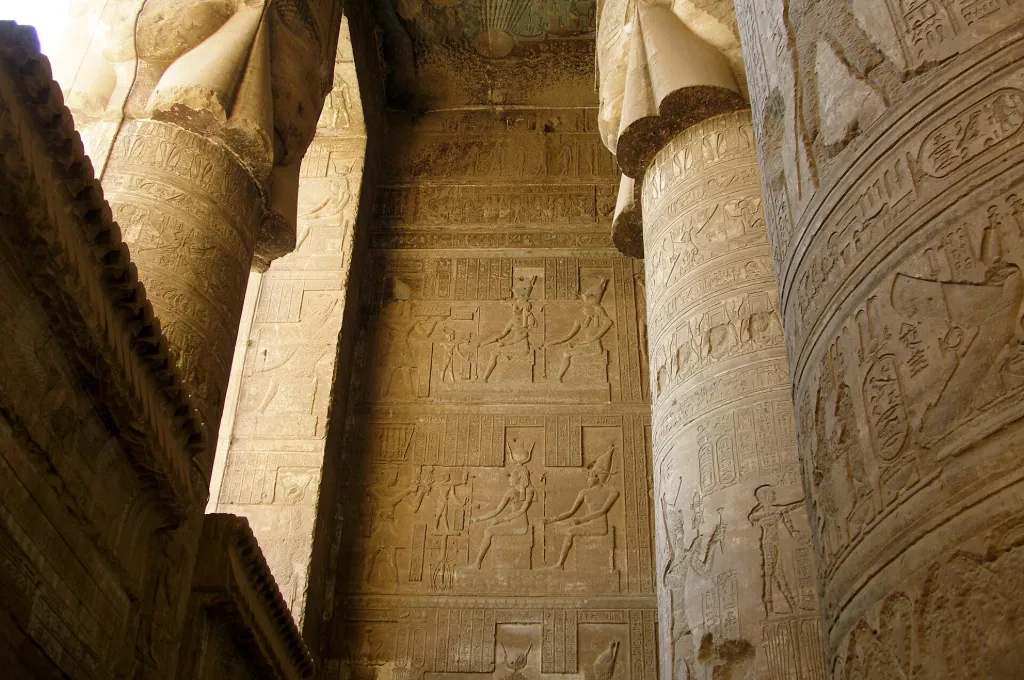
Mostly hymns, rituals and offering lists. The walls are covered, from floor to ceiling, in signs.
Door frames carry hymns praising Hathor. Other panels list the gifts she was due at each festival.
Most texts use late Ptolemaic and Roman hieroglyphs. These borrowed many more signs than earlier Egyptian, which is why beginners find them tricky.
You can spot her name without training. Hathor means “House of Horus”, so look for a falcon inside a rectangle.
| Sign | What it shows |
|---|---|
| Falcon inside a rectangle | Hathor’s name, “House of Horus” |
| Cow horns around a sun disc | Hathor in picture form |
| Oval ring (cartouche) | A royal name, such as Cleopatra’s |
Guide’s tip: ask your guide to read one hymn aloud. Hearing it makes the carved lines feel alive.
Why Is Cleopatra Carved on the Back Wall?
She wanted the goddess to bless her heir. The relief shows Cleopatra VII and her son Caesarion making offerings, a message of royal legitimacy carved in stone.
Look closely. The queen’s face is stylised, not a portrait. Egyptian artists used a set formula for every ruler, so the carving tells you who she was, not how she looked.
Searches for Dendera Cleopatra all lead to this one wall. The Dendera temple Cleopatra relief sits on the outside rear of the building, so you must walk round to find it.
Ready to follow Cleopatra’s story up the Nile? Browse our Luxor tours and day trips.
Why Do Roman Emperors Appear in Hathor’s Temple?
Because Rome kept the old system. Emperors were carved as pharaohs, offering gifts to the goddess in return for her blessing.
Tiberius finished the great columned hall. Domitian and Trajan appear in offering scenes on the entrance gateway. Nero is shown presenting a model of the birth house.
Look for their names inside cartouches. Foreign rulers wore Egyptian dress, and Hathor accepted them all.
Which Other Pages Complete the Dendera Story?
Hathor is only one chapter. Three more pages fill in the rest of the temple.
- The full visitor route, tickets and hidden corners: our Dendera temple in Egypt guide.
- The star map sawn off the roof: the ancient Egyptian Dendera zodiac.
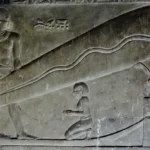
- The lotus-and-snake carving in the crypt: the Dendera lights.
- Hathor beside Isis and Sekhmet: our guide to Egyptian goddesses.
Hathor Questions Travellers Ask
Did Cleopatra ever visit Dendera?
No source proves it. The back-wall relief shows her as the temple’s royal patron, whether or not she stood in the courtyard herself.
Can beginners read the Dendera hieroglyphs?
A few signs, yes. Learn Hathor’s falcon-in-a-box name and the cartouche shape, and the walls start to make sense. A guide fills in the rest.
Why do Hathor’s columns show cow ears?
Ancient artists often mixed human and cow features for Hathor. The ears point to her role as the heavenly cow who mothers the sun.
What is a sistrum, and can you see one at the temple?
A sistrum is a sacred rattle linked to Hathor. In the temple of Hathor at Dendera, Egypt, its shape rises above her face on the column tops.
Go and Meet the Lady of Dendera
Hathor’s home rewards slow looking: faces on columns, hymns on door frames, a queen on the back wall. Give it a morning and the goddess stops being a name in a book. Plan your Hathor day with El Sultan Travel.