Do the Dendera lights prove that ancient Egyptians had electric bulbs? Stand in the crypt and the real story turns out stranger, and far more Egyptian. Here is what the carving shows, why it fooled the internet and how to find it.
What Do the Dendera Lights Actually Show?
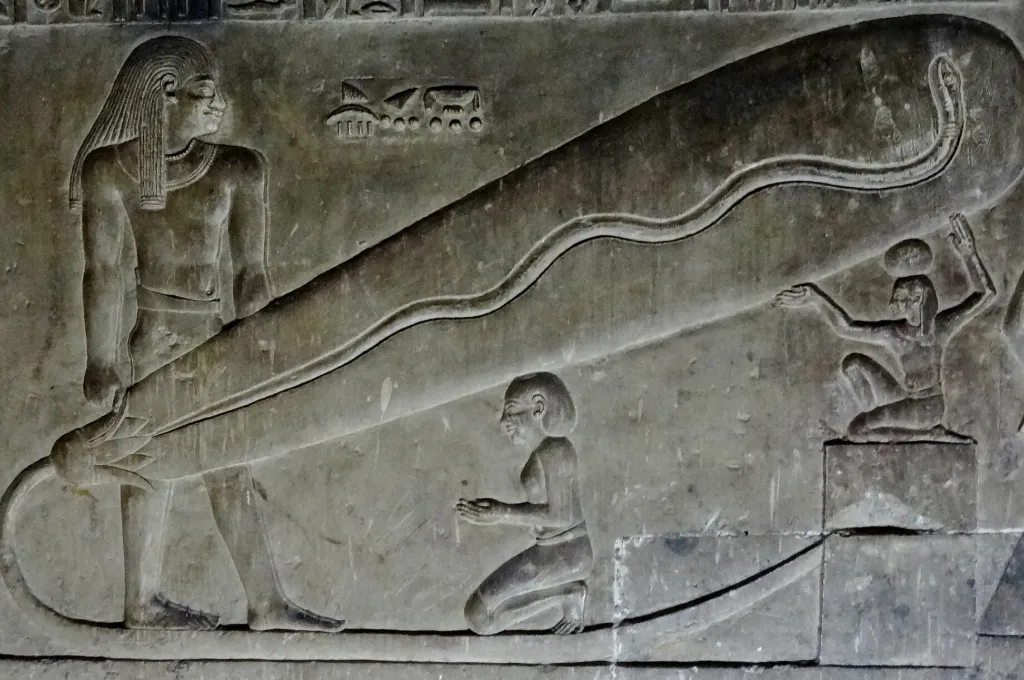
A snake rising from a lotus flower inside a large oval shape. The scene is carved six times, across a crypt and a chamber in the Hathor temple.
| Element | What it is |
|---|---|
| Oval shape | A container the Egyptians called the hn, perhaps the womb of the sky goddess Nut |
| Snake | The god Harsomtus, shown rising from the flower |
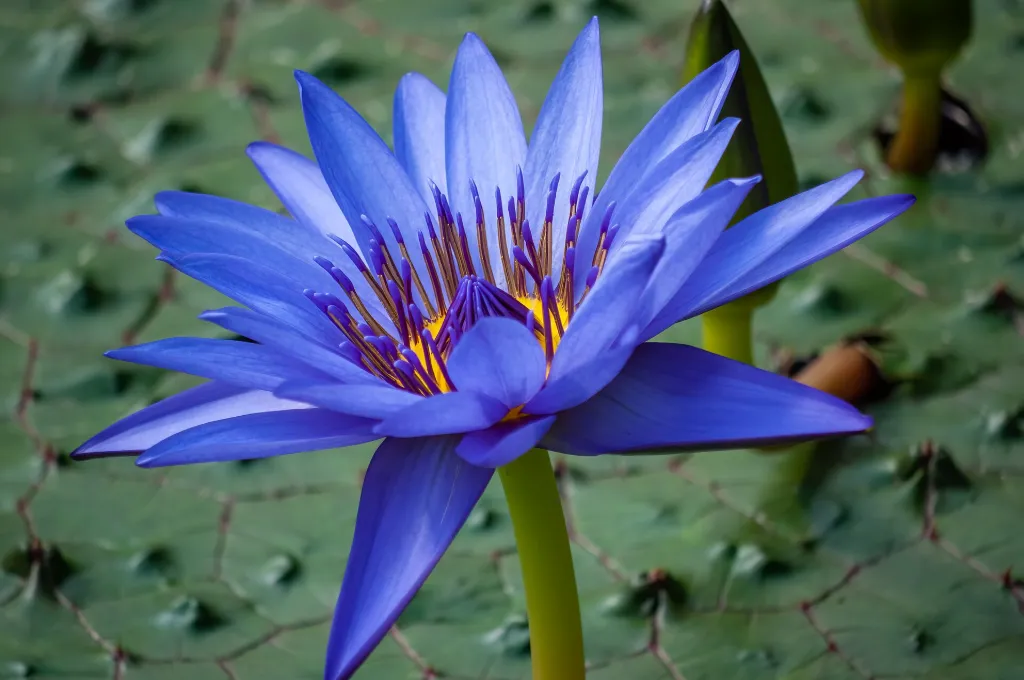
| Lotus | A symbol of creation and rebirth |
| Djed pillar | A sign of stability that sometimes holds the oval up |
Captions beside the scenes name the god and describe the statues involved. Nothing in the text mentions light, power or glass.
Why Does the Dendera Bulb Look Like a Light Bulb?
Because of shape. The long oval looks like glass, the snake like a filament and the lotus stem like a socket.
Add a pillar that resembles an insulator, and a modern eye does the rest. Writers of the ancient-alien school popularised the idea in the twentieth century.
Search for the Dendera lightbulb today and you find memes, videos and heated comment threads. Very few show the captions carved beside the scene.
Archaeologist Kenneth Feder makes a simple point. No bulb remains, wires or batteries have ever turned up at Dendera.
What Do Egyptologists Say the Relief Means?
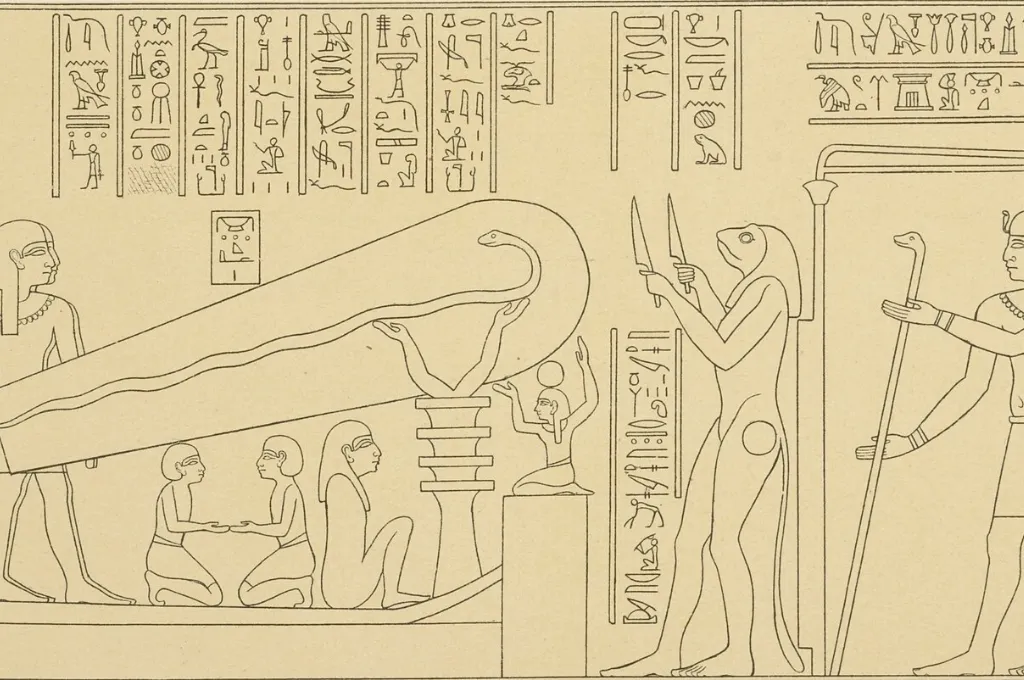
It is a creation scene, not a lamp. The captions describe cult statues of the gods, with their materials and heights.
Statues were kept in the crypts, which stood for the underworld. Light from the temple roof would later wake them. The snake is Harsomtus, the great god who lives in Dendera. Madain Project summarises the scenes and their inscriptions on its Dendera Light page.
The same roof once held the famous star map. Read the story in our guide to the ancient Egyptian Dendera zodiac.
What Else Hides in the Dendera Crypts?
Twelve underground chambers in all. Priests used them to store ritual vessels and sacred images, away from public eyes.
The walls carry lists of offerings, gods and temple treasures. The lotus-and-snake scenes are only a small part of the decoration.
Only priests entered. For everyone else, the crypts stayed a secret for centuries.
How Did Priests Light Dark Crypts Without Electricity?
With oil lamps and torches. Egyptians used both for thousands of years, inside tombs and temples alike.
Some scholars add a clever detail. Mirrors can bounce daylight down a corridor, and salted torches burn with less smoke. Both are simpler than power cables.
Guide’s tip: when you stand in a crypt, notice how dark it really is. It explains why the carvers cared so much about light.
Which Claims Survive the Evidence?
| Claim | What the evidence says |
|---|---|
| Egyptians had electric bulbs | No bulb, wire or battery has been found |
| The oval is a glass bulb | The captions call it a sacred container |
| The snake is a filament | It is the god Harsomtus rising from a lotus |
| The scene is a creation story | Supported by the inscriptions |
Think about what real electric lighting would leave behind. Glass fragments, metal contacts, a power source, even a workshop to make them. Archaeologists have found none of these in any crypt, tomb or town.
The real puzzle is better. Why did priests hide gods underground, then wake them with sunlight? That question gets you closer to ancient Egypt than any bulb.
Where Can You See the Dendera Lights Today?
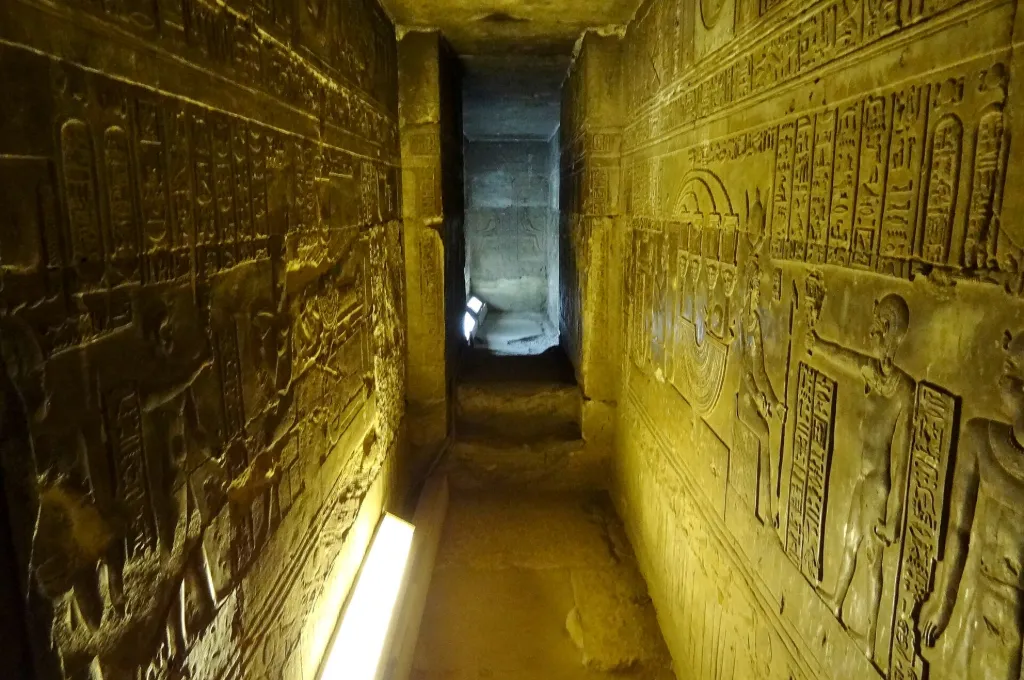
In the temple’s underground crypts and a related chamber, inside the Hathor temple near Qena. One half of each scene sits in a crypt, the other half in a room nearby.
Ask your guide to point out the oval. The reliefs are small, low and easy to miss. Crypts are narrow and dim, and some may be closed on the day, so treat the lights as a bonus, not a promise.
Field note from our guides: most visitors arrive expecting a giant light bulb and leave talking about the snake. Online photos are cropped tight, so the real carving feels smaller than you imagine, and far more detailed.
Our Dendera temple in Egypt guide lists tickets, hours and the best walking order.
Want a guide who can find the carving in seconds? Join our private Dendera and Abydos day trip from Luxor.
For the goddess who owned this temple, read our guide to the temple of Hathor at Dendera.
Dendera Lights Questions Answered
Is the Dendera lightbulb a real ancient light bulb?
No. No bulb, wire or battery has been found, and the captions describe a lotus, a snake and sacred statues. The Dendera lights are a creation scene.
Where are the Dendera lights carved?
In the temple’s underground crypts and a related chamber. Ask your guide, as the scenes are small and low on the wall.
Why is a snake inside the lotus?
The lotus stands for creation, and the snake is the god Harsomtus emerging into the world. Together they show new life.
Did ancient Egyptians use lamps?
Yes. They used oil lamps and torches. Some scholars think mirrors and salted torches could light deep rooms with less smoke.
Look Past the Bulb
The Dendera lights are not a light bulb. They are a lotus, a snake and a creation story carved in the dark. The real surprise is how well the temple tells it. Book your Dendera day trip with El Sultan Travel and see the reliefs for yourself.