 Skip to main content

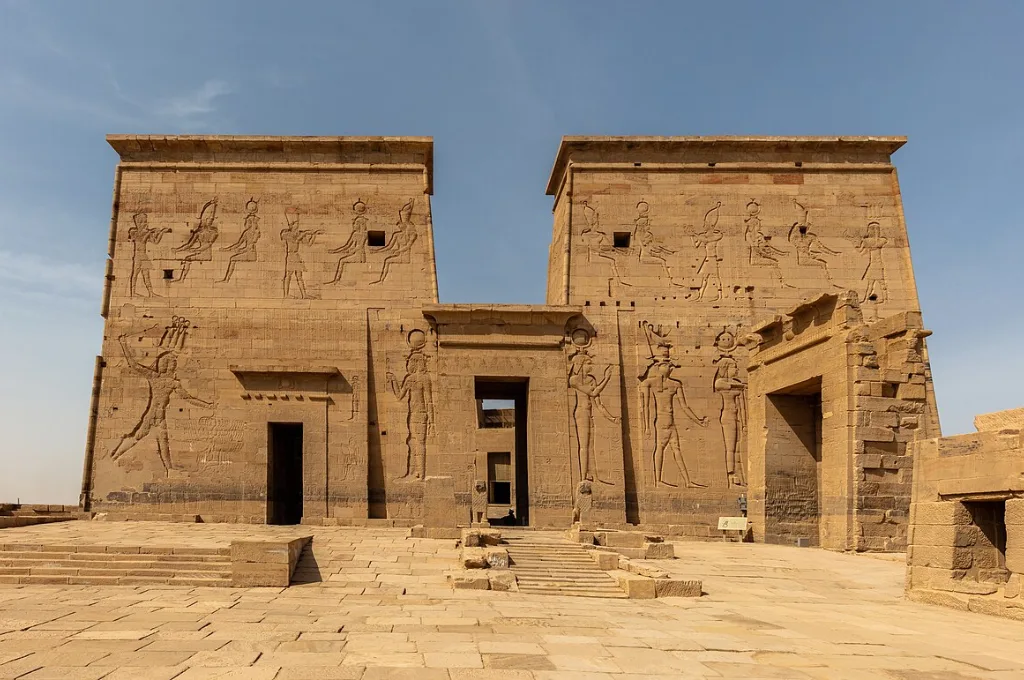
Standing at Philae Temple and unsure what you are looking at? Beyond the graceful columns, the walls hold a goddess’s rescue mission, the birthplace of the Nile and a French army’s boast. Here is what to look for.
Five Details Most Visitors Walk Past
Slow down at these spots, and the island becomes a storybook in stone.
- The Nile’s birthplace: a carved cave with the flood god pouring water, on the Gate of Hadrian.
- A murdered god: scenes of Isis mourning Osiris, also on the Gate of Hadrian.
- A French inscription: carved in 1799 near the entrance to the Temple of Isis.
- A birth house: small carved scenes celebrating the child Horus.
- Carved crosses: traces of the years when the temple became a church.
The Myth That Built an Island
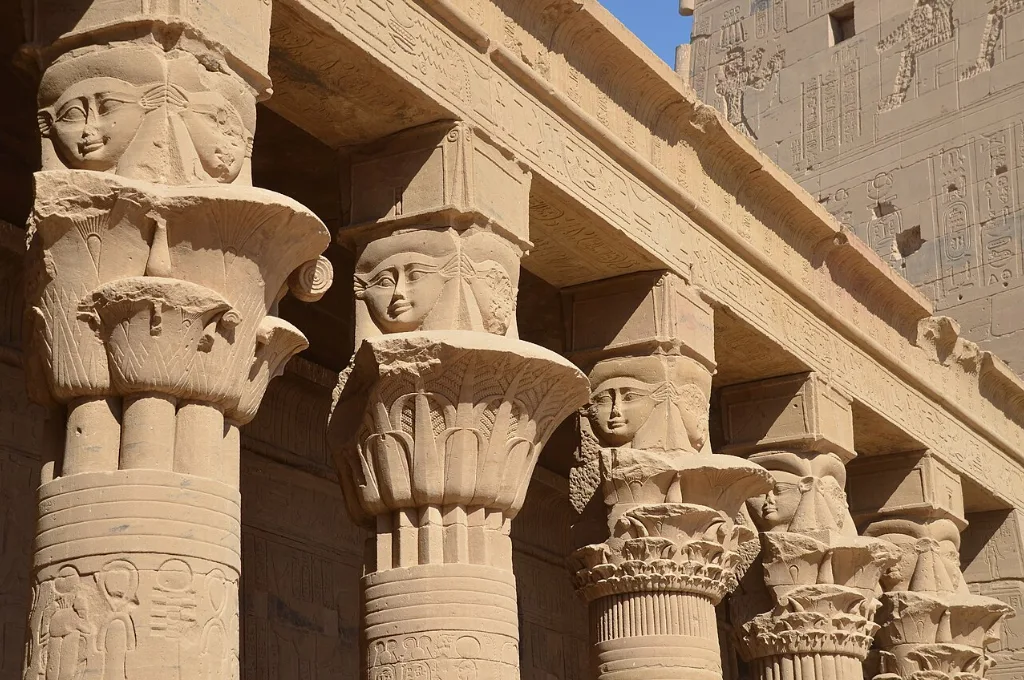
Philae mattered because of one story. Osiris was murdered, and his wife Isis searched the land for his body. Ancient Egyptians believed he lay buried on a neighbouring island, Bigeh, which was called the Abaton.
Priests sailed Isis’s sacred boat there in ceremonies, and the Gate of Hadrian marked the starting point of that procession. Pilgrims crossed to Philae to honour the goddess who defeated death.
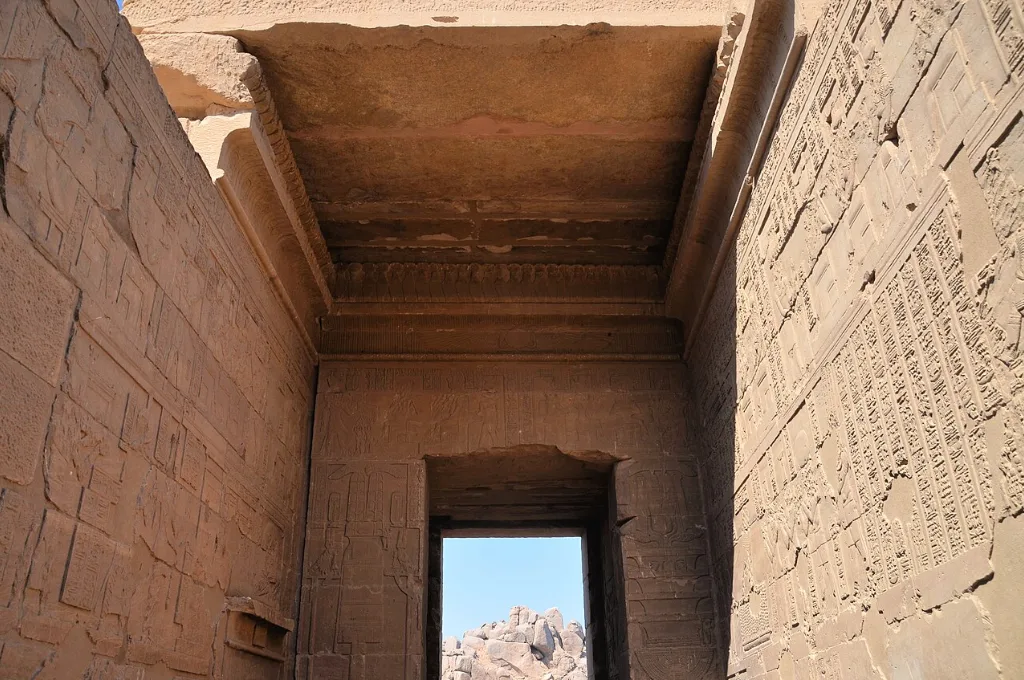
Guide’s tip: walk through the Gate of Hadrian slowly. Most visitors photograph the outside and miss the myths carved on the inner walls.
Where Ancient Egyptians Believed the Nile Was Born
On the right-hand wall of the gate, the Nile god Hapy pours two streams of water from a cave beneath Bigeh. A falcon perches above. To the Egyptians, the flood began at the first cataract, right here.
The scene feels poignant today, because the dam at Aswan now controls that annual flood. Read the full story in our Aswan High Dam guide.
Want a guide to point out these details? Join our Philae Temple tour and see the island through an Egyptologist’s eyes.
A French Army’s Boast, Carved in Stone
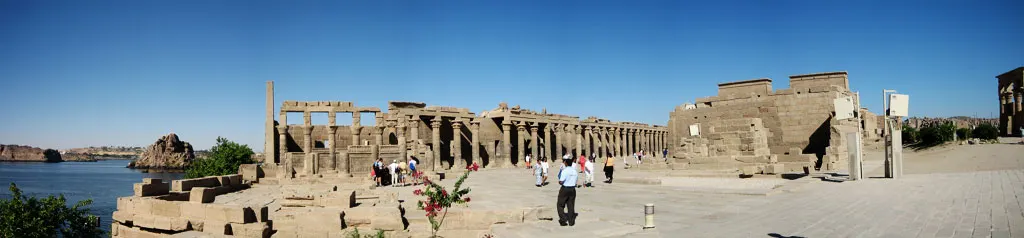
Near the entrance to the Temple of Isis, you will find an unexpected inscription in French. It dates to March 1799, when Napoleon’s army chased the Mamluks south. A sculptor named Castex carved the names of the generals and the division commander, Desaix, into the sandstone.
The text is described by the Napoleon Foundation as one of the most significant inscriptions of the Egyptian expedition. It shows that travelers have been leaving their marks at Philae for centuries.
Three Eras, One Island
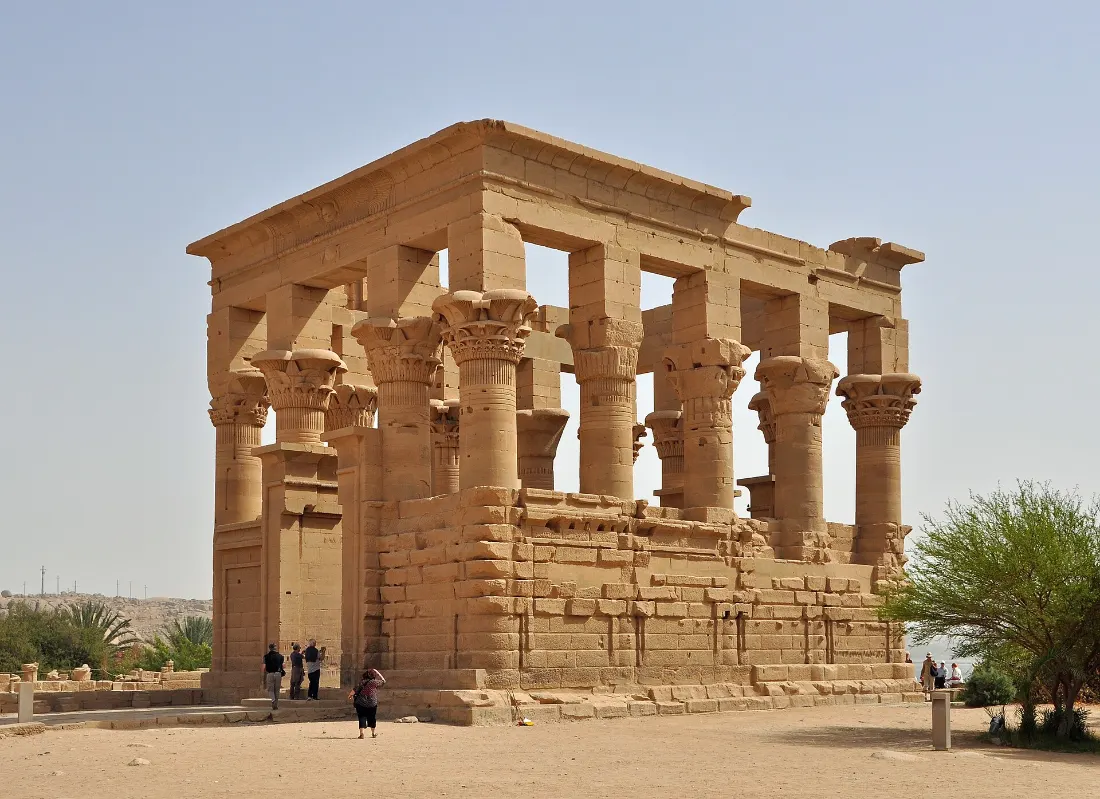
Philae is not the work of one age. Native pharaohs, Greek-speaking Ptolemies and Roman emperors all added to it. This table shows who built what.
| Building | Era |
|---|---|
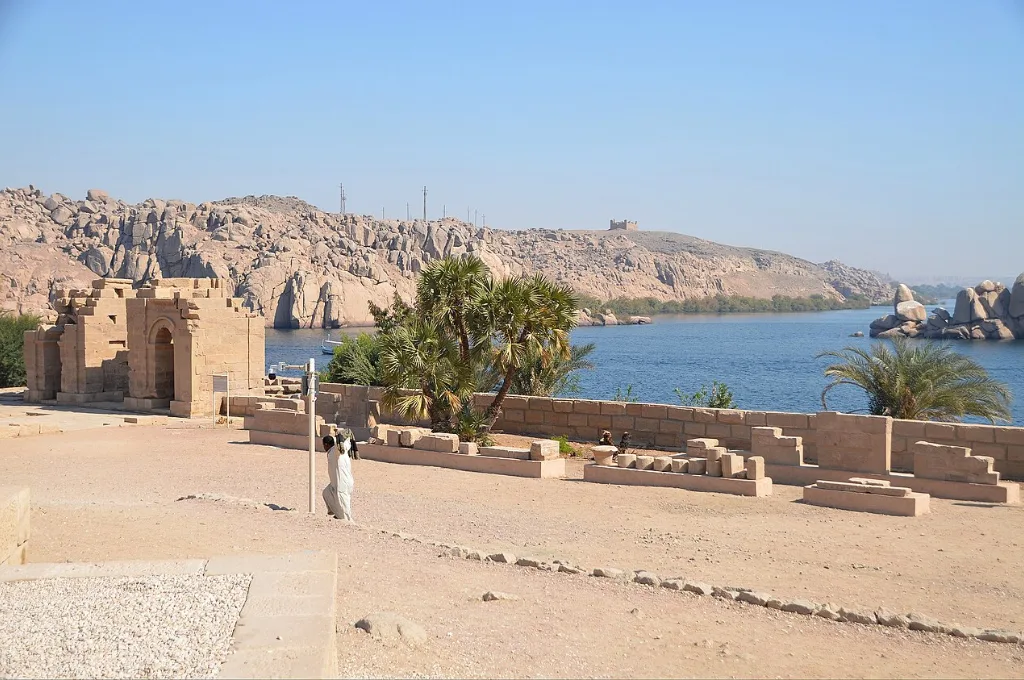
| Kiosk of Nectanebo | Late Egyptian rule, 4th century BC. |
| Temple of Isis | Ptolemaic period, from about 280 BC. |
| Trajan’s Kiosk | Roman period, around AD 100. |
| Gate of Hadrian | Roman period, 2nd century AD. |
| Gate of Diocletian | Late Roman period, around AD 300. |
How to Read the Walls Without a Degree
You do not need to read hieroglyphs. Use three simple rules:
- Look for the biggest figure. It is usually the king or the goddess.
- Follow the water jars. They often point to the Nile or to rebirth.
- Notice the damage. Defaced faces and carved crosses tell a later story.
Questions to Ask Your Guide at Philae
A good question unlocks a good story. Try these:
- Which carving shows Isis at her most powerful?
- Where would pilgrims have stood during the festival of Isis?
- What changed when the temple became a church?
- How did the engineers match the old island’s layout on Agilkia?
Bring a camera with a zoom lens or a phone with good low-light mode. Carved details look best in side light, which is why mornings and late afternoons work well.
Planning Your Visit in Two Lines
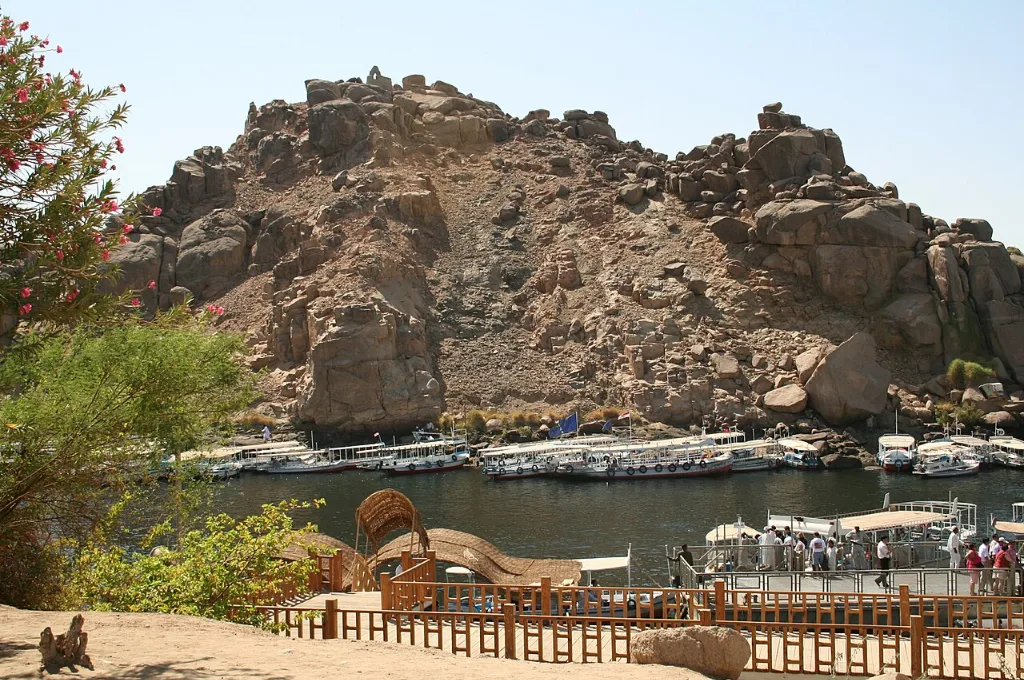
Cross by motorboat from the dock near Aswan, and go early for the softest light. For boat tips, opening times and the evening show, read our full Philae Temple Egypt visitor guide.
Philae Temple: Questions Travelers Ask
Where is the relief showing the source of the Nile at Philae Temple?
Look at the right-hand wall of the Gate of Hadrian. It shows the flood god pouring water from a cave beneath Bigeh island.
Who was buried on Bigeh, the island beside Philae?
Ancient Egyptians believed Osiris lay there, in a sacred area called the Abaton. Priests held special rites for him on that island.
What does the French inscription at Philae say?
It records the French army’s advance up the Nile in 1799 and names the commanders. It commemorates a military pursuit, rather than a religious event.
Which rulers added buildings to Philae Temple?
Late Egyptian kings, the Ptolemies, and several Roman emperors, including Trajan, Hadrian and Diocletian, all contributed.
An Island of Stories
Philae is more than a pretty view. Look closely, and you will find myth, politics and the Nile itself carved into the stone. Ready to read the walls with an expert? Browse our Aswan tours and let a guide tell the stories.


