Table of Contents: Elephantine Island
Elephantine Island sits mid-Nile at Aswan — one of the oldest continuously inhabited places in Egypt, where pharaonic ruins, a working nilometer and two flowering Nubian villages share a car-free island you can walk end to end. It is Aswan’s best free-range afternoon.
Quick Answer: Elephantine is the large island facing central Aswan, reachable by public ferry or felucca in minutes. Its south end holds the ruins of ancient Abu — temples of Khnum and Satet and a famous nilometer — with the Aswan Museum; the rest is Nubian village life: painted houses, gardens, riverside cafés. Allow 2–4 unhurried hours.
- Ancient Abu was Egypt’s southern frontier town and ivory-trade post — hence “Elephantine”.
- The nilometer’s stone staircase measured the flood that set each year’s taxes.
- No cars, no hurry: the island runs on footpaths and ferry schedules.
The Ancient South: Ruins of Abu
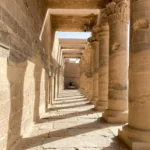
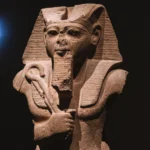
For 4,000+ years this island guarded the First Cataract frontier. The archaeological zone layers temple over temple — Khnum, ram-headed god of the cataract, and Satet, its goddess — plus a reconstructed Middle Kingdom shrine and granite gateways. The nilometer steps down to the river under carved measuring scales: when the flood climbed its stairs, scribes read the level and Egypt knew its harvest and its taxes. The small Aswan Museum sits among the ruins [check current opening status locally].
The Living North: Siou and Koti
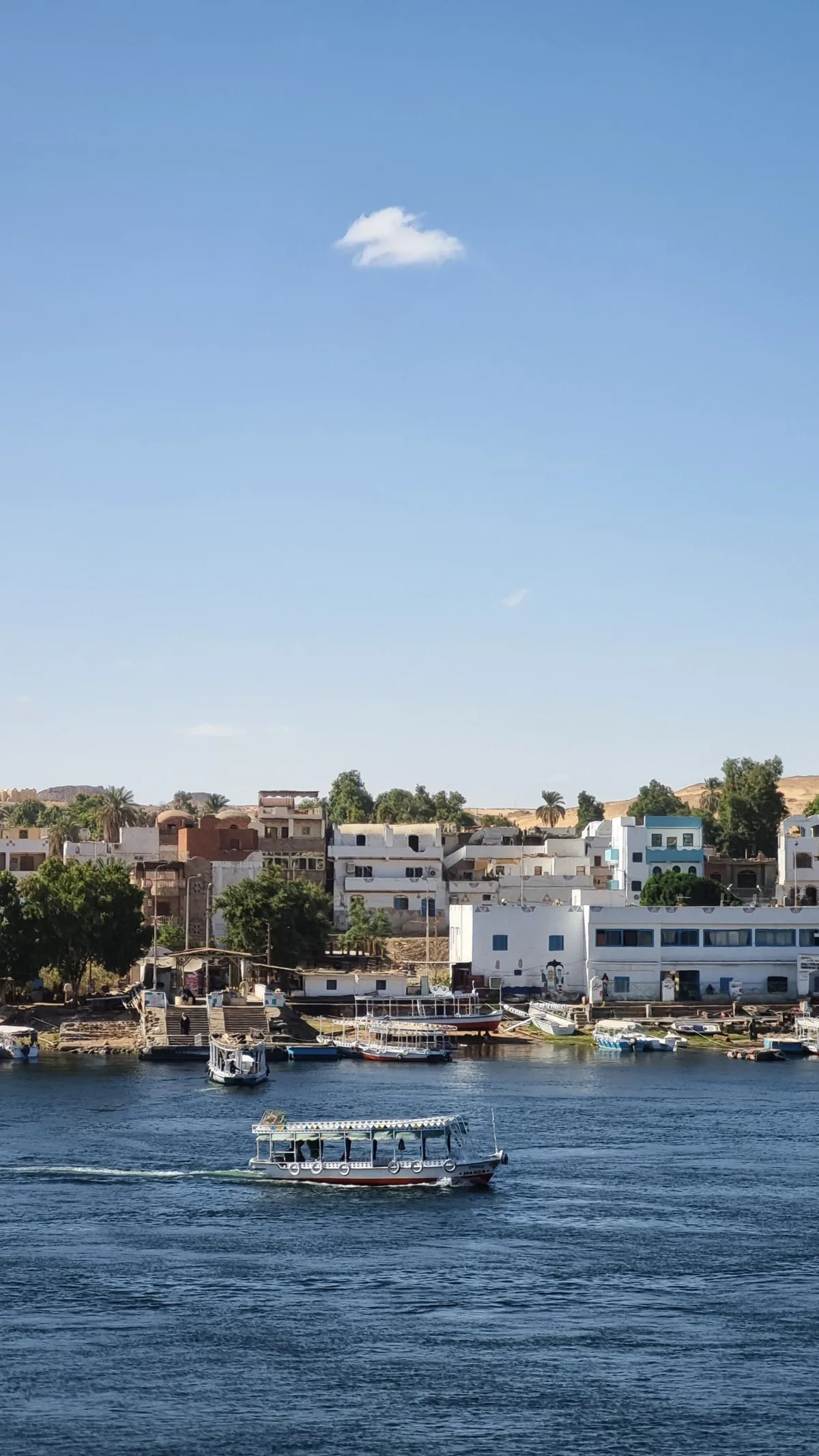
Beyond the ruins, the island belongs to two Nubian villages — alleys of hand-painted houses, banana gardens, kids playing football between palms, grandmother-run cafés on the waterline. It is not a “show village”: people simply live here, and respectful wandering is welcomed. For the fuller cultural visit with a host family, pair it with a Nubian village visit across the channel.
How to Visit
| Detail | What to know |
|---|---|
| Getting there | Public ferry from the corniche (minutes, pocket change) or any felucca |
| Time needed | 2–4 hours: ruins + village wander + café stop |
| Cost | Ferry is minimal; the archaeological zone has a ticket [verify current price] |
| Best light | Late afternoon, ending with sunset from the west shore |
Make It a River Day
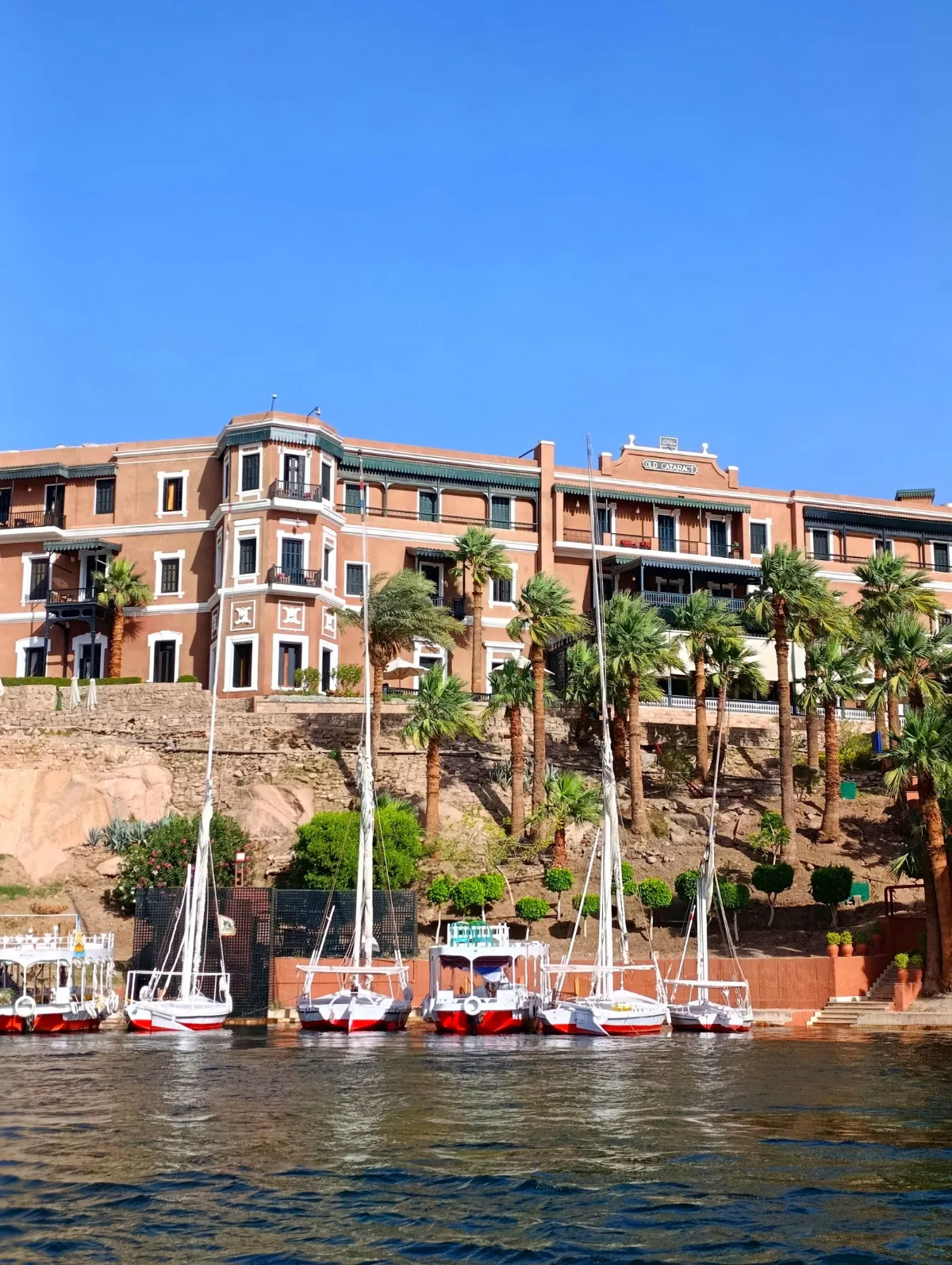
Elephantine anchors the classic Aswan river afternoon: ruins first, village tea, then a felucca sail around the island and Kitchener’s gardens as the sun drops. City context in the Aswan travel guide; organized versions in our Aswan tours.
A morning on Elephantine Island blends ancient ruins with living Nubian villages. Elephantine Island sits mid-river, reachable by a short felucca hop from the Corniche. Elephantine (historical background)
FAQs About Elephantine Island
Why is it called Elephantine?
Ancient Abu (“elephant/ivory”) was the ivory-trading frontier; the Greeks translated the name. Some say the smoothed granite boulders offshore look like bathing elephants.
How do you get to Elephantine Island?
The public ferry crosses from central Aswan’s corniche in a few minutes; feluccas drop you anywhere on request.
Is there an entrance fee?
The island is free; the archaeological area at the southern tip is ticketed [verify current price].
Can you stay overnight?
Yes — Nubian guesthouses on the island are among Aswan’s most atmospheric stays; see where to stay in Aswan.
Elephantine or the Nubian village at Gharb Soheil?
Elephantine is closer and more lived-in; Gharb Soheil is more set up for visitors. With an afternoon each, do both.
Want a guided island walk? Our Aswan team grew up on these ferries — message us on WhatsApp.