
The Ramesseum is the memorial temple of Ramses II on Luxor’s West Bank — the ruin that inspired Shelley’s “Ozymandias”, with the shattered colossus of the great king still lying where it fell. Fewer visitors, huge atmosphere. Here is the visit.
Quick Answer: The Ramesseum is the mortuary temple of Ramses II, built in the 13th century BC on the West Bank between Hatshepsut’s temple and Medinet Habu. Its signature sight is the fallen granite colossus of Ramses — originally around 18 meters and some 1,000 tons — plus a fine hypostyle hall and vaulted mudbrick storerooms. Allow 45–60 minutes.
- The fallen colossus inspired “Ozymandias”: “Look on my Works, ye Mighty, and despair!”
- Battle of Kadesh reliefs cover the pylons — Ramses’ favorite story.
- Usually blissfully quiet; combine with the neighboring West Bank sites.
Table of Contents
Ozymandias, in Person
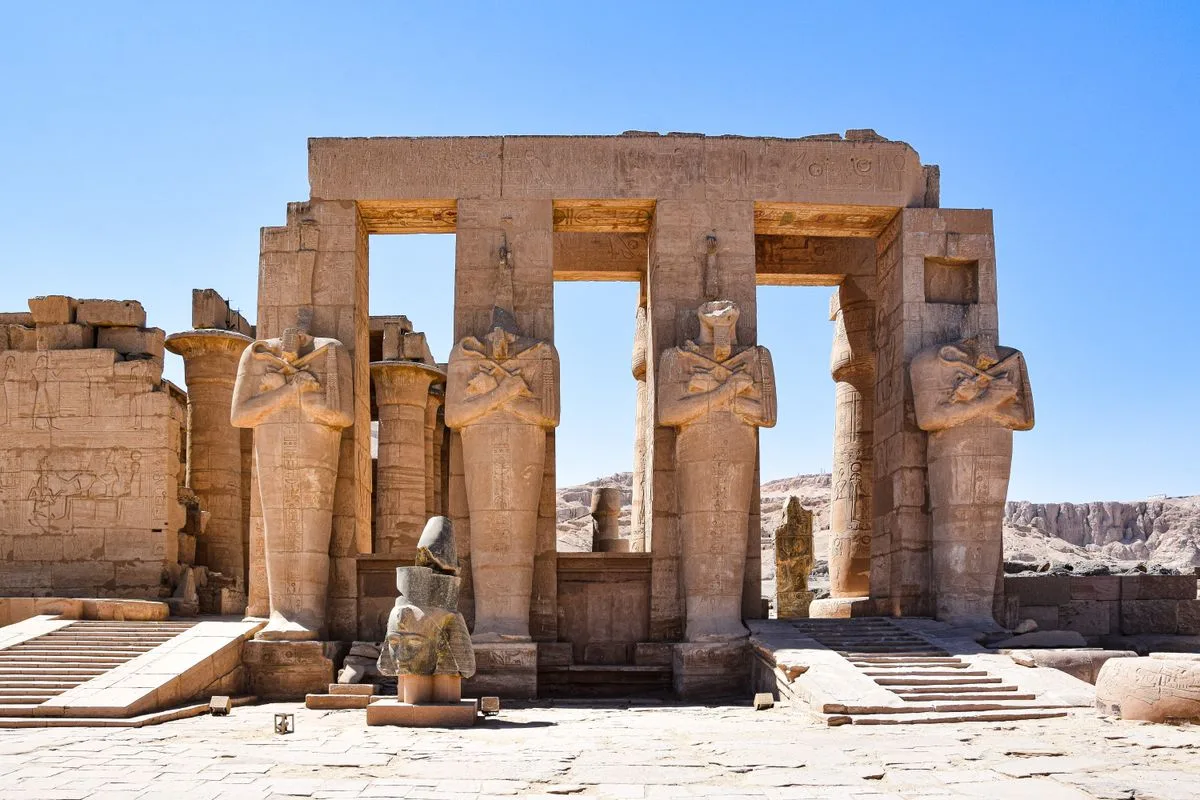
“Ozymandias” is the Greek rendering of User-maat-Ra, Ramses II’s throne name — and Shelley’s sonnet about the ruined ego of kings was inspired by reports of this very statue. The seated colossus of polished granite once rose about 18 meters beside the second court; today its enormous head and torso lie broken among the columns, and standing beside the toppled face is one of the West Bank’s quietly profound moments.
What Else to See
The Kadesh reliefs
Ramses II fought the Hittites at Kadesh (c. 1274 BC) to a strategic draw — and advertised it as a crushing personal victory on every temple he built. The pylon reliefs here show the king oversized in his chariot, scattering enemies single-handed: ancient propaganda at its most entertaining.
The hypostyle hall and astronomical ceiling
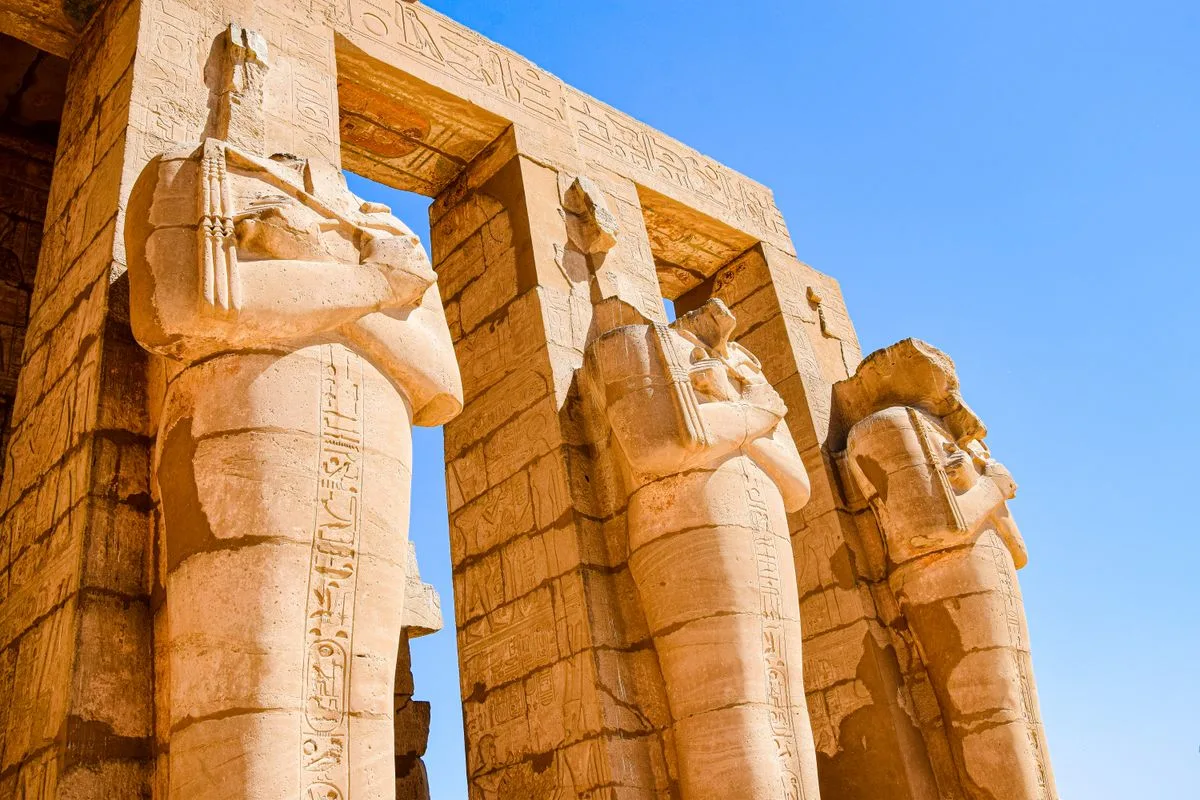
A smaller cousin of Karnak’s forest, with elegant papyrus columns and, in the surviving inner rooms, one of the earliest astronomical ceilings.
The mudbrick storerooms
Around the stone temple sprawl vaulted granaries and workshops in original mudbrick — rare survivors that show how a mortuary temple worked as an economic machine, not just a monument.
Visiting Information
| Detail | What to know |
|---|---|
| Location | Central West Bank, between Hatshepsut’s temple and Medinet Habu |
| Time needed | 45–60 minutes |
| Crowds | Light — often near-private |
| Combine with | Valley of the Kings morning + Medinet Habu / Deir el-Medina circuit |
Fitting It In
The Ramesseum suits the second West Bank morning, or replaces a site on the first for Ramses completists — pairing perfectly with Medinet Habu (built by his descendant Ramses III, in far better repair: see them together and the centuries snap into focus). We add it on request to the private West Bank tour.
The Ramesseum stands within Ancient Thebes and its Necropolis, a UNESCO World Heritage Site. See the official listing at the UNESCO World Heritage Centre.
FAQs About the Ramesseum
What is the Ramesseum famous for?
The fallen colossus of Ramses II that inspired Shelley’s “Ozymandias”, and its Battle of Kadesh reliefs.
How big was the fallen statue?
Estimates put it around 18 meters seated and roughly 1,000 tons of Aswan granite — among the largest statues Egypt ever carved.
Is it worth visiting versus Medinet Habu?
Medinet Habu wins on preservation; the Ramesseum wins on romance and literary echo. With an hour to spare, do both — they are minutes apart.
How long does the visit take?
Under an hour at an unhurried pace.
Want the quiet West Bank? Ask on WhatsApp to add the Ramesseum to your day — context in the Luxor travel guide.
