
Medinet Habu is the best-preserved temple on Luxor’s West Bank — and somehow the one most tours skip. The mortuary temple of Ramses III keeps its color, its towering reliefs and its fortress gate, usually with a fraction of the Valley of the Kings crowd. Here is why it deserves a place on your West Bank day.
Quick Answer: Medinet Habu is the mortuary temple of Ramses III on Luxor’s West Bank, built around 1150 BC. It is the most complete temple complex in Luxor — walls up to 20 meters, reliefs still carrying original paint, and the famous carved record of the Sea Peoples’ defeat. Plan about one hour.
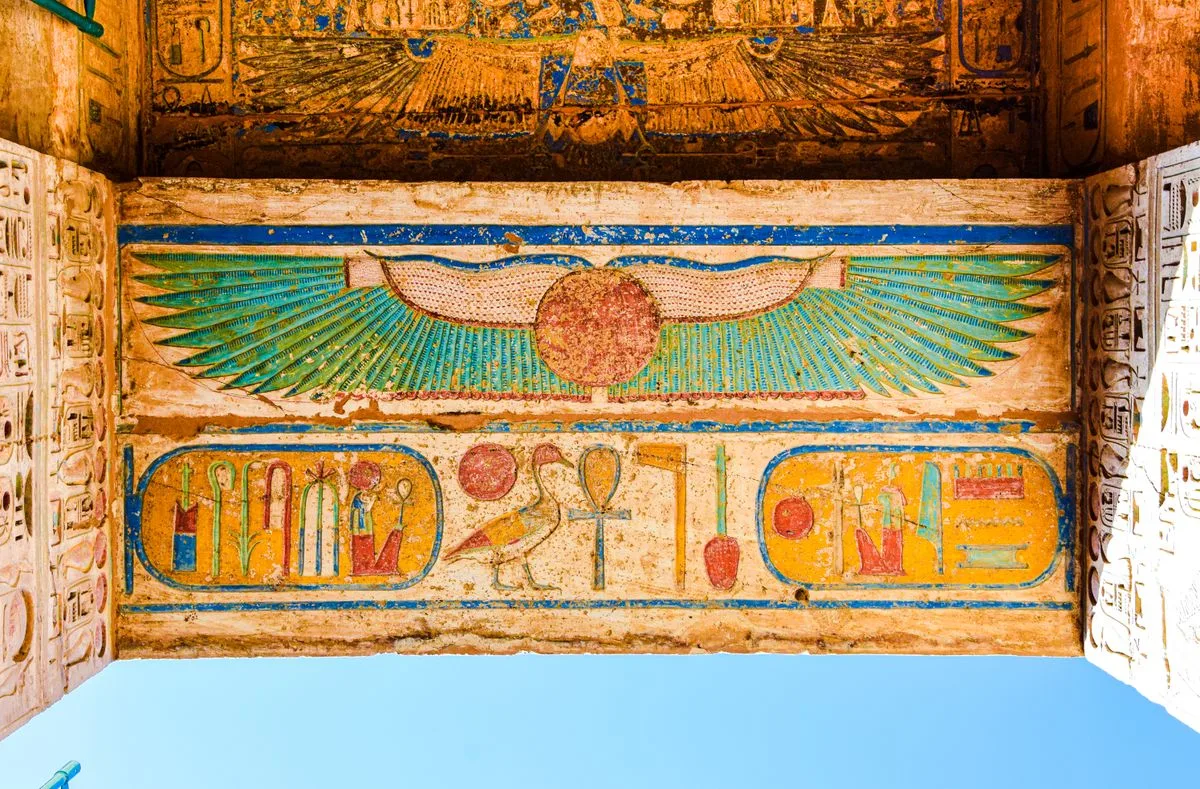
- Best-preserved major temple on the West Bank, with surviving color on the ceilings.
- Historic record: the great naval battle against the Sea Peoples is carved on its walls.
- Quiet: often nearly empty in the early morning.
Table of Contents
Why Medinet Habu Matters
Ramses III was the last of the warrior pharaohs, and his temple is both victory monument and history book. The north wall carries the ancient world’s most detailed battle scene — the repulse of the Sea Peoples’ invasion by land and sea around 1175 BC — a key document for historians of the Bronze Age collapse. The deep-cut reliefs here are so sharp you can read feathers on the enemies’ headdresses.
What to See
The Migdol Gate
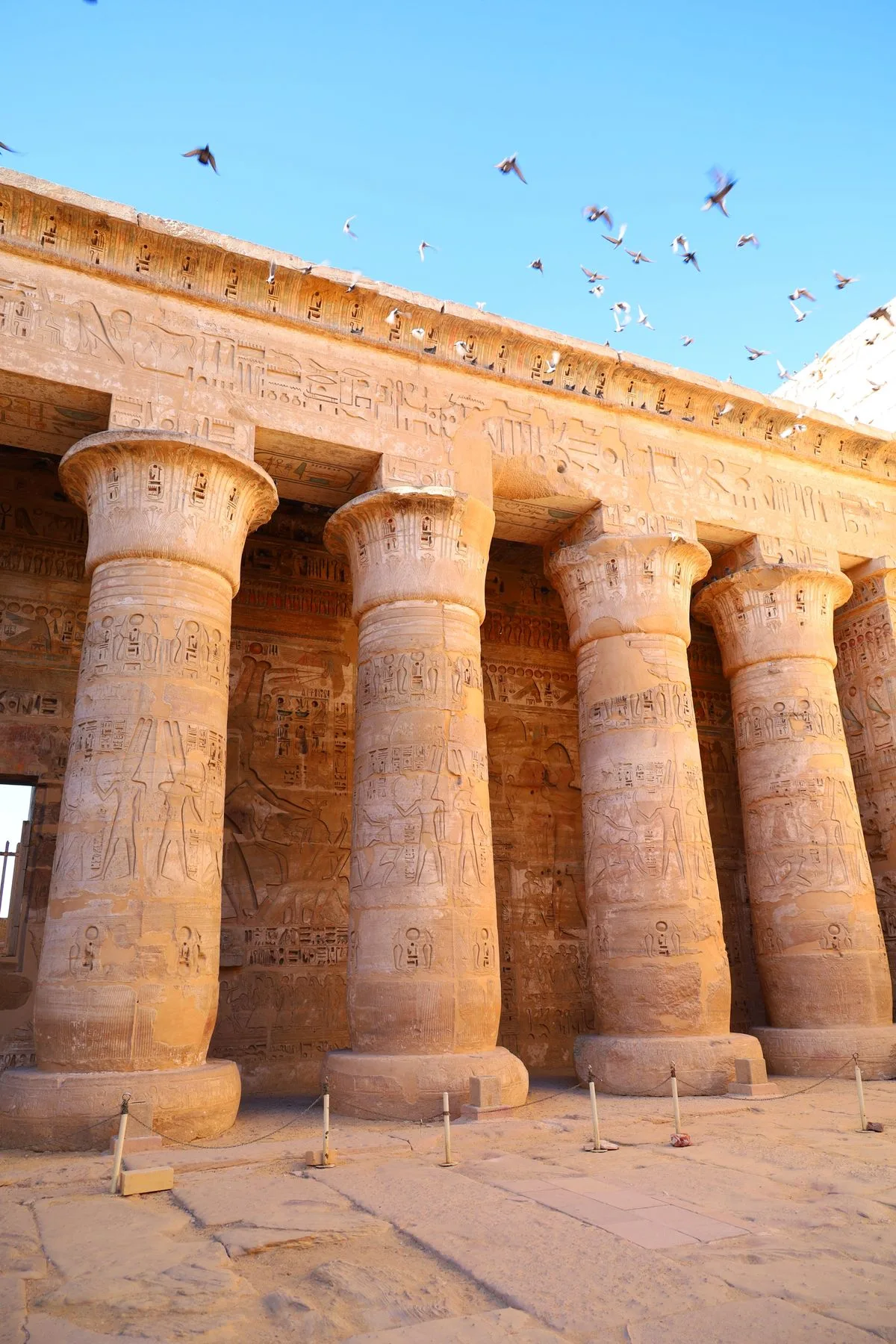
You enter through a fortified gatehouse modeled on Syrian migdol fortresses — unique in Egyptian temple architecture. Its upper rooms were the pharaoh’s private retreat, carved with scenes of the king at leisure.
The First and Second Courts
Colossal Osiride pillars, festival scenes, and on the walls the grim accounting of victory: scribes tallying the severed hands of enemies. The ceilings of the second court’s colonnade keep their blues and golds — this is where you understand every temple was once painted.
The Sanctuary and the Small Temple
Beyond lie the hypostyle halls (roofless but richly carved) and, in the corner of the compound, a small temple of Amun older than Ramses III’s — holy ground reused for a thousand years, later home to a Coptic town.
Visiting Information
| Detail | What to know |
|---|---|
| Location | Southern West Bank, near the workers’ village of Deir el-Medina |
| Time needed | About 1 hour |
| Crowds | Light — one of Luxor’s calmest major sites |
| Combine with | Deir el-Medina next door; Valley of the Kings morning |
Fitting It Into Your Day
Medinet Habu pairs naturally with Deir el-Medina, five minutes away, as the quiet second half of a West Bank morning that starts in the Valley of the Kings. Ask us to add it to a private West Bank tour — it is our guides’ favorite request.
The temple of Medinet Habu lies within Ancient Thebes and its Necropolis, a UNESCO World Heritage Site. See the official listing at the UNESCO World Heritage Centre.
FAQs About Medinet Habu
What is Medinet Habu famous for?
It is the mortuary temple of Ramses III, the best-preserved temple in Luxor, and holds the carved record of the defeat of the Sea Peoples.
Is Medinet Habu worth visiting?
Emphatically — many travelers rate it above bigger names for preservation, color and calm. It is the West Bank’s best value hour.
How long does Medinet Habu take?
Around an hour covers the gate, both courts and the halls without rushing.
Who were the Sea Peoples?
A confederation of maritime raiders whose Mediterranean-wide attacks around 1200–1150 BC coincided with the Bronze Age collapse. Ramses III’s victory scenes here are history’s main record of them.
Want the quiet masterpieces too? Tell us on WhatsApp and we will build Medinet Habu and Deir el-Medina into your West Bank day — full context in our Luxor travel guide.
