
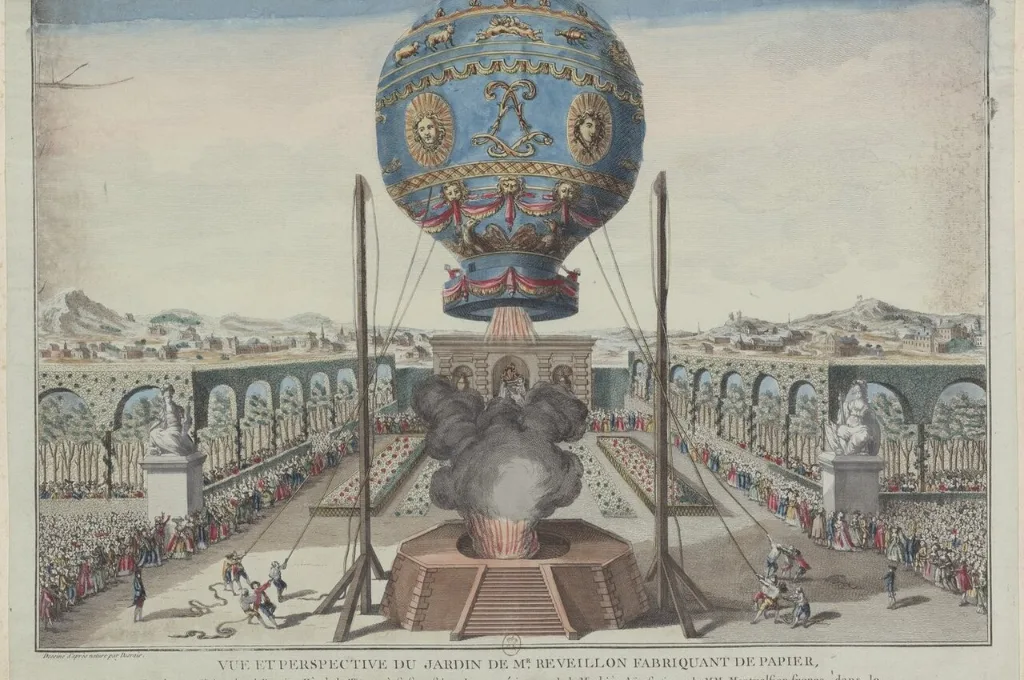
When did the 1st hot air balloon flight happen, and who dared to try it? The answer takes us to France in 1783, to two paper makers and a very brave sheep. Here is the story, and how it still lifts off over Luxor today.
Who Made the 1st Hot Air Balloon Flight?
Two French brothers, Joseph-Michel and Jacques-Étienne Montgolfier. They ran a paper business near Annonay and noticed that hot air made paper bags rise. In June 1783 they showed a large unmanned balloon to the public, and it climbed high above the town.
The American Balloon Museum tells the story of that day in its account of Montgolfier Day.
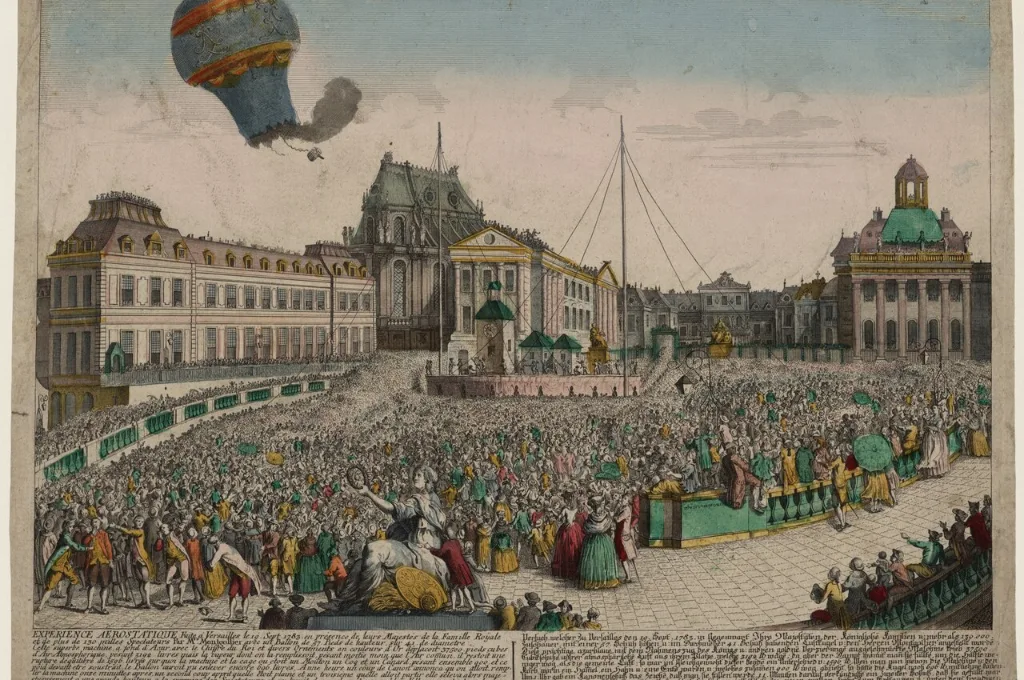
Why Did a Sheep, a Duck and a Rooster Fly First?
Because nobody knew whether people could survive in the air. In September 1783, at Versailles, the brothers launched a balloon carrying a sheep, a duck and a rooster, in front of the king. The flight lasted about eight minutes, and the animals landed safely.
That success gave the brothers the proof they needed. The next step was a human passenger.
What Are the Key Dates of Early Ballooning?
The progress came fast. This timeline shows the first months:
| Date | Milestone |
|---|---|
| June 1783 | The Montgolfier brothers launch an unmanned balloon at Annonay |
| September 1783 | A sheep, a duck and a rooster fly at Versailles |
| October 1783 | Pilâtre de Rozier rises in a tethered balloon |
| 21 November 1783 | Two men make the first free human flight over Paris |
Who Were the First Humans to Fly Free?
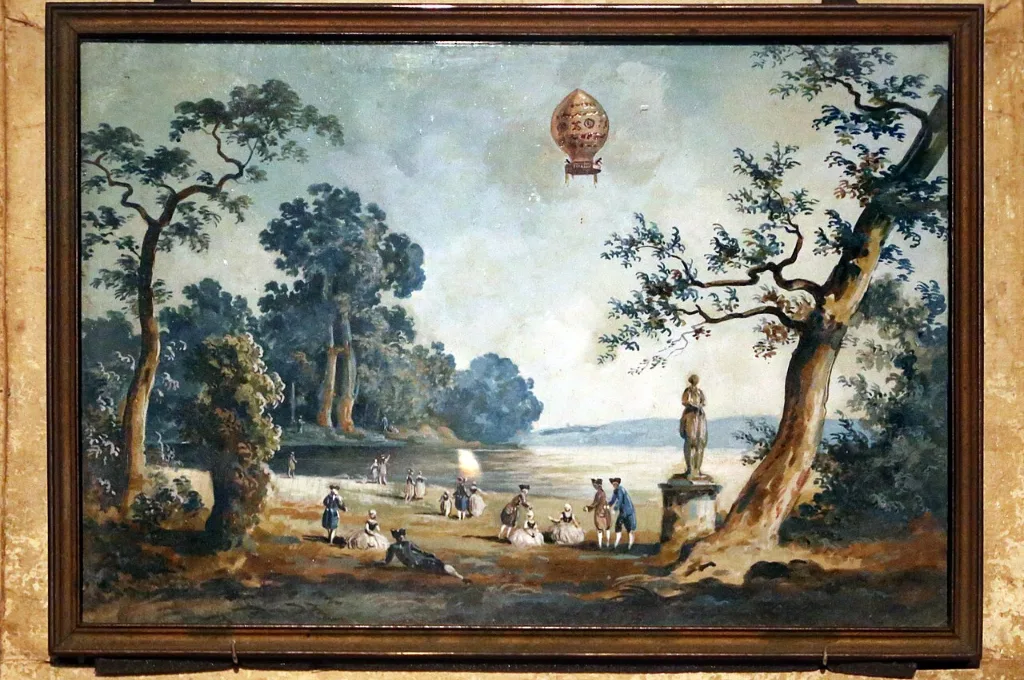
Pilâtre de Rozier and the Marquis d’Arlandes. On 21 November 1783 they lifted off from the Chateau de la Muette in Paris and flew for about 25 minutes. They travelled several kilometres across the city before landing safely.
The Montgolfier brothers did not make that flight themselves. They designed the balloon and watched from the ground.
Why Was a Human Passenger So Controversial?
Because the risk was unknown. Louis XVI is said to have suggested sending condemned prisoners first. Pilâtre de Rozier argued that such an honour should not go to criminals, and the king agreed to let volunteers go. The story shows how daring, and how unsure, those first months of flight were.
How Did the Public React in 1783?
With wonder and a little fear. Huge crowds gathered in Paris to see the balloons, and news travelled quickly across Europe. Some villagers who saw a balloon land in a field were frightened, and officials later issued notices explaining what balloons were. Ballooning became fashion within months.
What Came Right After the Hot Air Balloon?
Only days later, in December 1783, physicist Jacques Charles flew a hydrogen balloon in Paris with Nicolas-Louis Robert. Hydrogen balloons stayed up longer, while hot air balloons were simpler and cheaper to run. Both styles shaped the history of flight, and hot air remains the one most travelers meet today.
How Did the First Balloons Stay Up?
They burned straw and wool under an open balloon. The fire heated the air inside, and the heated air lifted the fabric dome. Early passengers carried extra fuel and had to keep the fire going the whole time. It worked, but it was risky.
Modern burners run on gas, give the pilot far more control and include backup systems. Our guide to a hot air balloon in flight explains how today’s balloons rise and land.
How Did One Idea Become a Worldwide Pastime?
Ballooning spread quickly through Europe, and rival designs soon followed. Over time, safer materials and better burners turned an experiment into a sport and a form of travel. Today, balloons fly over valleys, deserts and festivals on every continent, including Egypt.
Curious how Luxor compares with the other famous places? Read our guide to the best hot air balloon rides in the world.
What Does That 1783 Idea Look Like in Luxor Today?
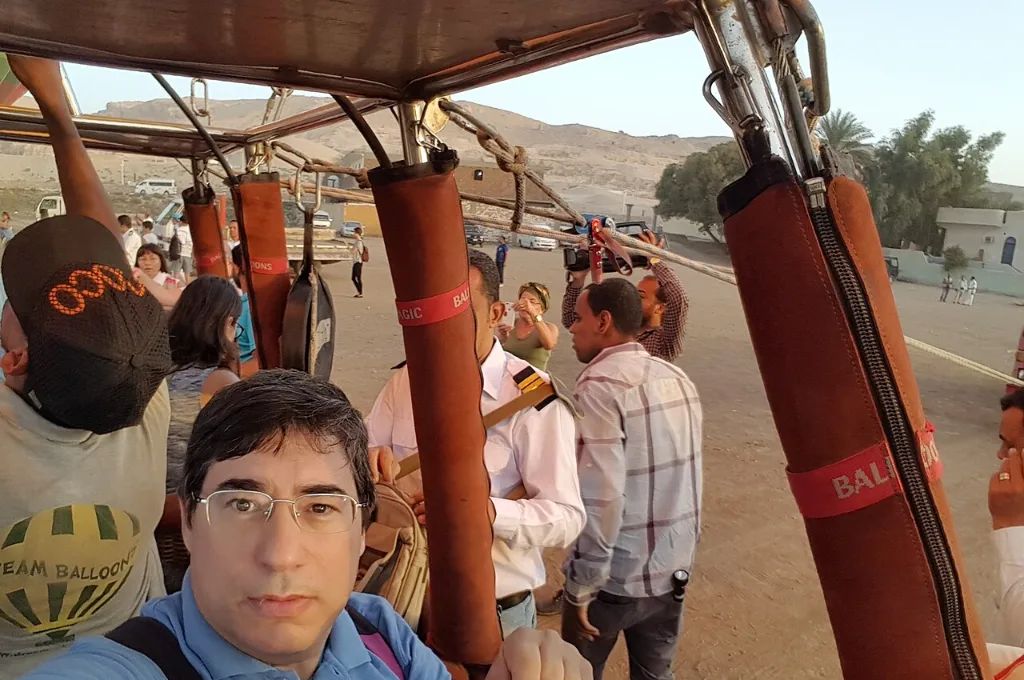
It looks calm, colourful and very safe in experienced hands. Modern balloons float over the Nile, the fields and the cliffs of the West Bank at dawn, carrying passengers with licensed pilots and clear safety rules. The principle is the same one the Montgolfiers discovered: hot air rises.
Local tip: when you watch your balloon fill with air before sunrise, think of 1783. Few experiences connect you so directly to a scientific moment.
What Can Travelers Learn From the First Flight?
Three lessons still apply. Test before you trust, which is why the brothers sent animals first. Respect the weather, since early flights waited for calm days. And choose skilled people to fly, because experience beats courage. Those same rules guide safe balloon operators in Luxor, who fly only licensed pilots and cancel when the wind is wrong.
If you want to see how today’s morning is organised, read our sunrise balloon ride guide.
Fly the Idea Yourself
You can follow in the footsteps of those first passengers without the straw fire. Our Luxor hot air balloon tour includes pickup, the Nile crossing and a licensed pilot.
Quick Answers on Early Ballooning
Which date counts as the 1st hot air balloon flight with people?
The date is 21 November 1783. That day in Paris, two men made the first free flight with humans on board.
Did the Montgolfier brothers fly in their own balloon?
Not on that first human flight. They built and launched the balloon, but Pilâtre de Rozier and the Marquis d’Arlandes were the passengers.
How far did the first manned balloon travel?
Roughly nine kilometres across Paris, in about 25 minutes. It drifted with the wind and landed outside the city centre.
Why did early balloonists carry straw?
They fed it to the fire to keep the air inside hot. When the fire weakened, the balloon began to sink.
A Short Flight That Changed Travel
The 1st hot air balloon flight proved that people could rise above the ground and return safely. Almost 250 years later, that same idea carries travelers over Luxor each morning. If you want to feel it, book your balloon flight over the Nile.