How does a hot air balloon in flight actually stay up, and who decides where it goes? The science is simple, and the pilot’s skill is fascinating. Here is what happens above Luxor, from first lift to soft landing.
How Does a Hot Air Balloon Rise?
It rises because hot air is lighter than cool air. The burner warms the air inside the envelope, the balloon’s fabric dome. Once the air inside is light enough, the balloon floats up. The NASA Glenn Research Center explanation covers the physics in more detail.
When the pilot stops heating, the air cools slowly and the balloon starts to sink.
What Are the Main Parts of a Balloon?
Four parts do almost all the work:
| Part | Its job |
|---|---|
| Envelope | Holds the heated air and gives the balloon its shape |
| Burner | Heats the air with a controlled flame |
| Basket | Carries the pilot and passengers |
| Vent at the top | Lets the pilot release hot air to descend |
Can a Pilot Steer a Hot Air Balloon?
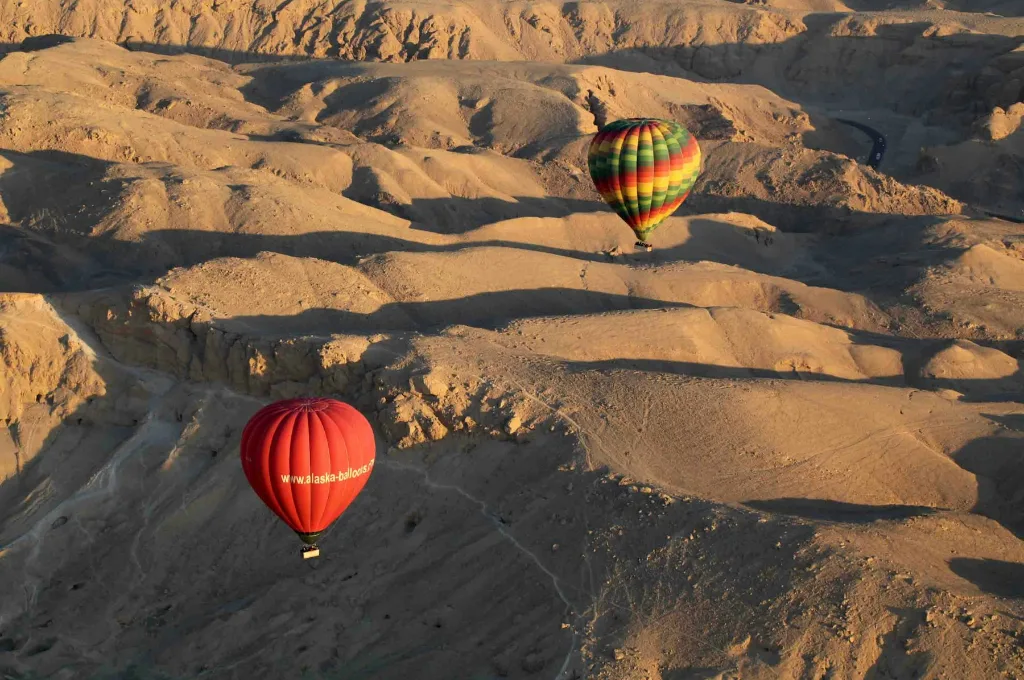
Not like a car or a plane. A balloon has no rudder or engine to push it sideways. Instead, the pilot climbs or descends to find air layers moving in the direction he wants. Winds often change with height, so skilled pilots read the sky in layers.
That is why two flights over Luxor never take the same path.
Why Can You Not Feel the Wind Inside the Basket?
Because the balloon moves at the same speed as the air around it. There is no headwind pressing on your face, so the ride feels almost still. Passengers often notice the ground slipping past, not the wind. That quiet is one reason first-timers feel calm in the air.
What Does a Flight Feel Like Over Luxor?
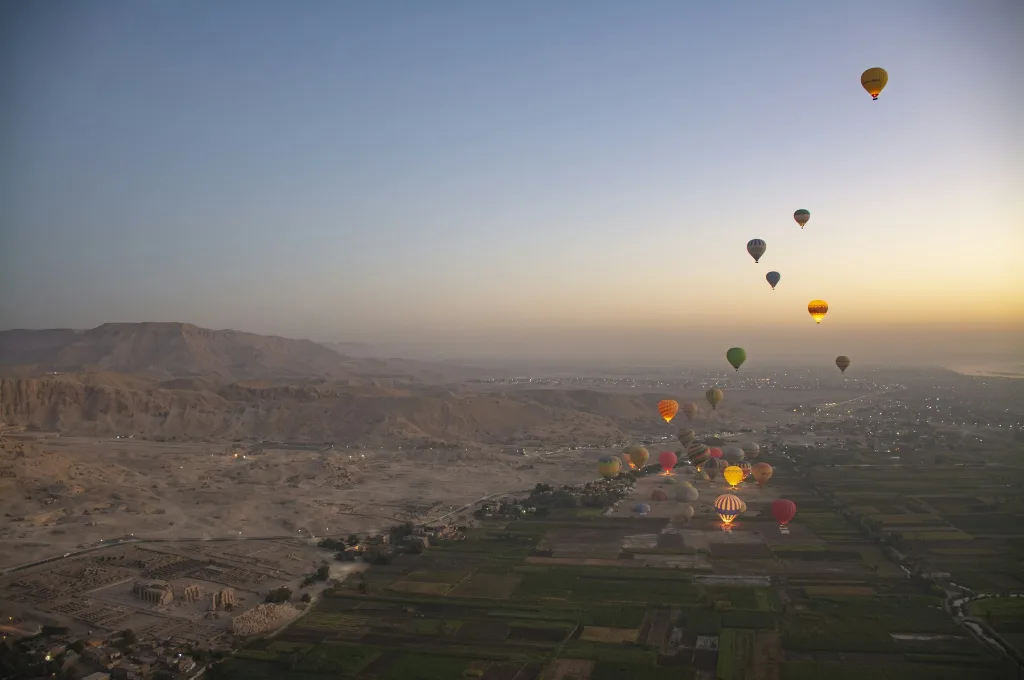
Soft, slow and surprisingly quiet. The burner roars for a few seconds, then silence returns. You can hear dogs, roosters and the call to prayer from the villages below. Light changes quickly across the cliffs and the Nile.
- Lift-off feels like a gentle elevator, with little shake.
- The climb is gradual and calm.
- Burner blasts warm your head for a moment.
- Landing is soft, though baskets sometimes drag or bump slightly.
Local tip: bring a hat. The burner is above your head, and a thin cap makes the warm blasts easier to enjoy.
Who Meets the Balloon When It Lands?
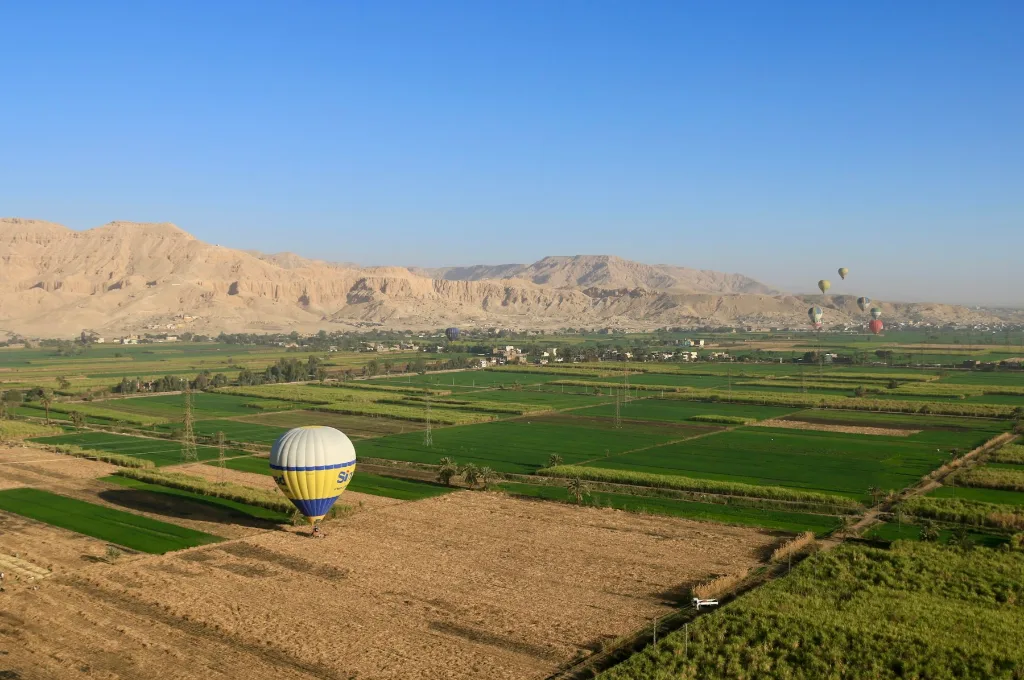
A ground crew in vehicles follows the balloon and meets it at the landing site. They help secure the basket, pack the envelope and guide guests out. Nobody walks across the fields alone. The crew knows the area, and the pilot radios the landing site as the flight ends.
How Does the Pilot Choose a Landing Spot?
He picks an open field, clear of power lines, trees and buildings. If the first choice looks unsafe, the pilot simply flies a little farther. This flexibility is a key reason balloons are safe in careful hands. Our price guide also explains why licensed pilots are part of a fair price.
How High Does a Balloon Fly?
Pilots use a range of heights during one flight. Low passes let you see farmers at work and children waving from the roofs. Higher climbs open the whole valley, with the Nile curving through the desert. The pilot chooses the height that finds the right wind and keeps the flight safe. Many people enjoy the low drifts most, because the world feels close.
Why Do Balloons Fly at Dawn?
Early morning air is cool and calm, which makes lift-off and landing smoother. By late morning the sun creates rising warm air that makes winds less predictable. Our guide to the sunrise hot air balloon ride explains the morning timeline in full.
What Makes a Good Balloon Pilot?
Patience, weather sense and calm decisions. A good pilot checks the forecast before dawn, releases small test balloons to see wind direction and talks passengers through each step. Experience matters more than fancy equipment, so always ask who is flying you.
What Can Stop a Balloon From Flying?
Wind is the main reason, followed by poor visibility and storms. Even a light breeze at the wrong height can make a launch unsafe. If conditions look doubtful, the pilot and the authorities wait, and sometimes cancel. A cancelled morning is not a failure. It is the system working as intended.
Because of this, plan one spare morning in your Luxor schedule. Our Luxor itinerary shows how to build that buffer without losing a day of sightseeing.
How Do You Photograph a Balloon in the Air?
Use a wide frame first to show the balloons against the cliffs. Then zoom on a neighbour glowing in the first light. If you stay on the ground, stand on the bank of the Nile or a rooftop terrace, because the flat horizon frames the envelopes beautifully.
See It for Yourself
Watching a hot air balloon in flight from the ground is lovely, but being in the basket is better. Our Luxor hot air balloon tour gives you the full view, and our Luxor balloon guide explains the morning step by step.

Questions About Balloons in the Air
How does the pilot make the balloon go down?
The pilot stops using the burner and may open the vent at the top. Hot air escapes, the envelope cools and the balloon descends gently.
Does the burner make the basket hot?
Only briefly. The flame is above your head, so you feel warm air for a few seconds after each blast. Wear a light hat if you are sensitive.
What happens if the burner stops working?
Balloons carry backup systems, and an envelope cools slowly, so descent is gradual. Pilots train for this and choose a landing area early.
Why does my hot air balloon in flight seem to stand still?
Because you drift with the wind. With no headwind, the speed is hard to sense, and distant sights seem to hang in place.
Simple Science, Lasting Memory
A hot air balloon in flight combines basic physics with real skill. The air rises, the pilot reads the wind and the landscape does the rest. Ready to feel it yourself? Book your Luxor sunrise flight.