Have you ever wondered why every great civilization in history dreamed of standing beside the Nile — and what secrets still wait along its banks today?

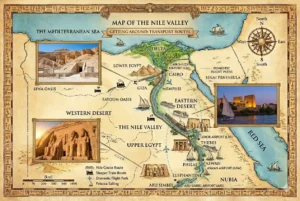
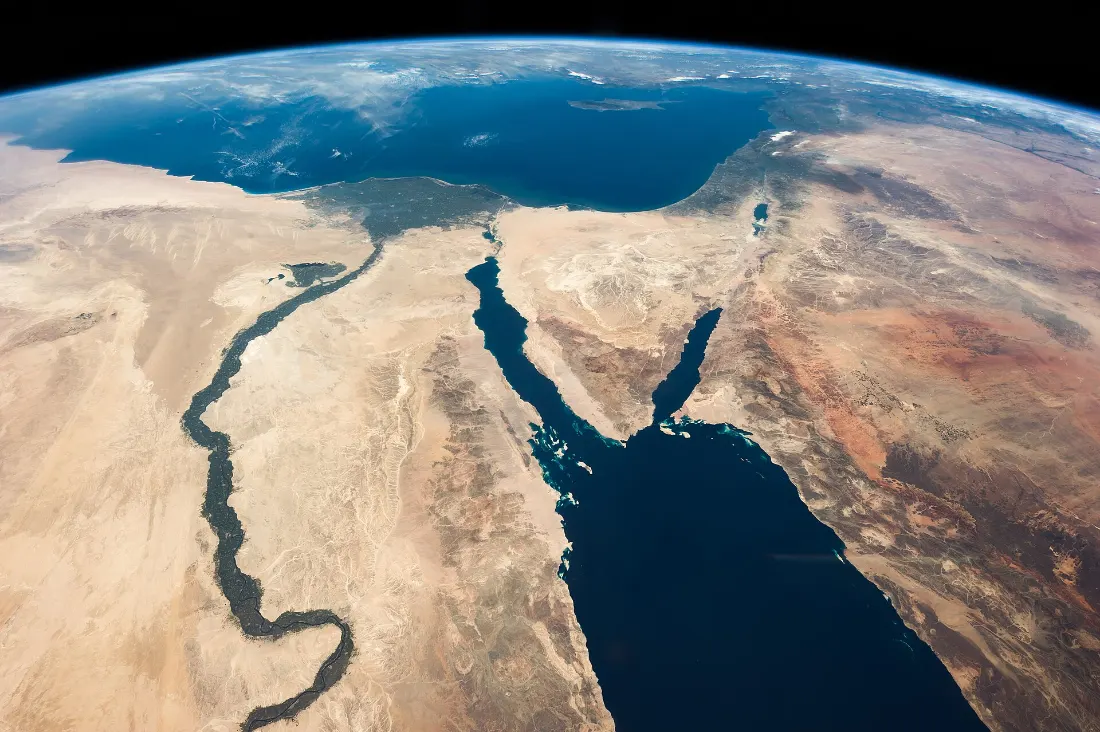
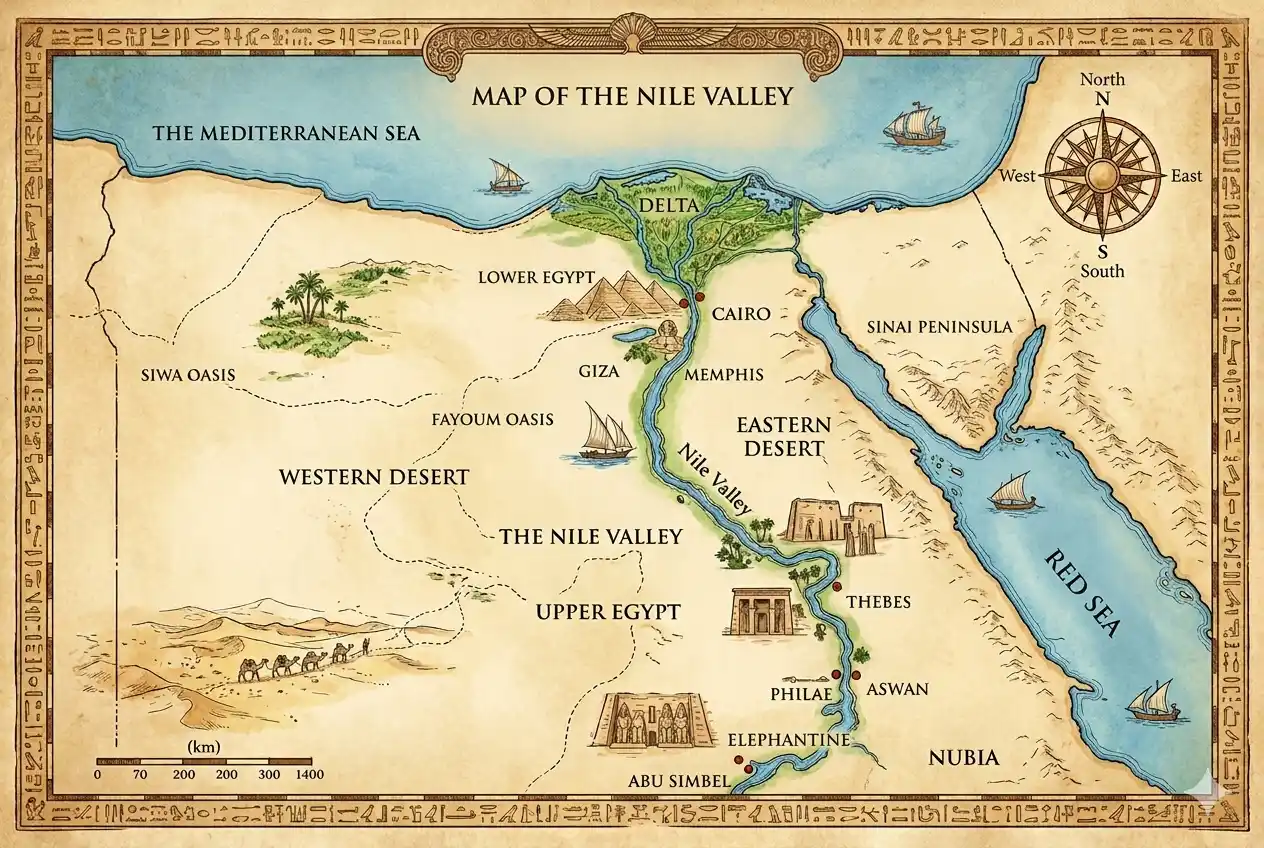
The map of Nile River Valley is not just a geographical chart — it is the blueprint of human civilization itself. Stretching over 6,650 kilometers from the highlands of East Africa to the shores of the Mediterranean, the Nile River Valley cradles the world’s most extraordinary concentration of ancient monuments, living cultures, and natural wonders. For thousands of years, pharaohs, traders, scholars, and explorers have followed this same river corridor — and today, it remains one of the most rewarding journeys any traveler can make.

Whether you’re a history enthusiast tracing the footsteps of Ramesses the Great, an adventurer seeking desert landscapes and river cruises, or a curious traveler wanting to understand Egypt beyond the guidebook highlights, understanding the Nile River Valley map is your essential starting point. At El Sultan Travel, we’ve helped thousands of international visitors navigate this legendary route — and in this guide, we share everything you need to know.

Facts

  • 6,650 km Total length of the Nile
  • 5,000+ Years of recorded history
  • 7 UNESCO World Heritage Sites along the valley

Understanding-the-Map of-Nile-Rive- Valley

Understanding the Map of Nile River Valley

To truly appreciate the Nile River Valley map, you need to understand how ancient Egyptians themselves saw the land. They divided the Nile Valley into two distinct regions — a division that still shapes every Egypt travel itinerary today:

UPPER EGYPT
Upper Egypt — Luxor to Aswan
The southern region, paradoxically higher in elevation. Home to the Valley of the Kings, Karnak Temple, Abu Simbel, and Philae. This is Egypt’s ancient heartland — the cradle of pharaonic power.
LOWER EGYPT
Lower Egypt — Cairo to the Delta
The northern region where the Nile fans into the Mediterranean Delta. Home to the Pyramids of Giza, the Sphinx, Memphis, and the bustling modern capital Cairo.

The Nile River Valley geography created a natural highway connecting these two worlds. The river flows northward — meaning ancient Egyptians sailed south with the wind (upstream) and drifted north with the current (downstream), making travel along the full length of the valley remarkably efficient even in antiquity.

The fertile Nile Valley, known as the “Black Land” (Kemet) by ancient Egyptians, contrasted sharply with the surrounding “Red Land” (Deshret) — the barren desert. This narrow green corridor, averaging just 20 km wide, is where the entire civilization flourished.

Key Landmarks on the Nile River Valley Map

Moving along the map of Nile River Valley from south to north reveals a succession of world-class archaeological sites. Here are the essential stops every traveler should know:

1. Abu Simbel — The Gateway Temples

Located near the southern border with Sudan, Abu Simbel’s twin temples were carved directly into the rock face by Ramesses II around 1264 BC. These colossal monuments, relocated in the 1960s to save them from the rising waters of Lake Nasser, represent one of the greatest engineering feats in both ancient and modern history. Twice a year — on February 22 and October 22 — the rising sun illuminates the inner sanctuary in a breathtaking astronomical event.

Abu-Simbel-The Gateway-Temples

2. Aswan — Egypt’s Nubian Jewel

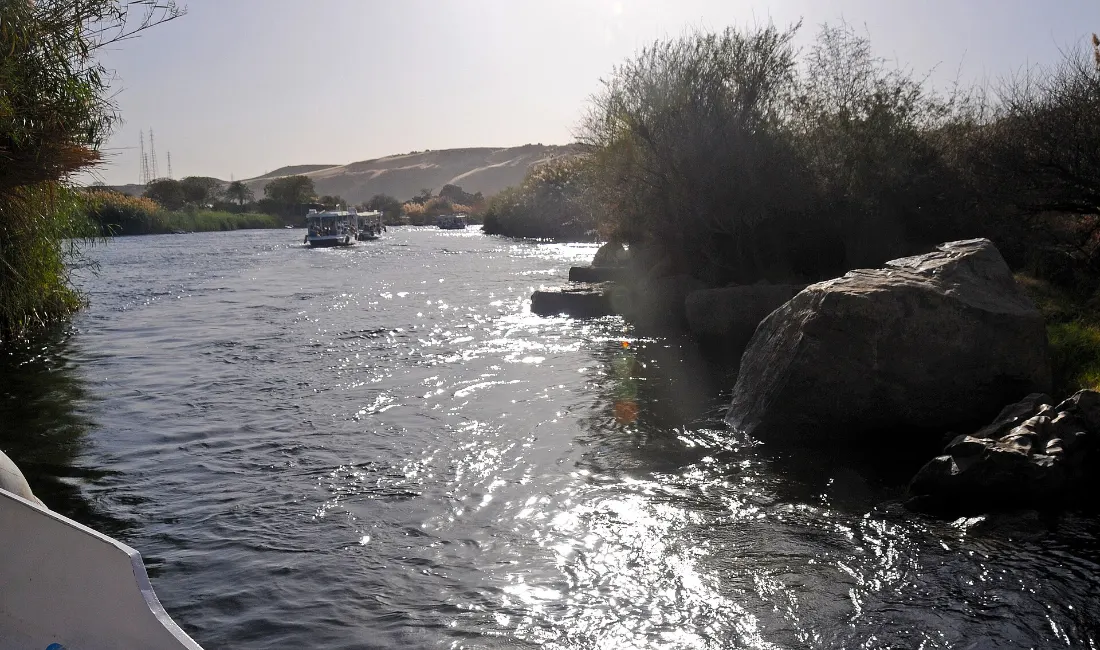
Aswan sits at a critical bend in the Nile River Valley where golden desert meets emerald river. Beyond the famous High Dam and Lake Nasser, Aswan offers the island temple of Philae, colorful Nubian villages, and some of Egypt’s finest felucca sailing. The city serves as the traditional starting point for Nile River cruises heading northward toward Luxor — one of the world’s great travel experiences.

3. Luxor — The World’s Greatest Open-Air Museum

No Nile Valley travel guide is complete without Luxor. This city, built atop ancient Thebes, is the site of the Valley of the Kings, Karnak Temple Complex, Luxor Temple, the Valley of the Queens, and the Mortuary Temple of Hatshepsut. Entire empires were built and buried here. Luxor alone contains roughly a third of all the world’s ancient monuments — a staggering concentration of history compressed into a single destination.

4. Edfu and Kom Ombo — Hidden Gems of the Valley

Between Aswan and Luxor lie two spectacular temples often encountered during Nile cruises. Edfu’s Temple of Horus is among the best-preserved temples in all of Egypt, offering visitors a vivid window into ancient religious life. Kom Ombo’s unusual double temple — dedicated simultaneously to the crocodile god Sobek and the falcon god Haroeris — features a celebrated collection of ancient surgical instruments and a Nilometer used to measure annual flood levels.

Kom-Ombo's-unusual-double-temple

5. Cairo and Giza — Where the Nile Meets Legend

The northern anchor of the Nile River Valley map, Cairo is the pulsing metropolis where ancient and modern Egypt collide. The Pyramids of Giza and the Great Sphinx stand at the desert’s edge, while the Egyptian Museum (now complemented by the Grand Egyptian Museum in Giza) houses the world’s most comprehensive collection of pharaonic artifacts. The nearby site of Memphis — Egypt’s first capital — and the Step Pyramid of Saqqara complete this essential cluster of sites.

The Nile River Valley Through Time: A Historical Overview

The story written across the Nile Valley ancient Egypt map spans millennia. Understanding this timeline helps travelers make sense of what they see at each site:

Predynastic Period (before 3100 BC): Early agricultural communities settled along the Nile’s banks, drawn by the river’s annual floods that deposited rich alluvial soil — the foundation of Egypt’s agricultural wealth and eventual political power.

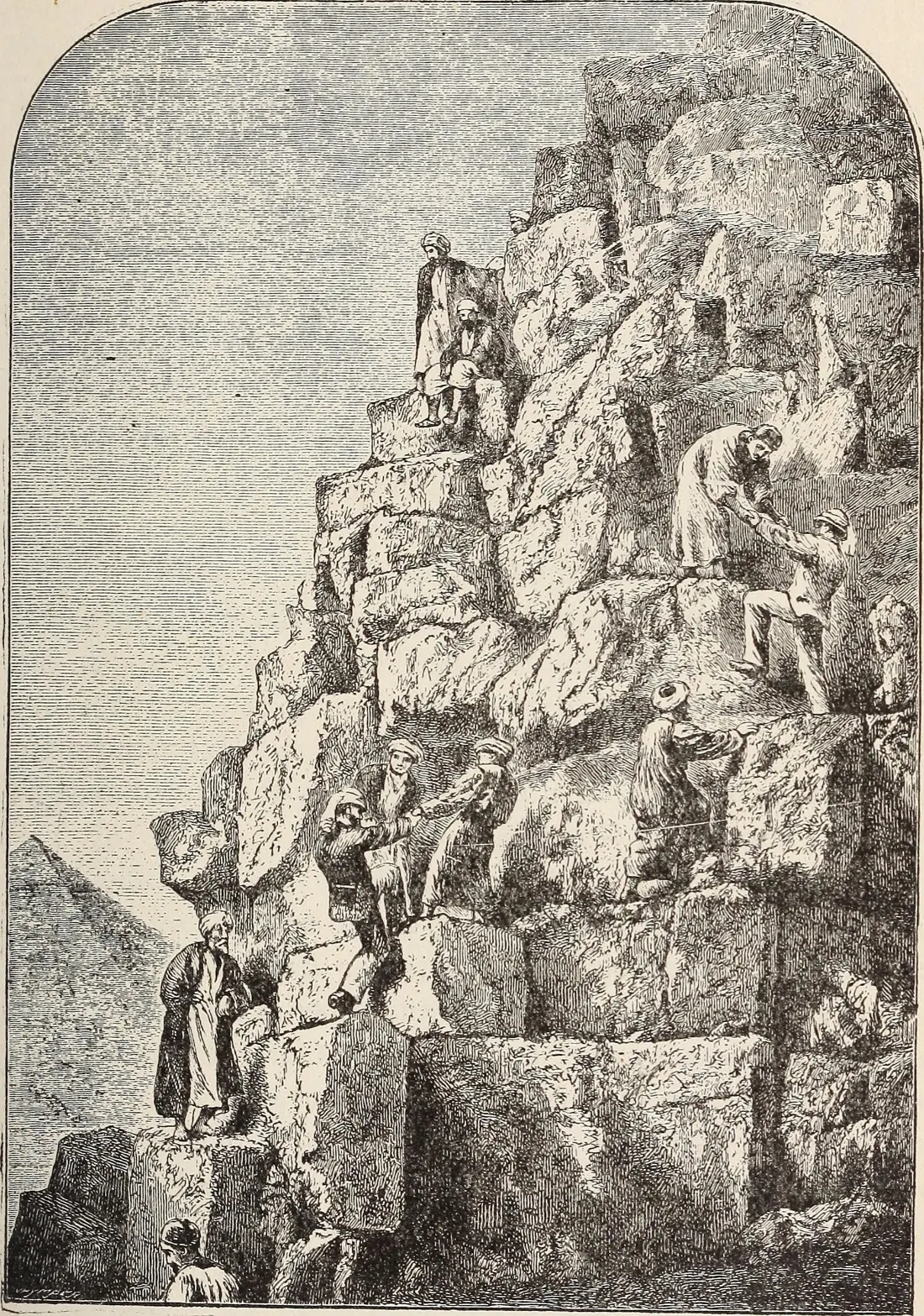
Old Kingdom (2686–2181 BC): The age of pyramid building. The great pyramids at Giza, Saqqara, and Dahshur were constructed during this era, representing the apex of royal funerary architecture and the organizational power of the early Egyptian state.

New Kingdom (1550–1069 BC): Egypt’s imperial golden age. Pharaohs like Ramesses II, Tutankhamun, and Hatshepsut ruled from Thebes (modern Luxor). The Valley of the Kings became the royal burial ground, and massive temple complexes at Karnak and Abu Simbel defined this era’s architectural ambitions.

Ptolemaic and Roman Periods (332 BC – 641 AD): Greek and Roman rulers adopted Egyptian religious customs, funding the construction of temples at Edfu, Philae, and Dendera — some of the best-preserved ancient structures on the entire Nile River Valley map.

The annual flooding of the Nile — called “The Inundation” — was the engine of Egyptian civilization. It deposited black silt that fertilized crops, gave the valley its name, and governed every aspect of Egyptian life, religion, and the agricultural calendar for thousands of years.

Natural Geography of the Nile Valley

Beyond archaeology, the Nile River Valley landscape itself is a destination. The river carves a dramatic contrast through the surrounding Sahara Desert — a ribbon of green life cutting through endless golden dunes and sandstone cliffs. Key natural features include:

The Nile Cataracts: A series of six shallow stretches of rocky rapids extending from Aswan into Sudan. The First Cataract at Aswan historically marked Egypt’s southern border and today creates a dramatic rocky landscape around Elephantine Island.

Lake Nasser: Created by the construction of the Aswan High Dam in the 1960s, Lake Nasser is one of the world’s largest artificial reservoirs. Its remote waters host Abu Simbel and a handful of relocated temples, reachable by cruise on this vast inland sea.

The Nile Delta: Where the river spreads into a broad fan before meeting the Mediterranean, the Delta represents some of Egypt’s most fertile agricultural land. Ancient cities like Alexandria and Tanis (the biblical Ramesses) lie within this northern region of the Nile valley map.

Explore the Nile Valley with El Sultan Travel

Every site on the map of Nile River Valley is best experienced with expert local guidance. El Sultan Travel offers a full range of tours designed for international visitors — from short excursions to multi-week adventures covering the entire valley:

All El Sultan Travel tours are fully customizable — private guided options, small group departures, and tailor-made itineraries are available for every type of traveler and every budget. Whether you have 3 days or 3 weeks, we will map out the perfect journey along the Nile River Valley for you.

Practical Tips for Visiting the Nile River Valley

Best Time to Visit

The ideal time to explore the Nile Valley is between October and April, when temperatures are comfortable for sightseeing (15–28°C). Summer months (June–August) bring intense heat, particularly in Upper Egypt, with temperatures regularly exceeding 40°C. Spring (March–April) offers pleasant weather and thinner crowds than the peak winter season.

Getting Around the Valley

The most iconic way to travel the Nile River Valley route is by cruise ship — a floating hotel that moves between Luxor and Aswan while you sleep, waking each morning at a new ancient site. Alternatively, the overnight sleeper train between Cairo and Luxor/Aswan is a classic Egypt travel experience. Domestic flights connect Cairo, Luxor, Aswan, and Abu Simbel efficiently for those with limited time.

How Many Days Do You Need?

A focused Nile Valley trip covering Luxor and Aswan comfortably takes 5–7 days. Adding Cairo and the Pyramids brings the recommended total to 10–12 days. A comprehensive Egypt itinerary covering the full length of the valley — including Lake Nasser, the Western Desert, and Alexandria — ideally requires 14–21 days.

Frequently Asked Questions

What does the map of the nile river show?

The Nile River Valley map shows the narrow fertile corridor along both banks of the Nile, stretching from Aswan in the south to the Mediterranean Delta in the north. It highlights major ancient sites, modern cities, desert borders, and the river’s key geographical features including cataracts, islands, and Lake Nasser.

What are the most important sites in the nile river valey?

The most important sites include the Valley of the Kings and Karnak Temple in Luxor, Abu Simbel and Philae Temple near Aswan, the Pyramids of Giza and the Sphinx near Cairo, the temples of Edfu and Kom Ombo, and the Step Pyramid of Saqqara. Together these sites tell the complete story of ancient Egyptian civilization.

How long is the nile river valley?

The Nile River itself stretches approximately 6,650 km, making it the world’s longest river. The cultivable Nile Valley corridor in Egypt — the strip of fertile land along the river’s banks — runs about 1,000 km from Aswan to the Delta, rarely exceeding 20 km in width.

Is a nile river cruise the best way to see the valley?

A Nile cruise between Luxor and Aswan is widely considered the most immersive and convenient way to experience the Nile Valley. It combines accommodation, transport, and guided visits to temples and monuments into one seamless experience. El Sultan Travel offers a range of cruise options to suit different budgets and schedules.

Conclusion: Your Journey Along the Nile Starts Here

The map of Nile River Valley is more than a geography lesson — it is an invitation. An invitation to stand inside temples that were ancient when Rome was young, to sail the same waters that carried pharaohs and merchants for millennia, and to witness landscapes so dramatic and historically rich that no photograph fully captures them. The Nile Valley remains, thousands of years after the great pyramids were built, one of the most awe-inspiring places on Earth.

Whether you dream of exploring the tombs of the Valley of the Kings in Luxor, watching the sunrise illuminate Abu Simbel’s inner sanctuary, cruising past golden cliffs on a traditional felucca, or standing before the last surviving Wonder of the Ancient World — El Sultan Travel is here to make it happen.

Ready to Explore the Nile River Valley?

Let our Egypt travel experts design your perfect itinerary — from a single day tour to a complete multi-week adventure along the entire Nile Valley.